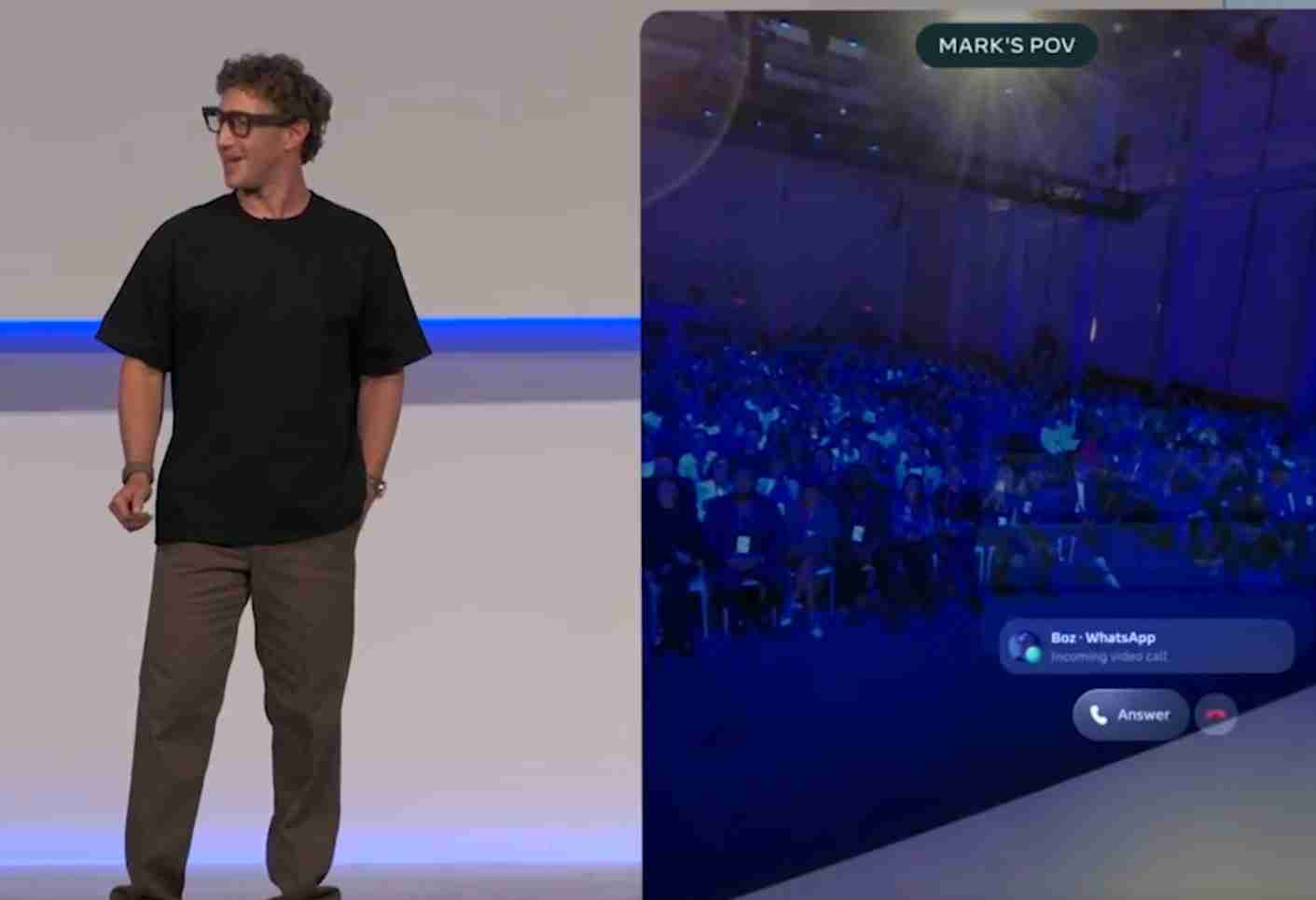
Zuckerberg’s AI glasses demo falters at Meta Connect 2025 as thousands of devices overwhelm servers
At Meta Connect 2025 in Orlando, live demos of Meta’s Ray‑Ban Gen 2 AI smart glasses malfunctioned on stage, producing scrambled assistant responses and a failed WhatsApp call that exposed server overload and software bugs.
- High-profile demos failed: Major live demonstrations of Ray‑Ban smart glasses failed on stage, drawing wide coverage.
- Cooking demo scrambled: The glasses’ Live AI gave out‑of‑order prompts and misidentified steps during a cooking segment with chef Jack Mancuso (CNET).
- CTO’s technical update: Meta CTO Andrew Bosworth said a mass activation of Live AI overloaded backend systems and a separate software bug caused a WhatsApp call to be unanswerable (TechCrunch).
What went wrong on stage
The cooking demo featured chef Jack Mancuso wearing the Ray‑Ban Gen 2 smart glasses while the Live AI was expected to identify ingredients and guide recipe steps. Instead, the assistant listed items out of order and declared steps complete when they had not begun, leaving the chef and audience perplexed — footage and reporting documented the miscue (CNET).
The WhatsApp call segment also failed when a video call from CTO Andrew Bosworth arrived and the glasses’ display had timed out. The incoming call option did not appear because the device had entered a sleep state and a software bug prevented an answer UI from showing (TechCrunch).
Technical explanation from Meta’s CTO
Initial on-stage comments attributed the issues to venue Wi‑Fi congestion, a plausible surface explanation at busy events. In a follow-up post-event Q&A, CTO Andrew Bosworth clarified the root causes.
Bosworth said the main problem arose when a live video feed unintentionally triggered the Live AI on many glasses in the hall, provoking a surge of requests to Meta’s development servers that resembled a distributed denial‑of‑service event.
That surge scrambled the AI responses during the cooking demo and degraded other services. Separately, the WhatsApp failure was traced to power‑save sleep behavior combined with a previously unseen UI bug that prevented answering on stage. Meta says patches and guardrails have been applied (CNET, TechCrunch).
Why experts say this matters
Industry observers called the failures both embarrassing and instructive. Live demos for cloud‑dependent wearables carry unique risks: when thousands of devices in one venue react to the same trigger, previously unseen edge cases can cascade into systemic faults (Meyka).
- Network dependence creates fragility: Devices must degrade gracefully or operate offline during bursts.
- Field testing matters: Live events cannot fully substitute for stress tests that replicate mass‑activation conditions.
- Public optics: High‑profile failures erode trust faster than engineering fixes can reassure consumers.
Public and media reaction
Coverage ranged from sharp criticism of the cringe factor to sober analysis of product readiness. Clips from the cooking demo and failed call circulated widely on social platforms, prompting debate over whether the incidents reflect reckless haste or normal growing pains for wearable AI (CNET, Meyka).
Meta’s response and next steps
Meta says it has fixed the immediate bugs, patched the sleep/UI issue, and implemented guardrails to prevent mass activations during demos. The company also plans to harden server capacity and device behavior to reduce the chance of similar outages (CNET).
Implications for the United States
Economic impact: The Ray‑Ban smart glasses AI represents a sizable market opportunity, but reliability problems could slow adoption and delay revenues and hiring tied to early deployments.
Regulatory and political consequences: High‑profile failures often attract lawmakers’ attention, fueling calls for standards on AI safety, data handling and consumer protections.
Security and resilience: The DDoS‑like overload at Meta Connect highlights how consumer devices can strain infrastructure; agencies may consider guidelines for device behavior under load.
Consumer trust and market uptake: Conservative users may delay purchases until vendors demonstrate predictable behavior, transparent limits, and strong support.
Social and workplace effects: Employers and institutions may require stronger guarantees before allowing wearables in sensitive environments.
Practical steps for users and businesses
- Ask vendors about fallback modes, offline features, and service‑level guarantees before purchasing.
- Event organizers should coordinate demo conditions to avoid mass activation triggers that could flood systems.
- Policymakers can press for clear disclosure about device behavior in crowded spaces and stress scenarios.