Route 66 at 100: How the “Mother Road” Built America — and Why 2026 Is the Year to Drive It
U.S. Route 66, the “Mother Road,” was designated November 11, 1926, stretching 2,448 miles from Chicago to Santa Monica. As its 2026 centennial approaches, we examine its history, cultural impact, preservation efforts and travel guidance.
Key takeaways
- Historic span: Designated November 11, 1926, U.S. Route 66 runs 2,448 miles from Chicago’s Grant Park to the Santa Monica Pier, crossing eight states.
- Cultural force: The “Mother Road” shaped Dust Bowl migration, postwar road culture and roadside economies; preservation continues under state and local historic designations.
- Centennial 2026: Expect heightened events around November 11 — plan lodging, book early and aim for spring or fall for milder conditions.
The road that helped shape modern America
When the federal designation for U.S. Route 66 was finalized in 1926, it did something more than connect two coasts. It tied hundreds of towns and thousands of small businesses into a new economy centered on automobile travel. Cyrus Avery, often called the “Father of Route 66,” championed a diagonal route that linked rural towns to larger markets and migration routes westward (U.S. Department of Transportation).
The number assignment occurred in Springfield, Missouri, on April 30, 1926, and signs went up the following year. For primary historical context, see the U.S. Department of Transportation — Route 66 history and significance and the Wikipedia overview.
A lifeline during crisis
“The Mother Road” became shorthand for the families who fled the Dust Bowl and Great Depression toward California in search of work and safety.
During the 1930s, migrants from Oklahoma, Arkansas, Kansas and Texas traveled Route 66 in large numbers; John Steinbeck memorialized this migration in The Grapes of Wrath (1939), dubbing it the “Mother Road.” The route also fostered a new roadside economy — filling stations, diners, auto courts and motels — that served travelers for generations. For preservation and migration context, consult the National Park Service — Route 66 overview and the U.S. Department of Transportation historical review.
From golden age to bypass and preservation
After World War II Route 66 entered a cultural peak as family road trips and trucking expanded. However, the 1956 Federal-Aid Highway Act and ensuing Interstate system gradually bypassed older alignments. The route was decommissioned as a federal highway in 1985, but local and state Historic Route 66 designations, plus federal attention, spurred preservation.
Key preservation milestones include the 1990 Route 66 Study Act (Public Law 102-400), National Park Service assessments, and numerous nonprofit-led restorations aimed at neon signs, diners and motels. See the National Park Service overview for details.
What the centennial means in 2026
Route 66’s centennial year (2026) marks 100 years since the November 11, 1926 designation. Organizers and historians expect the milestone to spotlight preservation projects, community festivals and heritage tourism. The Route 66 Centennial — historical timeline and planning is coordinating events and programming that will likely boost visitation, especially around November 11.
Travelers should plan for larger crowds and special programming during the anniversary window. Book lodging early in small towns and check local event calendars for parade routes or street closures.
Know Before You Go: Route 66 basics and planning
- Route: 2,448 miles from Grant Park in Chicago to the Santa Monica Pier, crossing Illinois, Missouri, Kansas, Oklahoma, Texas, New Mexico, Arizona and California. See the Wikipedia overview and the Route 66 Centennial timeline.
- Time needed: Most travelers allow 2–3 weeks to experience the full route at a relaxed pace; state-by-state segments can be completed in about a week.
- Best seasons: Spring (April–May) and fall (September–October) for milder weather; summer is hot in the Southwest and winter can limit rural services.
- Road condition: Much of the original highway survives as “Historic Route 66” under state/local control; GPS may route modern interstates around original alignments — part of the experience is finding those original stretches.
Why an RV changes everything on Route 66
Route 66 passes many small towns with limited hotel options and widely spaced attractions. An RV provides flexibility: camp near original alignments, arrive after sunset and still have sleeping and cooking facilities. For those who don’t own an RV, peer rental platforms make short-term access straightforward — pick size and amenities that match your group and avoid ownership costs.
Preservation, economic impact and local communities
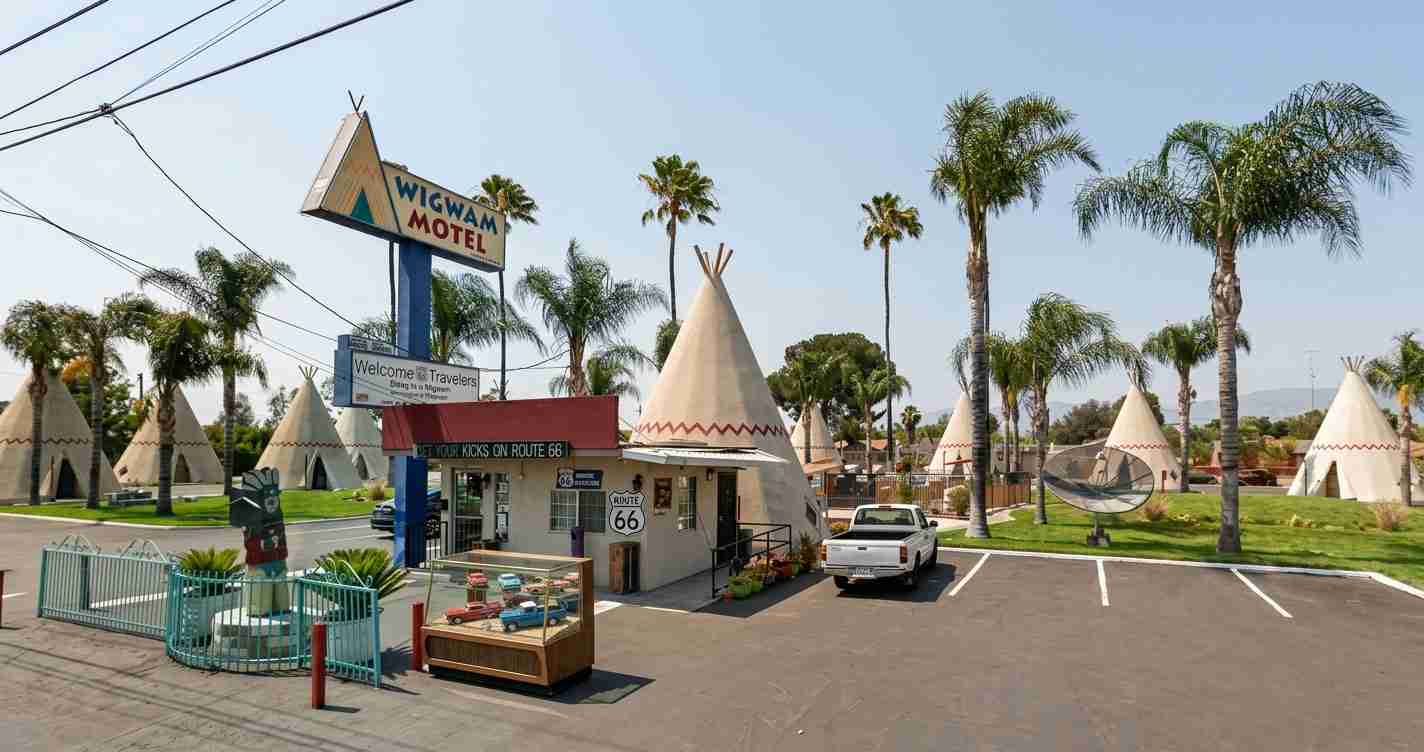
Historic Route 66 is both a tourism asset and cultural patrimony. Local, state and nonprofit-led restoration projects — from neon signs to vintage motels — attract visitors and generate economic benefits for small towns. Federal actions like the Route 66 Study Act and National Park Service involvement underscore preservation as a public-policy priority: investing in roadside assets can capture longer stays and higher local spending.
Practical safety and service notes
- Fuel and heat: Long desert stretches mean carry extra water and keep fuel tanks topped; stations can be widely spaced. Check vehicle cooling systems in summer.
- Roadside services: Winter may limit services in rural areas; verify museum and historic-site hours when traveling in shoulder seasons.
- Navigation: Follow state Historic Route 66 markers and download GPS tracks or state maps showing older alignments. Allow extra time for side trips and local detours.
Sources and further reading
- U.S. Department of Transportation — Route 66 history and significance
- National Park Service — Route 66 overview and preservation context
- Route 66 Centennial — historical timeline and centennial planning
- Wikipedia — general overview and route details
- Centennial and cultural previews (multimedia)
Implications for United States
Economic: The centennial is an opportunity to boost domestic tourism revenue. Small towns along the corridor can benefit from visitors, restoration funding and renewed interest in heritage travel.
Political and policy: The centennial highlights the importance of federal, state and local partnerships for heritage preservation. Past laws such as the Route 66 Study Act demonstrate how Congress can trigger federal evaluation and support.
Social and cultural: Route 66 serves as a living classroom about migration, industry and mid‑century culture. The centennial encourages reflection on the people who built and traveled the highway and helps pass that history to new generations.
Practical applications
If you plan to drive Route 66 in 2026: map your route by state, reserve campgrounds or RV rentals in advance, and research centennial events in towns you intend to visit. Expect special events around November 11 — book early or travel in spring or fall to avoid peak crowds.
For travel-ready links and planning resources, see the Route 66 Centennial planning page and the National Park Service overview.
Preserve the history: From Cyrus Avery’s vision to Dust Bowl migration, neon signs to roadside cafés, Route 66’s centennial is a moment to celebrate, preserve and plan for the next century of travel and memory.