
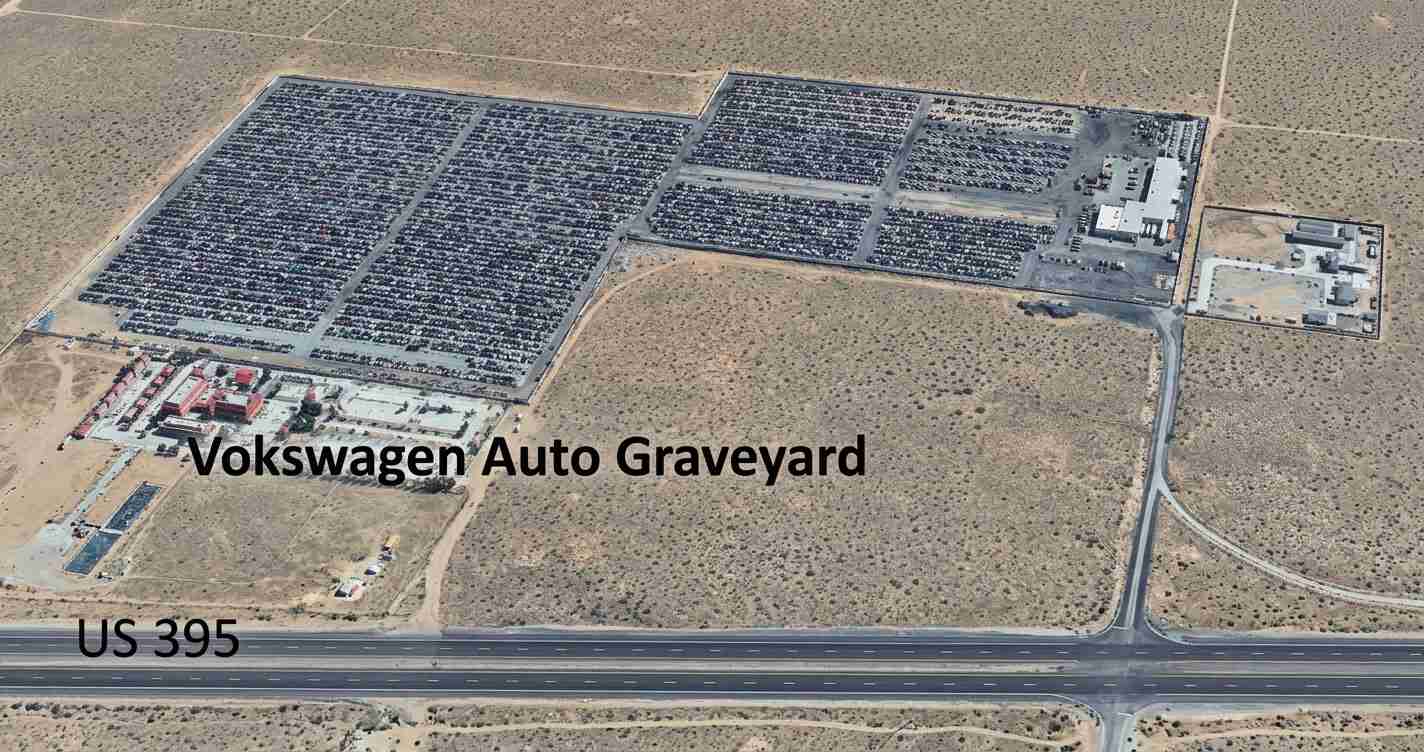
Desert of Diesel: How Volkswagen’s Dieselgate Left Tens of Thousands of Cars Parked in the Mojave
After Volkswagen’s “Dieselgate” scandal, tens of thousands of repurchased diesel cars were stored in the Mojave Desert near Victorville, California — a dry, inexpensive site chosen to prevent corrosion while vehicles awaited emissions fixes, resale or scrapping.
- Scale: Nearly half a million U.S. vehicles were subject to buybacks, modifications or other remedies after the 2015 emissions fraud.
- Storage choice: The Mojave’s arid climate reduced corrosion risk for roughly 350,000 repurchased cars awaiting approved fixes or disposition.
- Costs and oversight: Volkswagen agreed to spend about $14.7 billion in the U.S., with extensive regulatory monitoring of recalls and remediation.
- Logistics: Active maintenance crews kept vehicles operable while they were stored, preserving resale value and meeting regulatory goals.
Key information
– The Dieselgate scandal began in September 2015, when regulators found Volkswagen had installed “defeat device” software in many 2.0‑liter TDI engines that reduced emissions controls during normal driving and produced up to 40 times the legal limit of nitrogen oxides (NOx) on the road. See reporting and analysis from the CPA Journal and the Wikipedia — Volkswagen emissions scandal.
– U.S. settlements required Volkswagen to buy back or modify nearly 500,000 cars and spend roughly $14.7 billion to compensate owners and remediate environmental damage, including about $2.7 billion for NOx reduction projects (see the U.S. Department of Justice press release).
– Approximately 350,000 repurchased vehicles could not be sold until EPA/CARB‑approved fixes were completed; Volkswagen parked many on cheap, dry land — most visibly in the Victorville area of the Mojave Desert — to limit rust and preserve resale value (company filings and reporting summarized in the Wikipedia entry).
Background: the fraud and the fallout
In 2015 the U.S. Environmental Protection Agency and California regulators issued a Notice of Violation after tests showed that many Volkswagen diesel models emitted far more NOx in real‑world driving than in lab tests. Investigators discovered software that recognized testing conditions and activated full emissions controls only during those conditions. On a conference call with EPA and California Air Resources Board officials, Volkswagen admitted the practice; CEO Michael Horn later said, “We’ve totally screwed up,”
calling the behavior dishonest to regulators and consumers.
That admission triggered civil and criminal investigations worldwide. U.S. courts approved a settlement that gave owners options — a buyback, lease termination, or an EPA/CARB‑approved fix plus additional payments — and required Volkswagen to fund environmental mitigation and zero‑emission vehicle programs (see the U.S. Department of Justice press release).
Why the Mojave Desert?
Storing hundreds of thousands of cars presented a rare logistical challenge. Volkswagen needed large, inexpensive, secure parcels where vehicles could sit for months or years without rapid deterioration. The Mojave Desert near Victorville became one of the most visible answers.
Dry air and low humidity slow corrosion — a practical factor that informed the choice, not spectacle. Company planners and officials judged that outdoor lots in an arid climate would preserve metal, wiring and interiors better than humid sites. Other storage locations included an abandoned stadium in Detroit and a former paper mill in Minnesota, but the Victorville lots, visible from the air, created a striking public image of a “car graveyard.” Reporting and company statements are summarized in the Wikipedia entry.
Maintaining a mobile fleet of parked cars
The vehicles were not abandoned. Volkswagen hired full‑time crews to maintain the lots: mechanics periodically started engines, moved cars, and checked batteries to prevent degradation. The objective was clear — keep repurchased cars in a condition that would allow eventual resale as certified used vehicles after EPA/CARB‑approved software and, where required, hardware fixes.
This active maintenance strategy added expense to the program. Alongside settlement payments, Volkswagen faced storage, maintenance, repair or scrapping costs that contributed to the overall financial toll of the remediation effort.
The settlement, the costs, the oversight
Under the U.S. agreement Volkswagen committed roughly $14.7 billion to settle claims: about $10 billion for consumer compensation and approximately $4.7 billion for environmental mitigation and zero‑emission vehicle investments. The company also faced enforcement actions regarding deceptive “clean diesel” advertising and other consumer protection matters (see the DOJ press release).
Courts and regulators set targets for recalls and fixes. Volkswagen had financial incentives to complete remediation quickly; failure to meet targets could trigger additional mitigation payments. The technical complexity of some repairs — and challenges in bringing diesel engines into compliance without degrading performance — made this a years‑long program subject to continuous regulatory review.
What happened to the Dieselgate settlement cars?
Many of the nearly half‑million U.S. vehicles were either fixed and returned to owners, bought back and resold after repair, or sent to scrap when repairs were impractical. By the mid‑2020s most repurchased cars had been processed — modified and resold, or dismantled — but the Victorville images remain a stark visual reminder of the scandal’s scale. This account synthesizes reporting and settlement documents, including the DOJ release and summary material on Wikipedia.
Accountability and broader implications
Dieselgate exposed weaknesses in testing and enforcement systems and raised questions about corporate culture and oversight at global automakers. The episode sparked calls for stronger real‑world emissions testing, better consumer protections, and more transparent environmental reporting from manufacturers. Analysis of the scandal’s financial and governance effects can be found in the CPA Journal and other sources.
Implications for the United States
Economic impact
– Direct costs: The $14.7 billion settlement forced Volkswagen to redirect capital toward consumer payments, environmental mitigation and clean‑vehicle investments, with ripple effects across suppliers and dealerships.
– Used‑car market and scrappage: Buybacks, repairs and scrapping altered supply dynamics in local used‑car markets — reselling fixed vehicles added inventory while scrapped cars removed stock, influencing prices and availability.
Political consequences
– Regulatory scrutiny: The scandal strengthened federal and state resolve to tighten testing and enforcement, prompting changes in how on‑road emissions and fuel‑economy claims are validated.
– Corporate accountability debates: Dieselgate became a reference point in discussions of corporate responsibility, executive accountability and shareholder oversight.
Social effects
– Consumer trust: Many owners felt betrayed by “clean diesel” claims; the buyback program offered redress, but rebuilding trust remains a long‑term challenge.
– Community impacts: Visible storage sites like Victorville drew public attention and local concern about land use and environmental management, while temporary jobs were created for maintenance and logistics.
Cultural relevance
Images of rows of Volkswagen and Audi vehicles in the desert reinforced the cultural expectation that companies be held accountable for misleading consumers and harming the environment — underscoring the need for corporate transparency and regulatory oversight.
Practical daily impacts
– For car buyers: The buyback program provided an option to recover value and avoid owning vehicles that violated emissions claims; modified, certified used cars later returned to the market.
– For regulators and automakers: Dieselgate drove operational changes — improved testing standards and closer monitoring of emissions claims that affect how vehicles are certified and sold in the U.S.
Sources and further reading
- U.S. Department of Justice press release on Volkswagen settlement
- CPA Journal summary of Dieselgate and accounting/financial implications
- Background and timeline: Wikipedia — Volkswagen emissions scandal
“For consumers, the buyback option offered a clear remedy: get money back and be free of a car that violated emissions claims. For Volkswagen, the program was a costly pathway to restore regulatory compliance and attempt to rebuild trust.”



