
Iran flips nationwide internet “kill switch” as protests surge; rights groups say blackout hides lethal crackdown
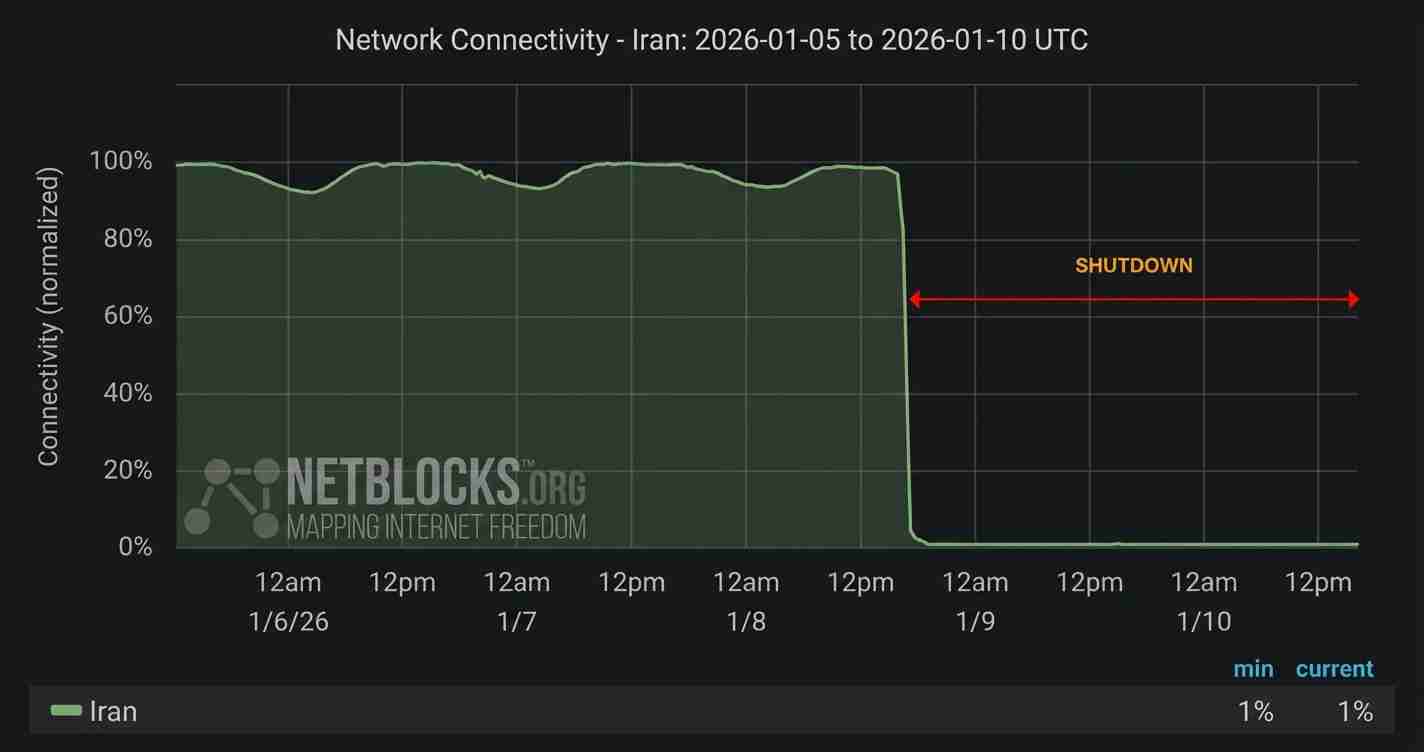
Iran imposed a near-total nationwide internet and telecommunications shutdown on Jan. 8, 2026, amid nationwide protests, prompting rights groups to warn the blackout is being used to conceal lethal force, mass arrests and other grave human rights abuses.
- Near-total shutdown: Authorities cut most fixed-line and mobile internet access on Jan. 8, 2026, creating a nationwide communications blackout, according to Amnesty International.
- Purpose and impact: Rights groups and analysts say the blackout functions as an information “kill switch,” hindering documentation of alleged unlawful killings, mass arrests and other abuses (see Amnesty International and the Institute for the Study of War).
- Verification limits: Confirmed casualty and arrest figures are incomplete and likely undercounts because the blackout prevents independent reporting and digital verification.
What happened: a blanket blackout
On Jan. 8, 2026, Iran’s authorities cut most fixed-line and mobile internet access in what Amnesty International calls a “near total internet shutdown.” The blackout hit both mobile data and home services, making it difficult for people inside Iran to send or receive information or document events in real time. The Institute for the Study of War also reported the continued nationwide shutdown as protests persisted.
Amnesty’s researchers say the shutdown is deliberate, prolonged and designed to prevent independent information flow, obstructing the ability to document state abuses and to coordinate peaceful protest.
Why analysts call it a “kill switch”
Human rights groups and cyber experts describe the cutoff as an information “kill switch.” Rebecca White, an Amnesty Security Lab researcher, warned the shutdown “prevents human rights violations, including unlawful killings by security forces, from being documented and perpetuates impunity for these state crimes.” The Institute for the Study of War and other analysts note that cutting internet service also impedes protest organization and independent verification of events on the ground.
Protest scope and spread
Protests began Dec. 28, 2025, in Tehran after a sharp currency collapse and soaring inflation. Demonstrations broadened quickly, with many protesters openly calling for major political change. Amnesty International reports unrest spread nationwide and that protest activity continued despite the communications blackout. Open-source analysis and media reporting indicate demonstrations in multiple provinces and urban centers, signaling a broad, multi-city movement rather than isolated incidents (ISW).
Casualties, arrests and data limits
Verified figures remain incomplete. Amnesty International has verified dozens of deaths in the early days of the unrest and has documented cases of unlawful use of lethal force in several cities. Because the blackout blocks documentation and reporting, Amnesty stresses its confirmed figures are a minimum and that the actual numbers are likely higher.
Some social media and exile-network reports list higher figures — including claims of at least 65 killed and more than 2,300 arrested across as many as 180 cities — but those tallies had not been independently verified in the major rights group statements cited above at the time of this article. Amnesty further reported that between Dec. 31, 2025, and Jan. 3, 2026, at least 28 protesters and bystanders, including children, were killed in 13 cities across eight provinces based on verified investigations when communications were still partially functioning.
Arrests and repression
Rights organizations report mass arbitrary arrests and widespread intimidation. Amnesty documents detentions of protesters and bystanders in multiple provinces and warns the shutdown makes it harder to track arrests, prison conditions and possible mistreatment. The Institute for the Study of War describes the blackout as part of the regime’s domestic control toolkit, used with security force deployments to limit the scale and visibility of dissent.
Historical pattern: a familiar playbook
Amnesty situates the 2026 blackout within a recurring pattern. In November 2019, authorities imposed a near-total internet shutdown while security forces unlawfully killed hundreds of protesters and bystanders over five days. During the 2022 “Woman, Life, Freedom” uprising, the state again used internet shutdowns and throttling while security forces killed and detained large numbers of people. Amnesty argues that internet cuts are deliberate methods to cover up abuses and foster impunity (Amnesty International).
International responses and diplomatic pressure
Western governments and international bodies have raised alarms. Amnesty called for urgent global diplomatic action to protect civilians and document crimes. Public statements supporting protesters and condemning violence have appeared from Western capitals. Media reports indicate the United States has expressed support for Iranian protesters, while Canada’s prime minister publicly condemned killings and warned of detention risks, urging citizens to avoid travel to Iran (CTV segment).
ISW added that the domestic unrest and blackout should be viewed in the context of broader regional security dynamics and could influence Tehran’s foreign behavior.
Legal and human rights framing
Amnesty frames unrestricted internet access as a core human right, particularly during protests when information is crucial to protect lives and document abuses. The group argues blanket shutdowns are inherently disproportionate and cannot be justified under international human rights law. The blackout, by preventing evidence collection, increases the risk of impunity for unlawful killings and other serious rights violations (Amnesty International).
Reporting limits and verification challenges
The communications shutdown creates a major verification problem. Journalists, rights investigators and independent monitors rely on digital forensics, eyewitness video and real-time messaging to confirm incidents. With those channels cut, verified casualty counts, arrest figures and geographic spread are harder to confirm. Both Amnesty and the Institute for the Study of War note confirmed figures likely understate the full scope of deaths, arrests and injuries.
Implications for United States
Economic and strategic interests
Large-scale unrest in Iran could ripple across global oil markets and heighten regional instability. U.S. businesses with regional ties and global markets may face new uncertainty. The U.S. government will likely weigh sanctions, diplomatic pressure and human rights support while balancing concerns about wider escalation.
National security and policy
A severe crackdown and domestic instability complicate U.S. policy in the Middle East. The blackout and repression reduce transparency, making it harder for U.S. intelligence and policymakers to assess on-the-ground realities and the risk of spillover into neighboring states or proxy conflicts.
Human rights and public diplomacy
For a politically moderate conservative audience, the rule of law and protection of individual rights are core concerns. U.S. options include pressing for independent investigations, tightening targeted sanctions on security figures tied to abuses, and supporting international mechanisms that document violations. Public diplomacy measures that back peaceful protest and condemn unlawful force can uphold American values and signal consequences for state violence.
Domestic political effects
The U.S. response will be scrutinized domestically. Policymakers must balance rhetorical support for protesters and human rights with steps that avoid unintended escalation. Congressional pressure for sanctions or other measures will likely grow as more evidence emerges.
Information security and cyber policy
Iran’s use of an internet shutdown underscores the growing role of cyber tools in state repression. The U.S. and allies may need to expand support for secure communications for activists, invest in censorship-circumvention tools, and press tech platforms to document and preserve evidence of abuses when safe to do so.
Humanitarian and consular concerns
The blackout complicates efforts to track Americans and other foreign nationals in Iran. The U.S. should coordinate with partners to monitor consular needs, push for safe passage for those seeking to leave, and advise caution for people with ties to Iran.
Reporting and sources
This report draws on Amnesty International’s analysis of the internet shutdown and its effects on documenting rights abuses, and the Institute for the Study of War’s situational updates on protest activity and the continued nationwide shutdown. A related media segment is available at the CTV segment.
Note on casualty and arrest figures
Different groups and networks have produced varying tallies. Rights organizations stress confirmed figures currently available are a floor, not a ceiling, because the communications blackout prevents full verification. Reported figures such as “at least 65 killed” or “more than 2,300 arrested” may appear in some outlets or local tallies but had not been verified in the Amnesty International or ISW statements cited above at the time of this article.



