
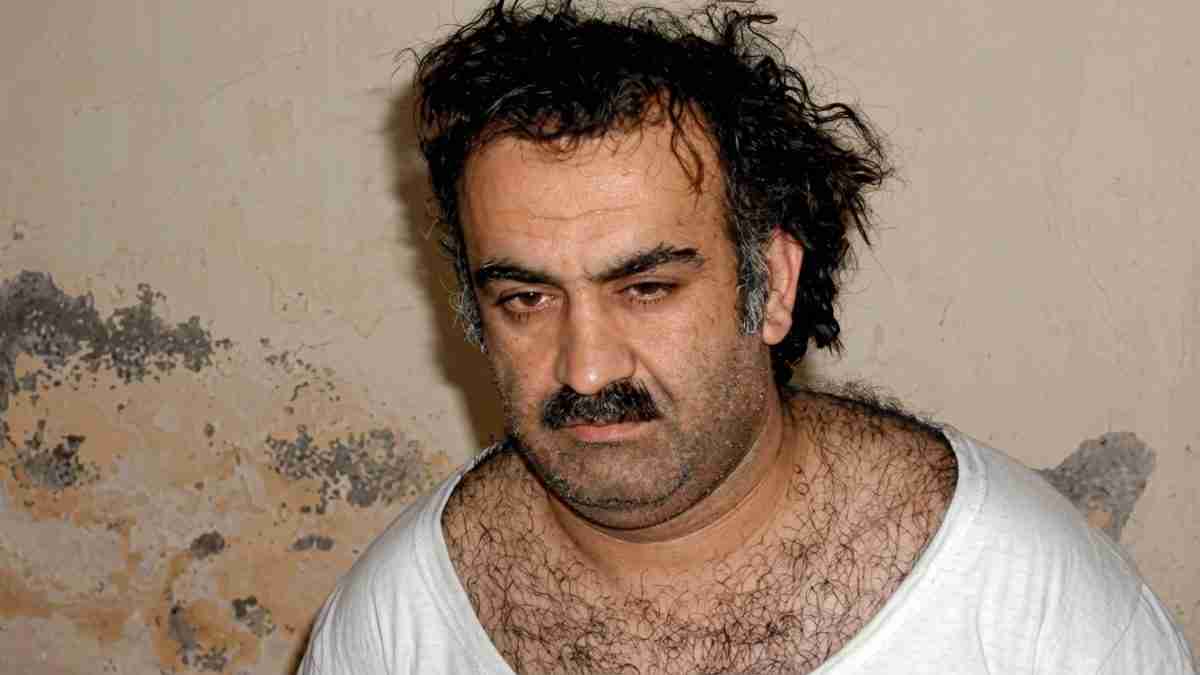
GUANTÁNAMO, Cuba, Aug. 29 (Nationwide Times) — A U.S. military judge has ruled that statements Khalid Sheikh Mohammed made to FBI agents during a 2007 interrogation at Guantánamo Bay were involuntary and cannot be used at trial, creating another obstacle in a case that has waited decades for a courtroom proceeding.
Air Force Lt. Col. Michael Schrama, who oversees the military commission case, ruled that prosecutors did not prove that Mohammed’s statements were given voluntarily. The ruling was not publicly released in the materials available for this report. Its contents were described by lawyers and news organizations that reviewed or obtained information about the decision.
The decision does not end the case against Mohammed or his three co-defendants. Trial and jury selection are scheduled to begin June 5, 2028, at the U.S. military commission at Guantánamo Bay, Cuba.
What did the judge decide?
Schrama excluded statements Mohammed made to FBI agents during a four-day interrogation in January 2007. The judge wrote that prosecutors had “failed to prove by a preponderance of the evidence” that the statements were voluntary, according to reports describing the ruling.
“Preponderance of the evidence” is a legal standard meaning that something is more likely true than not true. In this case, prosecutors had to show that Mohammed’s statements were the product of his free choice rather than coercion.
The judge reportedly found that the FBI questioning continued what he called the CIA’s “unbroken continuation” of psychological conditioning and severe coercion. The ruling also said FBI agents intentionally did not tell Mohammed that he could remain silent, speak with a lawyer or understand that his statements could be used against him at trial.
Those rights are commonly associated with warnings given to suspects before custodial questioning. The ruling’s effect is limited to the statements covered by the order; the available reports do not identify all evidence prosecutors may still use.
Who is charged?
Mohammed is a defendant in the military commission case involving the Sept. 11, 2001, attacks, in which nearly 3,000 people were killed. Prosecutors also accuse Walid Muhammad Salih Mubarak bin ‘Atash, Mustafa Ahmed Adam al Hawsawi and Ali Abdul Aziz Ali in the case.
The military commission is a U.S. court system created to try certain terrorism-related cases involving alleged violations of the law of war. It operates separately from the ordinary federal courts and courts-martial.
Mohammed has been held at Guantánamo Bay since 2003, according to reports. The available materials do not include the formal charging document or the full case caption.
Why has the trial taken so long?
The case has been shaped by disputes over evidence collected during years of CIA detention and interrogation, as well as questions about how later statements were obtained. Those issues have required the commission to decide what evidence can be presented before a trial begins.
Schrama recently set the 2028 trial date after rejecting a prosecution request for a January 2027 trial, according to reports. The latest ruling could add further legal work because the government must decide whether to challenge it.
Rear Adm. Aaron C. Rugh, the chief military prosecutor, said prosecutors would review the decision and decide whether to appeal. Prosecutors were given five days to make that decision, with the possibility of seeking five additional days.
The available information does not show whether an appeal has been filed, whether prosecutors have requested more time or what evidence would remain if the ruling stands.
What happens next?
An appeal could ask a higher military commission court to review Schrama’s decision. If the ruling remains in place, prosecutors would have to proceed without the excluded FBI statements, while the defense could continue challenging other evidence tied to Mohammed’s earlier detention and interrogation.
The scheduled 2028 trial date is not a guarantee that the proceedings will begin then. Further appeals, evidentiary hearings and other pretrial disputes could change the schedule.
The judge’s ruling addresses the admissibility of specific statements. It does not determine whether Mohammed or any co-defendant is guilty. Those charges remain accusations unless and until they are resolved at trial or through another lawful court proceeding.



