
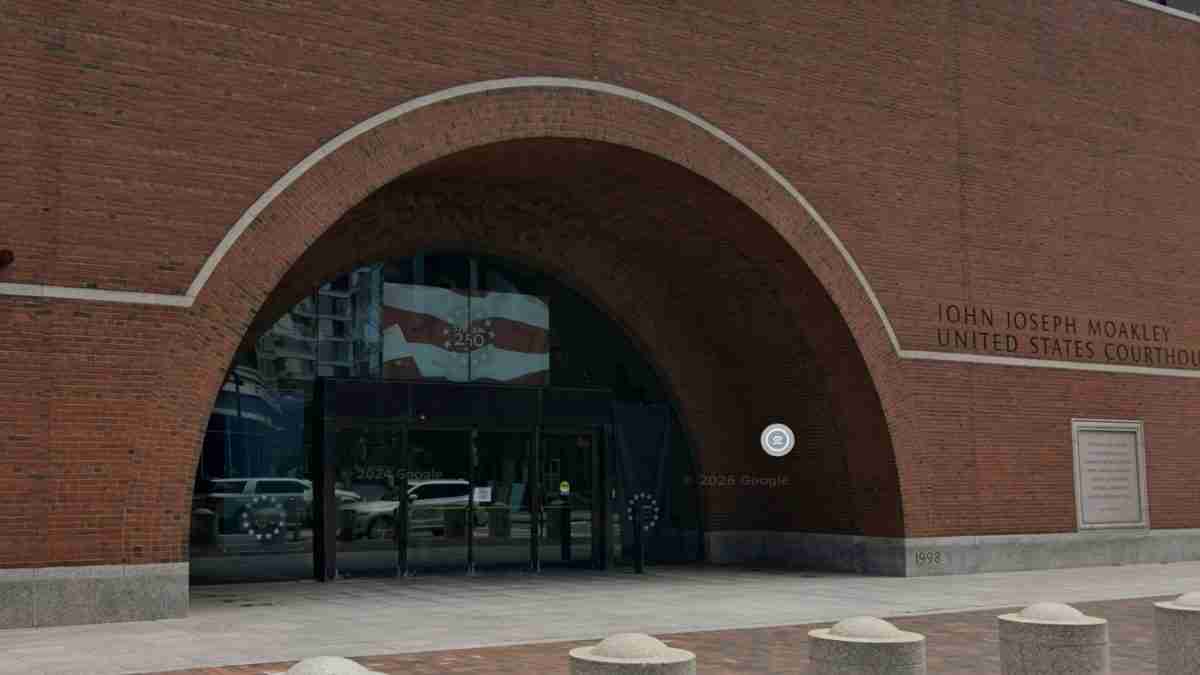
BOSTON, Aug. 19 (Nationwide Times) — A federal judge in Boston has lifted the last court-ordered pause on the Trump administration’s plan to end Temporary Protected Status for Ethiopian nationals, allowing the Department of Homeland Security to move forward with the termination.
U.S. District Judge Brian Murphy issued the order Aug. 18 in the U.S. District Court for the District of Massachusetts. The decision affects more than 5,000 Ethiopian nationals, Reuters reported, although the underlying court order or government record supporting that figure was not identified in the available material.
The ruling removes the remaining legal block to the administration’s effort. It does not, by itself, establish that any individual has been arrested, placed in removal proceedings or deported. The available records do not confirm those actions.
What is Temporary Protected Status?
Temporary Protected Status, or TPS, is an immigration program that allows eligible nationals of designated countries to live and work legally in the United States for a limited period. The Department of Homeland Security can designate a country when conditions such as armed conflict, natural disaster or other extraordinary circumstances make it unsafe for people to return.
TPS does not provide permanent legal status or a direct path to citizenship. When a designation ends, the protections and work authorization tied to it can also end, subject to any required wind-down period or court order.
Why did the court lift the stay?
Then-DHS Secretary Kristi Noem determined in December 2025 that conditions in Ethiopia no longer justified the designation and announced that it would end after a 60-day wind-down period. The announced termination date was Feb. 13, 2026.
Before that date, Murphy issued a temporary injunction on Jan. 30 blocking the termination. Further court orders kept the protections in place while the case continued. On July 25, Murphy issued an administrative stay as he considered constitutional claims raised after a Supreme Court decision involving TPS protections for Haitian and Syrian nationals.
On Aug. 18, Murphy lifted that remaining stay. The available reports say he rejected arguments that DHS lacked authority to end the Ethiopia designation and that TPS holders were entitled to individual hearings before a nationwide designation could be terminated.
The full text of the Aug. 18 order, its docket number and the judge’s complete reasoning were not available in the supplied records.
What role did the Supreme Court case play?
The Boston proceedings followed a June 2026 Supreme Court decision identified in the available material as Mullin v. Doe. That case involved TPS protections for Haitian and Syrian nationals. The court’s decision was described as limiting lower courts’ ability to review DHS decisions ending TPS designations.
The supplied accounts differ in how broadly they describe the Supreme Court’s ruling. The available material does not include the full opinion or its complete citation, so its precise reach cannot be independently detailed here.
What happens next?
DHS General Counsel James Percival said in a social-media post that Murphy had lifted the stay and that TPS terminations were in effect. DHS also posted that “ALL TPS terminations are now IN EFFECT.”
The litigation was brought or challenged in part by African Communities Together, an organization that advocates for African immigrants. The available records indicate that legal challenges generated multiple pauses before Murphy’s Aug. 18 order.
The ruling clears the way for DHS to implement the termination. It does not resolve every possible legal issue, and the supplied material does not confirm whether an appeal has been filed. It also does not provide individual termination notices or current figures for Ethiopian TPS holders.



