
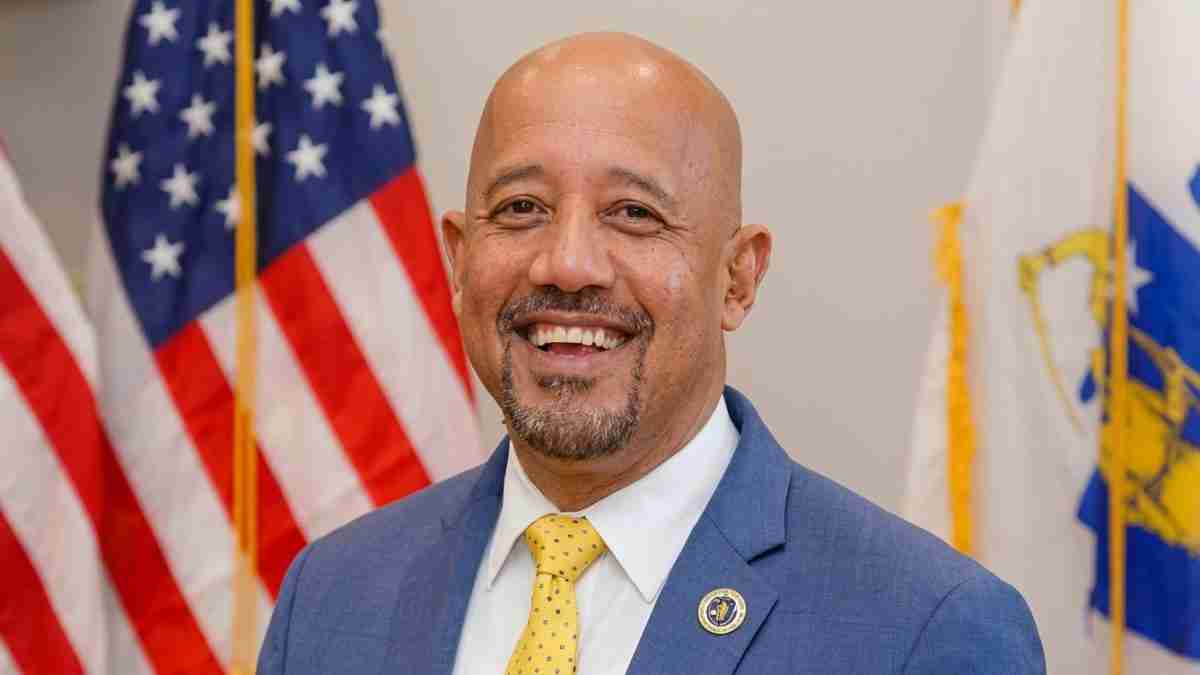
BOSTON, Aug. 15 (Nationwide Times) — Federal prosecutors have charged Lawrence Mayor Brian DePena with wire fraud and money laundering, alleging that he obtained more than $1.5 million in COVID-19 relief loans and used some of the money for personal and political expenses.
The FBI arrested DePena, 61, on Aug. 14, 2026. He appeared in federal court in Boston and was released under court-ordered conditions. The charges are allegations, and DePena is presumed innocent unless proven guilty.
What is DePena accused of doing?
According to federal prosecutors and the criminal charging documents, DePena sought Economic Injury Disaster Loans, or EIDLs, for Tenares Tire Services Inc., a Lawrence tire and automotive business he owned.
EIDL loans were administered by the U.S. Small Business Administration under the federal CARES Act. The program was designed to help businesses cover expenses and recover from economic harm caused by the COVID-19 pandemic.
Prosecutors allege that DePena obtained more than $1.5 million through the loans. Some reports describe the total as more than $1.6 million, while another figure of about $1.65 million refers to the loan balance that remained outstanding in August 2026. The available charging summaries do not fully explain the difference.
The allegations include:
- Using $85,000 in EIDL proceeds to pay personal federal tax liabilities, according to the charging documents.
- Transferring money to a personal account and using it for payments connected to “The Committee to Elect Brian DePena,” his campaign committee.
- Using $883,293 in December 2021 to pay two high-interest private loans or mortgages linked to properties he owned in Lawrence.
The campaign-related figures vary in the available reports. They include $90,000 in checks and an additional $42,112.96 in campaign spending or payments. The charging summaries do not provide a complete transaction ledger to reconcile the amounts.
How did the alleged transactions unfold?
Tenares Tire was approved for an initial EIDL of about $150,000 in May 2020, and the funds were received in June of that year, according to the criminal complaint as summarized by CBS News.
In April 2021, prosecutors allege, DePena requested an increase. Additional EIDL money was deposited into the business account in August 2021. Reports say that between August and October, money was transferred to personal accounts, used for the alleged IRS payment and directed toward campaign-related checks.
A later increase of about $1.15 million was deposited in October or November 2021, according to conflicting summaries of the charging documents. Prosecutors allege that money was used in part to make the private-loan payments.
The complaint, as summarized by CBS News, said that by Aug. 5, 2026, only 16 payments totaling $130,160 had been made toward the EIDL. The outstanding principal was reported at about $1.65 million.
What do the charges mean?
Wire fraud generally involves using electronic communications to carry out a scheme to obtain money or property through false or misleading representations. Money laundering charges can involve conducting financial transactions with proceeds that prosecutors allege came from unlawful activity.
The case includes one count of wire fraud and one count of money laundering, according to the U.S. Attorney’s Office and reports describing the federal charges. If convicted, wire fraud carries a maximum sentence of 20 years in prison, while money laundering carries a maximum of 10 years. Those are statutory maximums, not a prediction of DePena’s sentence.
What has happened in court?
DePena appeared in federal court in Boston on Aug. 14. He waived a probable-cause hearing and was released without bond, according to reports citing the court proceeding and federal authorities.
The release conditions included surrendering his passport, remaining in Massachusetts, avoiding contact with potential witnesses and reporting to probation. He also was barred from applying for new loans without court approval.
The supplied case information does not identify the case number, assigned judge or next hearing date. It also does not report a defense statement or indicate whether a grand jury has returned an indictment.
Who is investigating the case?
The investigation is attributed to the FBI’s Boston Division, IRS Criminal Investigation and the Massachusetts Office of the Inspector General. The U.S. Attorney’s Office for Massachusetts is prosecuting the federal case.
The alleged transactions, business activity, property payments and campaign spending are tied to Lawrence. The available reports do not include a statement from Lawrence city officials, the City Council or DePena’s campaign committee.
The criminal case will require prosecutors to prove the charges beyond a reasonable doubt. The allegations in a complaint or other charging document are not findings of guilt.



