
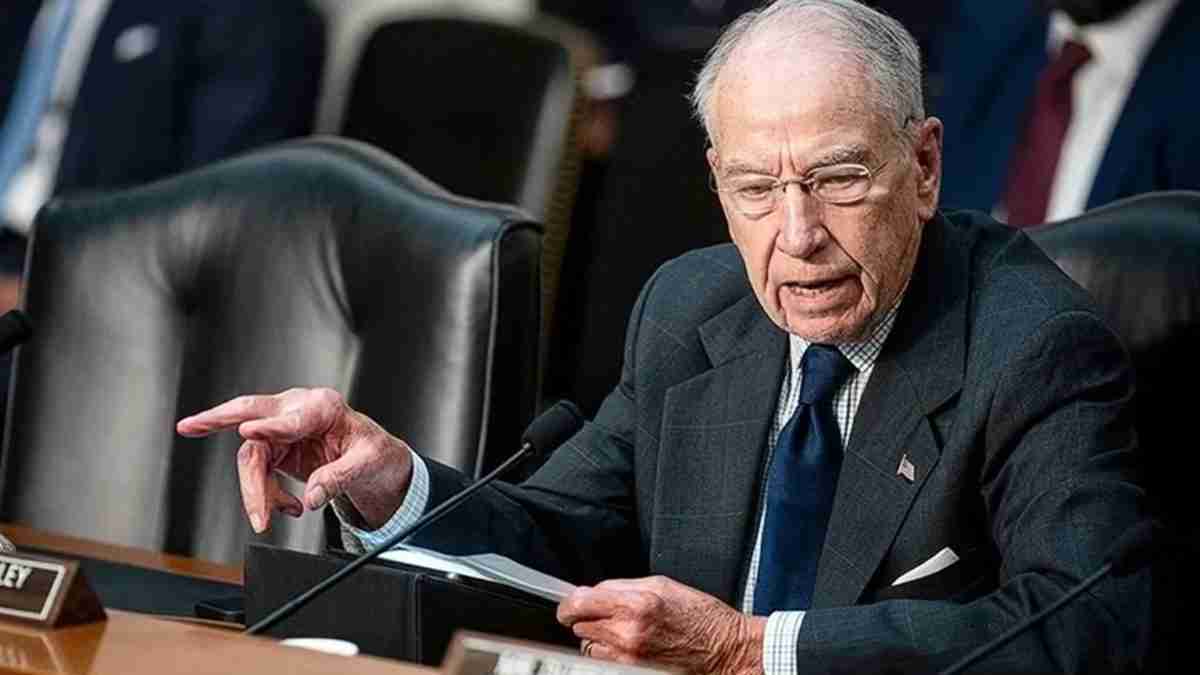
WASHINGTON, Sept. 17 (DC Times Online) — Unclassified FBI emails released by Senate Judiciary Chairman Chuck Grassley show that a former agent repeatedly sought a role in the bureau’s Crossfire Hurricane investigation in 2017 and that another former agent asked about opening a criminal investigation of Elon Musk in 2025.
The records do not show that either proposed line of inquiry resulted in criminal charges, a court case or a formally opened investigation of Musk. They also do not, by themselves, establish Grassley’s broader allegation that a “Deep State” network worked to undermine former President Donald Trump and Republicans.
Grassley, an Iowa Republican, presented the emails during a Senate Judiciary Committee oversight hearing with FBI Director Kash Patel. He described the records as evidence of political bias inside federal law enforcement and said, “That’s arguably worse than Watergate.”
What happened in 2017?
Walter Giardina, a former FBI agent, sent at least seven emails over about four weeks beginning in January 2017 seeking an assignment to Crossfire Hurricane, according to the committee’s released records and hearing statement.
Crossfire Hurricane was the FBI operation involving the 2016 Trump campaign. On Jan. 20, 2017, Giardina emailed FBI agent Joe Pientka: “I wanted to mention again my interest in joining the case.”
The emails also show Giardina offering what he described as a new angle involving campaign fundraising. The records described by the committee indicate that the proposed line of inquiry did not advance.
The emails document Giardina’s requests and ideas. They do not establish that he was assigned to the investigation, that his proposed fundraising inquiry became a formal case or that his actions amounted to misconduct. The released material also does not include a court filing, criminal charge or judicial finding involving Giardina.
What did the 2025 email about Musk say?
In February 2025, former FBI agent Kevin Gounaud sent an email seeking a criminal investigation of Musk, according to the records released by the committee.
Gounaud’s stated concern involved Musk’s proposal that federal employees report five things they had accomplished at work. Gounaud questioned the use of X, formerly known as Twitter, to communicate information he said might have been for official purposes. He also raised possible federal security-policy issues connected to the reporting request.
In the email, Gounaud wrote, “And no, I’m not kidding.”
The records do not establish that the FBI opened, rejected or acted on a criminal investigation of Musk. They also do not show that Musk was charged with a crime. The supplied records contain no response from Musk, the FBI or the Justice Department about the proposed inquiry.
What is Grassley alleging?
Grassley argues that the emails reflect a pattern of politically motivated case selection inside the FBI and Justice Department. In his hearing statement, he characterized the records as evidence of “overall sustained efforts by the Deep State in the dark corners of the bureaucracy” against Trump and Republicans.
That is Grassley’s interpretation of the documents, not an independently established finding. The material released by the committee does not itself prove that the FBI or Justice Department operated as part of a coordinated “Deep State” effort.
The committee statement also references other FBI officials and records, including former agents Timothy Thibault and Michael DeLauro. But the supplied material does not provide a complete inventory of the released emails, their full redaction history or the broader context of every communication.
What remains unresolved?
The emails provide evidence that former FBI personnel proposed or sought involvement in investigations. They do not answer several basic questions about what happened next: whether supervisors approved the requests, whether the FBI investigated the underlying allegations, or why particular proposals were accepted or declined.
No court, judge, case number, charging document, arrest record or adjudication is identified in the released material described by the committee. The supplied records also do not include responses from Giardina, Gounaud, Pientka, Thibault, the FBI or the Justice Department.
As a result, the documents are relevant to congressional oversight of investigative decision-making, but they do not establish criminal liability or wrongdoing by the people named in them.



