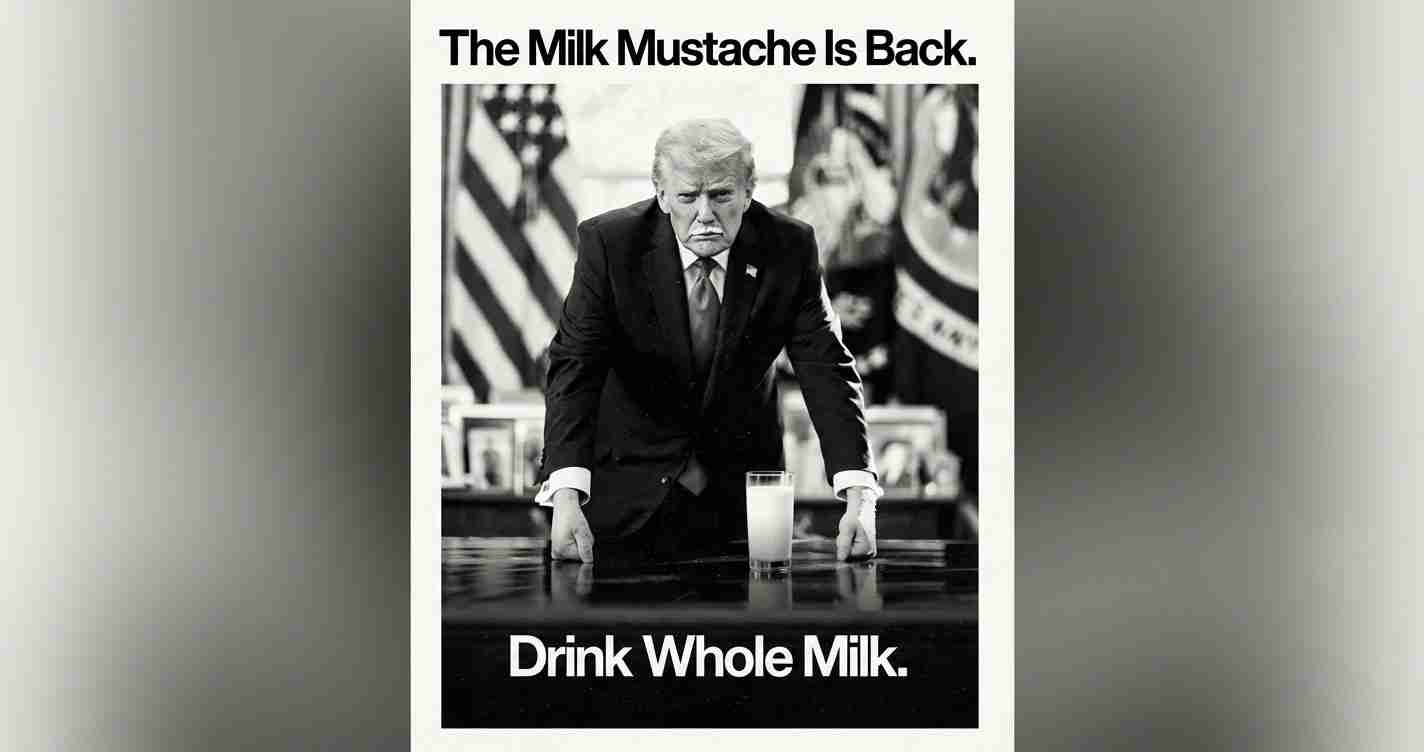
Trump signs Whole Milk for Healthy Kids Act, reversing school milk rules and expanding choices
President Trump signed the Whole Milk for Healthy Kids Act on January 14, 2026, allowing schools to offer whole and 2% milk, expand access to nutritionally equivalent plant‑based alternatives, and require staff allergy training nationwide.
- Law enacted: Whole Milk for Healthy Kids Act (signed January 14, 2026) — FoodBev
- Main change: Schools in the National School Lunch Program may offer whole and 2% milk in addition to fat‑free and low‑fat options — FoodBev
- Plant‑based access & allergy training: Nutritionally equivalent dairy‑free alternatives may be served without physician notes; the bill includes the Protecting Children with Food Allergies Act — DTN/The Progressive Farmer
What the law changes about milk in schools
The Whole Milk for Healthy Kids Act reverses a long‑standing restriction from the Healthy, Hunger‑Free Kids Act that had effectively limited school milk to fat‑free or low‑fat varieties. Under the new law, districts participating in the National School Lunch Program (NSLP) may offer whole milk and 2% milk alongside the previously allowed options.
The law does not remove fat‑free or low‑fat milk from menus; rather, it gives school nutrition directors the option to expand offerings. The USDA began issuing implementation guidance and signaled fast‑track rulemaking so districts can act quickly.
Plant‑based milk access and allergy protections
A notable component of the act affects dairy‑free milk alternatives. Schools may now serve plant‑based beverages that meet a nutritional equivalency standard without requiring a written physician’s statement for non‑disability reasons. Parents and guardians — not only licensed physicians — can submit notes to secure access to non‑dairy milk for their children. State notification rules for non‑dairy beverages are relaxed as well (FoodBev).
The legislation bundles the Protecting Children with Food Allergies Act, which requires school food service staff to receive training on preventing, recognizing and responding to allergic reactions. Supporters say the training will reduce emergency incidents and make expanded milk choices safer for students with allergies (DTN/The Progressive Farmer).
How the law aligns with federal dietary guidance
The change follows the Dietary Guidelines for Americans 2025–2030, which reintroduced full‑fat dairy as an acceptable part of healthy eating for some age groups. USDA officials said the law and the new guidance are compatible and directed agencies to update Child Nutrition Programs. The USDA issued immediate guidance and began rulemaking (USDA press release), and regional reporting highlighted the move (Oklahoma Farm Report).
Support, rationale and reactions
The bill drew bipartisan backing in Congress and support from a range of organizations. Dairy groups praised the law as a win for children and farmers. Dennis Rodenbaugh, president and CEO of Dairy Farmers of America, said:
“Common sense has prevailed with Congress and the Senate recognising the importance of giving kids access to more complete nutrient‑rich and delicious beverage options that support growth and overall health.” — FoodBev
Some lawmakers framed the change as correcting a flawed assumption about whole milk and childhood obesity. House Education and the Workforce Committee Chairman Tim Walberg said the link between whole milk and obesity “is deeply flawed” (House Education and the Workforce Committee).
The Plant Based Foods Institute endorsed the measure on grounds of choice; Executive Director Sanah Baig said students should have beverage options that match family preferences (FoodBev).
Animal Welfare and lactose‑intolerance advocates also weighed in. Wayne Pacelle of Animal Wellness Action highlighted access concerns for lactose‑intolerant students — estimating roughly 40% of children in the lunch program show some degree of lactose intolerance — and warned prior rules forced many children to choose between discomfort or no drink (DTN/The Progressive Farmer).
Signing ceremony and federal implementation steps
The January 14 signing included senior officials and stakeholders: U.S. Secretary of Agriculture Brooke L. Rollins, HHS Secretary Robert F. Kennedy Jr., USDA National Nutrition Advisor Dr. Ben Carson, dairy farmers, parents and bipartisan members of Congress attended. The USDA announced plans to rewrite child nutrition program rules and launched outreach encouraging whole milk consumption (Oklahoma Farm Report; DTN/The Progressive Farmer).
Administrative next steps: USDA will issue detailed rules and guidance for school food authorities on procurement, portion sizes and nutrition equivalency standards for plant‑based milks. Local districts will decide how quickly to add whole or 2% milk to cafeteria lines based on budgets, supplier contracts and student demand (USDA).
Areas of debate to watch
- Nutrition outcomes: Will adding whole milk affect calorie intake or obesity trends? Research is mixed; federal guidance now treats full‑fat dairy as acceptable in moderation (USDA).
- Cost and procurement: Whole milk supply chains and pricing vary by region; some districts may face higher costs or need new vendor contracts (Oklahoma Farm Report).
- Allergy safety and training: Effectiveness of the new allergy training depends on resources and consistent implementation at the district level (DTN/The Progressive Farmer).
- Equity and access: Will lower‑income districts be able to offer expanded choices, or will options differ widely across communities?
Implications for the United States
Economic: The law is expected to benefit American dairy farmers by expanding demand for whole and 2% milk in institutional markets. Dairy groups frame the change as support for rural economies; school districts will weigh procurement costs and potential equipment or supplier changes (FoodBev; Oklahoma Farm Report).
Political: For a moderate conservative audience, the law underscores parental choice, local control and regulatory rollback, and signals bipartisan willingness to revisit prior nutrition rules. Expect debates in state and local school boards as districts set milk‑offering policies (House Education and the Workforce Committee).
Social: Expanded choices may ease access for students who are lactose intolerant by simplifying access to nutritionally equivalent plant‑based options. The allergy training provision could reduce emergency incidents in cafeterias, though public‑health experts will monitor childhood nutrition metrics (DTN/The Progressive Farmer; FoodBev).
Practical applications for families and schools
Parents can now request non‑dairy milk for children without a physician’s note. School nutrition directors have new flexibility to offer whole milk and 2% milk. Districts should expect forthcoming USDA guidance and begin planning for procurement, menu updates and staff allergy training under the new law (FoodBev; USDA).
Sources
- FoodBev: President Trump signs Whole Milk for Healthy Kids Act into law
- DTN/The Progressive Farmer: President Trump signs Whole Milk Act
- USDA press release: Whole milk back — President Trump signs Whole Milk for Healthy Kids Act
- Oklahoma Farm Report: Whole milk is back
- House Education and the Workforce Committee: Statement