
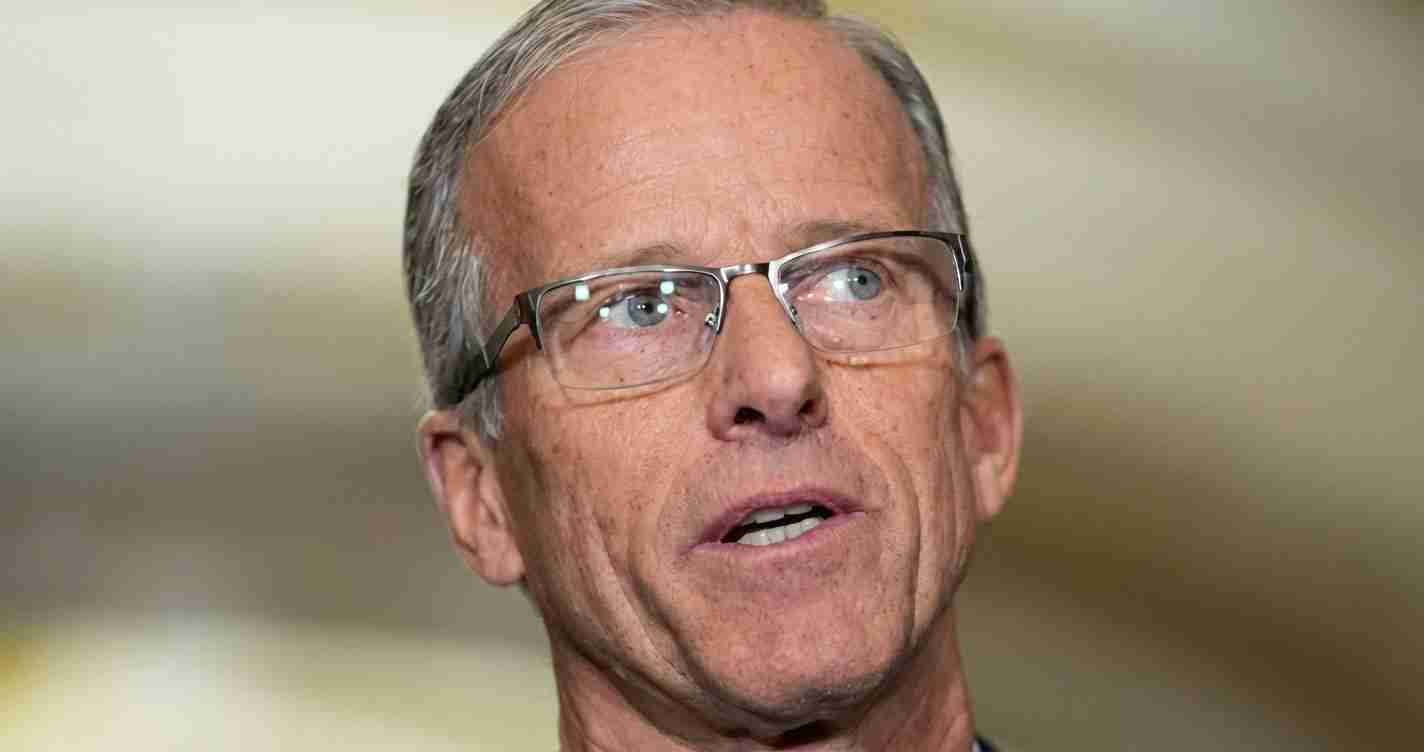
Thune Pushes SAVE America Act to Senate Floor, Forces Democrats to Defend Opposition on Voter ID and Citizenship Rules
Senate Majority Leader John Thune is pushing the SAVE America Act to the Senate floor with 50 GOP backers to force votes on voter ID and citizenship verification, framing the move as a test for Democrats ahead of the midterms.
Key takeaways
- 50 Republican backers: Senate GOP leaders say 50 Senate Republicans support bringing the bill to the floor to compel public votes ((Source: Fox News)).
- House passage: The bill passed the House on Feb. 11, 2026, and would require proof of U.S. citizenship to register and a photo ID to vote ((Source: VoteBeat)).
- Database matching: The measure would direct states to screen voter rolls against DHS’s SAVE database to identify noncitizens ((Source: VoteBeat)).
- Filibuster barrier: With the 60-vote cloture norm, the bill likely cannot clear a filibuster without Democratic defections or rule changes ((Sources: Fox News; VoteBeat)).
Main content
Why Thune is forcing the vote
Senate Majority Leader John Thune says the goal is to put Democrats on the record. While campaigning in South Dakota he told reporters that a Senate floor vote “will make sure that everybody’s on the record,” adding that if senators oppose measures to “ensure that only American citizens vote” they will have to defend that in campaigns. Thune frames the move as both a political test and messaging opportunity ahead of midterms. (Fox News).
GOP strategy and political theatre
Republican strategists view the floor push as political theater with concrete policy aims. Forcing clear votes on election security and immigration allows GOP senators to contrast positions with Democrats and use the results in campaign messaging. Thune and other Republicans are also highlighting recent legislative wins as candidates prepare for primaries and the general election. (Fox News).
What’s in the SAVE America Act
- Proof of citizenship to register: The bill would require proof of U.S. citizenship to register to vote (VoteBeat).
- Photo ID at the polls: It would impose photo ID requirements for in-person voting (VoteBeat).
- Use of DHS SAVE database: States would be directed to check voter rolls against the Department of Homeland Security’s SAVE (Systematic Alien Verification for Entitlements) system to identify noncitizens (VoteBeat).
Supporters argue these provisions protect election integrity and ensure only citizens vote. Opponents counter that the rules would create new barriers—particularly for low-income, elderly, and minority voters—and warn that matching state rolls to federal immigration databases could produce false positives without robust appeals processes. (Fox News; VoteBeat).
Filibuster math and procedural hurdles
GOP leaders say they have the votes to bring the bill to the floor for debate. However, Senate procedure typically requires 60 votes to invoke cloture and end debate on most legislation. With 50 Republican backers, the SAVE America Act lacks the usual 60-vote threshold, making final passage unlikely unless Democrats break ranks or rules change. Thune acknowledged politically charged amendments could complicate the bill’s path and force vulnerable senators into difficult votes. (Fox News; VoteBeat).
Practical concerns from election officials
Election administrators warn of implementation challenges. Only three states currently require proof of citizenship for new registrations, and 27 states lack photo ID rules. Officials say nationwide proof-of-citizenship checks and photo ID systems would be costly, time-consuming, and technically complex. They also caution that the SAVE system was designed for immigration and benefit checks—not voter roll verification—raising the risk of inaccurate hits and wrongful removals absent strong appeal mechanisms. (VoteBeat).
Political framing and midterm implications
For Republicans, the debate is both policy and politics. Thune’s push forces public votes that draw contrasts on election security and citizenship. For Democrats, opposing the bill allows positioning as defenders of voting access and highlights the risks of ID and registration hurdles. The timing is critical: with the midterms approaching, both parties see messaging advantages tied to how the issue plays in key states.
Implications for United States
Economic impact: Implementing nationwide checks and ID systems would carry substantial state costs—upgrades, staffing, and outreach—to avoid disenfranchisement. (VoteBeat)
Political consequences: The filibuster remains the key structural barrier. A Senate failure would still leave Republicans with a campaign issue; a surprising procedural win would face further political friction en route to final enactment. (Fox News)
Social effects: ID and citizenship rules could alter who can readily register and vote—critics warn disproportionate impacts on low-income, elderly, and minority voters; supporters say the measures would bolster confidence in elections. (VoteBeat)
Practical applications: States would need funding, technical upgrades, clear procedures for mismatches, and accessible options for IDs or citizenship proof to prevent eligible voters from facing barriers. (VoteBeat)
Quote
“We will make sure that everybody’s on the record, and if they want to be against ensuring that only American citizens vote in our elections, they can defend that when they have to go out and campaign against Republicans this fall,” — Sen. John Thune (Fox News).



