
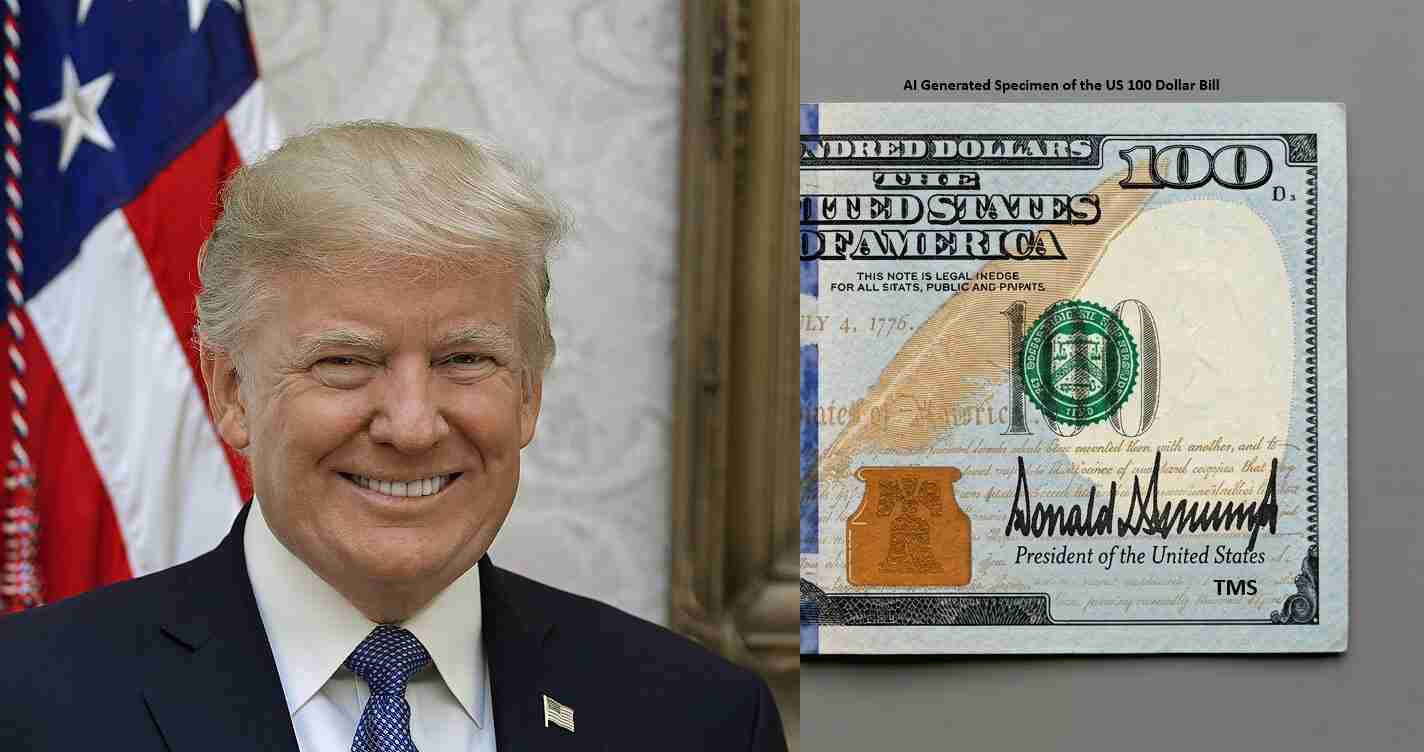
Treasury says Trump’s signature will appear on U.S. bills for 250th anniversary — a first for a sitting president
The U.S. Treasury announced on March 26, 2026, that President Donald Trump’s signature will appear on future paper currency to mark the nation’s 250th anniversary, a first for a sitting president and part of a commemorative rollout.
Key takeaways
- Historic first: A sitting president’s signature — President Trump’s — will appear on U.S. paper currency for the semiquincentennial.
- Signatures changed: Notes will carry President Trump’s signature alongside Treasury Secretary Scott Bessent, replacing the treasurer’s signature for the first time in 165 years.
- Phased rollout: The Bureau of Engraving and Printing is expected to start producing $100 notes with the new signatures in June; other denominations will follow.
- Legal framing: Officials say a signature does not violate prohibitions on living persons appearing on circulating currency because it is not an image of the individual.
What the Treasury announced
Treasury Secretary Scott Bessent framed the decision as a tribute to the nation’s semiquincentennial and to what he described as the administration’s economic achievements. In a statement reported by media outlets, Bessent called the change “a powerful way to recognize the historic achievements of our great country and President Donald J. Trump.” Fox17 covered the statement and the Treasury announcement.
Signature details and production
Treasury said the signature block on new paper currency will show President Trump’s signature alongside Treasury Secretary Scott Bessent’s signature, replacing the Treasurer of the United States’ signature on newly produced notes — a change not seen in 165 years.
The Bureau of Engraving and Printing, which prints paper money, is currently producing notes that carry the signatures of former Treasury Secretary Janet Yellen and Treasurer Lynn Malerba. Reports say the first $100 notes with the new signatures are slated for production in June, with other denominations phased in later, though some details remain unconfirmed. Coverage and reporting on these timelines are available from ABC News.
Statements from other officials
Treasurer Brandon Beach, appointed in 2025, praised the move, saying placing Trump’s signature on U.S. currency is “not only appropriate, but also well-deserved,” and credited the president with contributing to what he described as “America’s Golden Age economic revival.” Fox17 reported the treasurer’s remarks.
Legal and historical context
Historically, circulating U.S. currency has displayed the signatures of the secretary of the treasury and the treasurer of the United States. Federal law generally prohibits living persons from appearing on circulating currency to avoid the appearance of political favoritism. Treasury officials and legal advisers told reporters the change — placing a sitting president’s signature rather than an image on paper currency — does not violate those restrictions. The administration treats the step as a commemorative measure tied to the 250th anniversary. See coverage by ABC News for more detail.
What is and is not changing
- Will change: New notes will show President Trump’s signature alongside Treasury Secretary Scott Bessent, replacing the treasurer’s signature on newly produced bills.
- Will not change (for now): Portraits and principal design elements of bills remain the same; existing plates with previous signatures continue in production until new plates are issued.
Production and rollout questions
News reports indicate the Bureau plans to begin producing $100 bills with the Trump and Bessent signatures in June, with other denominations to follow. Officials have not provided a full schedule for all denominations or exact circulation timelines. The Treasury has been asked for further comment as details are clarified; reporting on the announcement was published March 26, 2026, and includes coverage from ABC News.
Coins and related efforts
The announcement coincides with separate moves to authorize coins bearing President Trump’s image. A federal arts panel approved a design for a commemorative 24‑karat gold coin based on a White House photo. Federal law restricts living presidents from appearing on regular circulating coins, but exemptions exist for commemorative issues; agencies are navigating those rules for both coins and special currency. See ABC News for reporting.
Press coverage and responses
Media coverage highlighted both support and criticism. Supporters call it a deserved honor tied to the semiquincentennial; critics say it blurs the line between state symbols and the political interests of a sitting leader. Reporters reached out to the Treasury for clarification as rollout specifics were still being sorted by outlets including ABC News and Fox17.
Implications for the United States
Economic impact
Putting President Trump’s signature on currency is largely symbolic, though symbolism can influence markets and confidence. Supporters argue it signals a focus on economic strength and may reinforce narratives of “lasting dollar dominance.” Practically, the dollar’s value depends on policy, trade, and interest rates rather than signatures on bills. See reporting from ABC News.
Political consequences
The move is likely to deepen partisan debate. Conservatives may view it as patriotic recognition; critics may see it as mixing the presidency with national icons during an active term. Opponents may argue it confers political advantage by placing a sitting president’s name on widely used instruments, while supporters emphasize the anniversary context.
Social effects
Currency reaches every American daily; reactions will range from pride to perceptions of politicization. The Treasury’s communications and the timing of the rollout will shape public response, which is expected to play out across workplaces and social media.
Cultural relevance
As part of semiquincentennial observances, the step ties a living presidency to a major national milestone. For some, it honors tradition and national pride; for others, it raises questions about separating personal political legacy from national emblems.
Practical effects for daily life
Most Americans will not see immediate changes. New bills will be phased into circulation alongside existing currency. Banks, cash-handling businesses, and the Federal Reserve will adapt over time. Collectors and souvenir buyers may show heightened interest in early-issue bills and commemorative coins. The Bureau of Engraving and Printing’s production schedule will determine circulation speed.
Reporting notes and sources
This report is based on the Treasury announcement and media coverage published March 26, 2026. Key reporting sources include ABC News and Fox17. Journalists reached out to the Treasury Department for further comment as production and timeline details remain under clarification.
“A powerful way to recognize the historic achievements of our great country and President Donald J. Trump.” — Treasury Secretary Scott Bessent (as reported by Fox17)
Note: The Treasury’s announcement and subsequent reporting reflect ongoing developments; officials have indicated additional details and timing will be clarified as production proceeds.



