
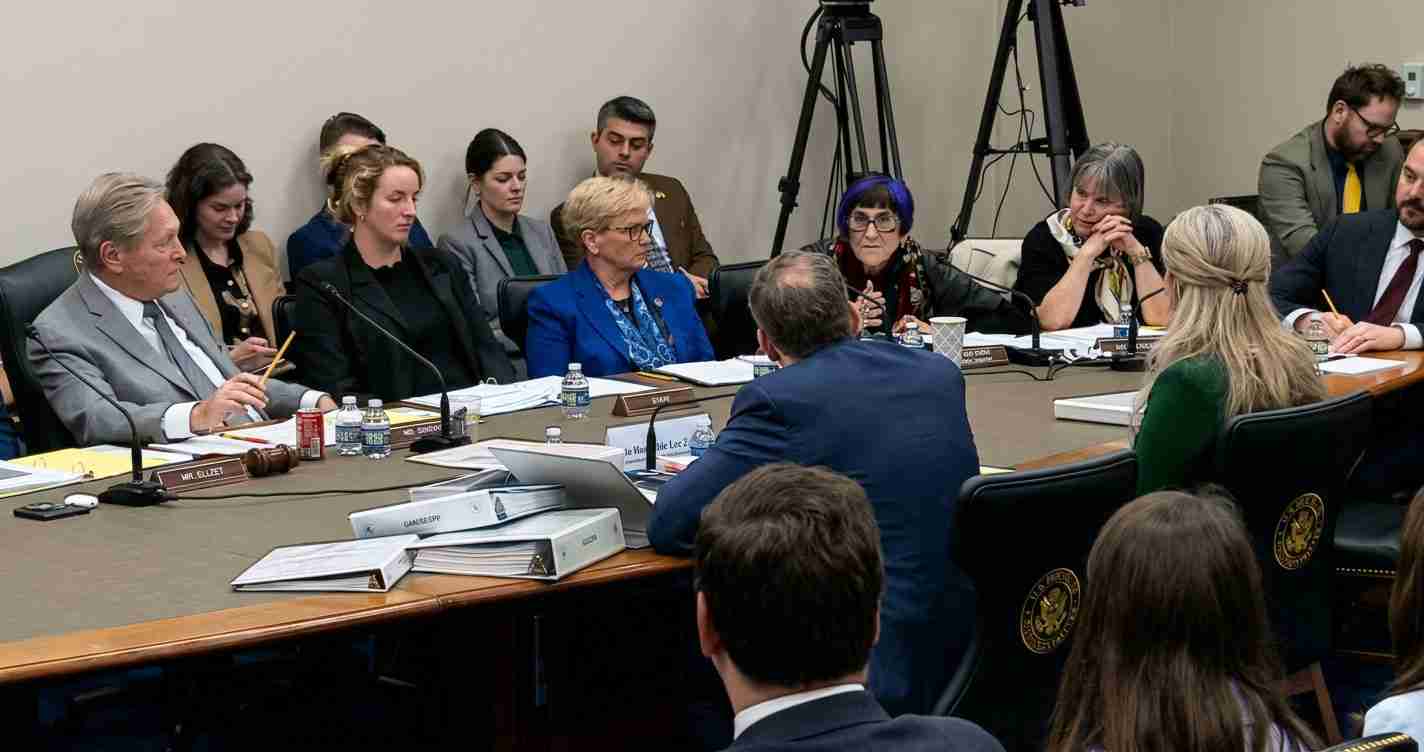
DeLauro and EPA’s Lee Zeldin clash over climate, agency power and Loper Bright during heated budget hearing
A heated House Appropriations hearing turned confrontational as Rep. Rosa DeLauro and EPA Administrator Lee Zeldin sparred over the EPA’s proposed 2027 budget, climate language, and the effect of Supreme Court rulings like Loper Bright.
- DeLauro accused the EPA budget of downplaying climate risks and protecting polluters — see the video of the hearing.
- Zeldin cited legal limits on agency action, invoking Loper Bright and the major questions doctrine to argue the EPA’s power is constrained (additional hearing footage and reporting).
- The exchange went viral after clips spread online and Zeldin discussed the hearing on cable television (Fox News reporting and Zeldin’s TV appearance).
- The larger stakes include funding for air and water programs, legal uncertainty after Chevron and Loper Bright, and political fights over regulatory scope.
What happened at the hearing
Rep. Rosa DeLauro, the top Democrat on the House Appropriations Committee, repeatedly pressed Administrator Lee Zeldin about language in the EPA’s 2027 budget request. She said the proposal “reads like a climate change denier’s manifesto” and asked how the agency could justify scaling back protections as Americans face flooding, poor air quality and rising health costs. The exchange is documented in the video of the hearing, which shows DeLauro demanding that the EPA explain its framing and confirm the agency’s duty to protect public health and the environment.
Zeldin pushed back, arguing that what the EPA can do depends on statutory authority and recent Supreme Court rulings. At one point he referenced Loper Bright and the major questions doctrine and challenged DeLauro’s familiarity with those precedents:
“You’re upset that you don’t know what Loper Bright is. You’re a member of Congress. You should know.”
Video and coverage of the exchange capture the tense tone and moments when speakers talked over one another (additional hearing footage).
The legal issues Zeldin raised
Zeldin framed part of his defense around two legal developments that have reshaped administrative law: the narrowing of Chevron deference through cases like Loper Bright Enterprises v. Raimondo (2024) and the expanded use of the major questions doctrine after cases such as West Virginia v. EPA. He argued these shifts require clearer congressional directives for sweeping regulatory action and limit the EPA’s ability to rely on broad statutory interpretations. The administration’s position is visible in the hearing footage and subsequent media coverage (hearing footage; reporting linked below).
What each side says about the budget
Democrats and the Biden-era EPA say the agency’s core mission is to protect public health and the environment. DeLauro characterized the proposed cuts as a retreat from that mission and highlighted climate impacts—flooding, air pollution and rising healthcare costs—warning that cuts would put Americans at greater risk (hearing video).
The administration’s response, as relayed by Zeldin, frames the budget as a recalibration in light of legal limits and a focus on reducing perceived regulatory overreach. Zeldin said the proposed cuts reflect the need to adjust agency activities to the post-Loper Bright legal landscape and the statutory boundaries that Congress sets (coverage cited below).
Reactions and the viral moment
Short clips of the hearing were widely shared online. Conservative commentators praised Zeldin for pressing legal doctrine and for what some described as “stumping” a senior Democrat; Fox News coverage amplified that response (Fox News reporting and video segment). Democrats and environmental advocates countered that the clips missed the larger point: the EPA’s mission to protect people from pollution and climate harms would be undercut by the budget and rhetoric.
What the record shows and what remains unclear
Available video and reporting document the exchange and the sharp tone between DeLauro and Zeldin. They also show Zeldin grounding part of his defense in recent legal decisions that have changed how courts treat agency power (hearing video; additional footage).
What is not yet clear is how the budget debate will resolve: committee hearings are the opening of a long appropriations process. No immediate changes to the budget request or later statements from DeLauro addressing Zeldin’s comments appeared in the sources reviewed.
Context: Loper Bright and agency power
Loper Bright Enterprises v. Raimondo (2024) narrowed the role of judicial deference to agency interpretations of ambiguous statutes by limiting Chevron deference. Coupled with the major questions doctrine—under which courts demand clear congressional authorization for agency actions of vast economic or political significance—these developments have reduced agencies’ interpretive leeway and shifted more questions to courts and Congress.
Where the story goes next
The hearing was part of the rollout of the EPA’s 2027 budget request. If pursued in its current form, the request requires congressional action to become law. Lawmakers will continue to debate funding levels and the agency’s role, and the legal landscape Zeldin cited will shape what the EPA can do absent new or clearer statutory authority from Congress.
Implications for United States
- Economic and regulatory balance: A constrained EPA could mean fewer industry rules; supporters say cuts may lower business costs, critics warn of increased pollution and public-health harms.
- Legal and policy uncertainty: Loper Bright and the major questions doctrine increase pressure on Congress to craft clearer laws or cede more policy decisions to courts.
- Health and environment: Funding reductions could slow air and water programs, hazardous-waste cleanup, and emergency response—affecting communities facing floods, wildfires and pollution.
- Practical effects for communities: States may need to fill gaps, producing uneven protections and higher local costs; businesses could face more legal uncertainty.
Sources and raw material
- Fox News reporting on the exchange: Fox News reporting on the exchange
- Hearing video clip (primary source): video of the hearing
- Additional hearing footage: additional hearing footage
- Zeldin’s later TV appearance on The Ingraham Angle: Zeldin’s appearance on The Ingraham Angle
- Fox News video segment: Fox News video segment
Reporting draws from the hearing video and contemporary news coverage of the event. No additional statements from Rep. DeLauro beyond the hearing transcript were available in the cited sources.



