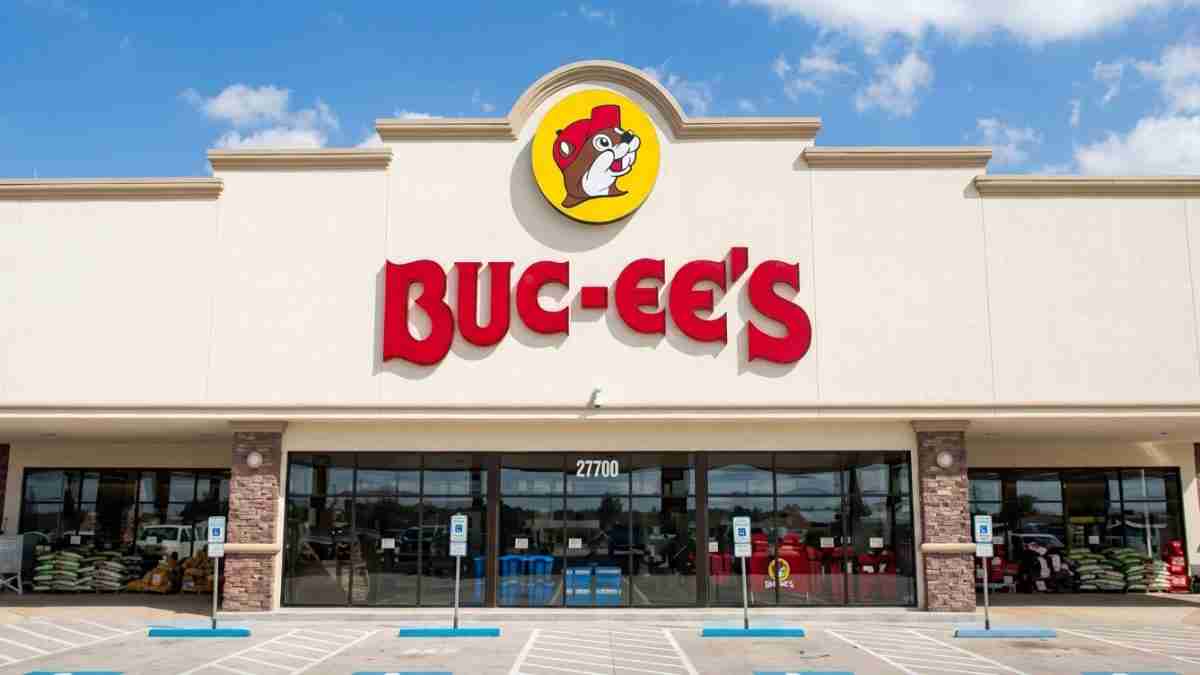
LAKE JACKSON, Texas, Aug. 25 (Our Texas Times) — Buc-ee’s is weighing political leadership and local support as it chooses where to build new stores, the Texas-based travel-center chain’s co-founder and CEO said at an Aug. 17 grand opening in Arkansas.
Arch “Beaver” Aplin III said the company is seeking states with conservative, business-friendly leadership and strong workforces. He also said he is becoming less willing to build in places where residents or elected officials do not value what Buc-ee’s brings.
The remarks suggest a preference in Buc-ee’s expansion strategy. They do not amount to a formal announcement that the company will stop building in Democratic-led, or “blue,” states.
What did the CEO say?
Aplin made the comments at the opening of Buc-ee’s store in Benton, Arkansas. Arkansas Gov. Sarah Huckabee Sanders shared video of his remarks.
“We have a lot of opportunities,” Aplin said. “We’re growing. We’re building in a lot of places, but when you find a conservative, business-friendly state with a phenomenal workforce, it makes a difference.”
He said the company’s preferred approach works best when support for business and family-oriented policies extends from state leaders to local officials.
Aplin contrasted Benton with places where the company’s projects may face less support. “I’m starting to realize life’s too short to try to build in places that people don’t appreciate what you’re bringing versus a place like this, where people do appreciate what you’re building,” he said.
Sanders praised the comments in a public statement, saying Aplin had “put it best” when he described the importance of being appreciated by the communities where Buc-ee’s builds.
Where is Buc-ee’s expanding?
Buc-ee’s had 58 locations when the Benton store opened, according to the company’s website. Thirty-seven of those stores were in Texas, according to location information cited in coverage of the opening.
The company is also planning projects outside its home state. Buc-ee’s location information, as reported by USA Today, lists first stores in Louisiana, Kansas and Wisconsin by the end of 2027. Other planned projects are listed in Tennessee, Florida, Georgia, North Carolina, Kentucky, South Carolina and Arkansas, with opening dates ranging from 2027 to 2031 and later.
Those projects are planned openings, not completed transactions. The available information does not establish the expected cost of each store, the number of jobs involved, the amount of tax revenue expected or whether every listed project has received final local approval.
The company’s growth has already taken it beyond Texas. Reported openings include locations in Colorado, Virginia, Ohio and Arizona. However, the available records do not provide a complete, independently verified operating history or a companywide financial forecast.
What could the strategy mean for communities and workers?
For communities seeking a Buc-ee’s, the CEO’s comments indicate that local and state officials’ support may be part of the company’s decision-making. A new travel center can affect construction work, permanent retail and food-service jobs, traffic, nearby businesses and local tax collections. The supplied company and public statements do not quantify those effects for the planned locations.
Workers could see new job opportunities in states where Buc-ee’s builds. Customers could gain another large-format travel center, known for fuel, food, retail goods and restrooms. At the same time, communities that do not fit the company’s preferred political or business environment could face greater uncertainty about whether Buc-ee’s will pursue a project there.
For Texas, the strategy matters because the state remains the center of Buc-ee’s operations. Most of the company’s locations were in Texas at the time of the Benton opening, and the chain’s expansion decisions are being made by a company founded and based there.
Is Buc-ee’s abandoning blue states?
Not based on the CEO’s remarks alone. Aplin described a preference for states and communities that are conservative, business-friendly and supportive of the company. He also said Buc-ee’s is “building in a lot of places.”
The statements do not identify specific states that Buc-ee’s has rejected, cancel existing projects or establish a political test for every future store. They also do not include a financial target, a change to the company’s ownership structure or a formal expansion policy.
The clearest business takeaway is that Buc-ee’s plans to keep growing while placing more emphasis on the relationship between company leaders and the public officials who approve, support or host new developments. How that preference affects the chain’s store count, costs and pace of expansion remains to be determined.