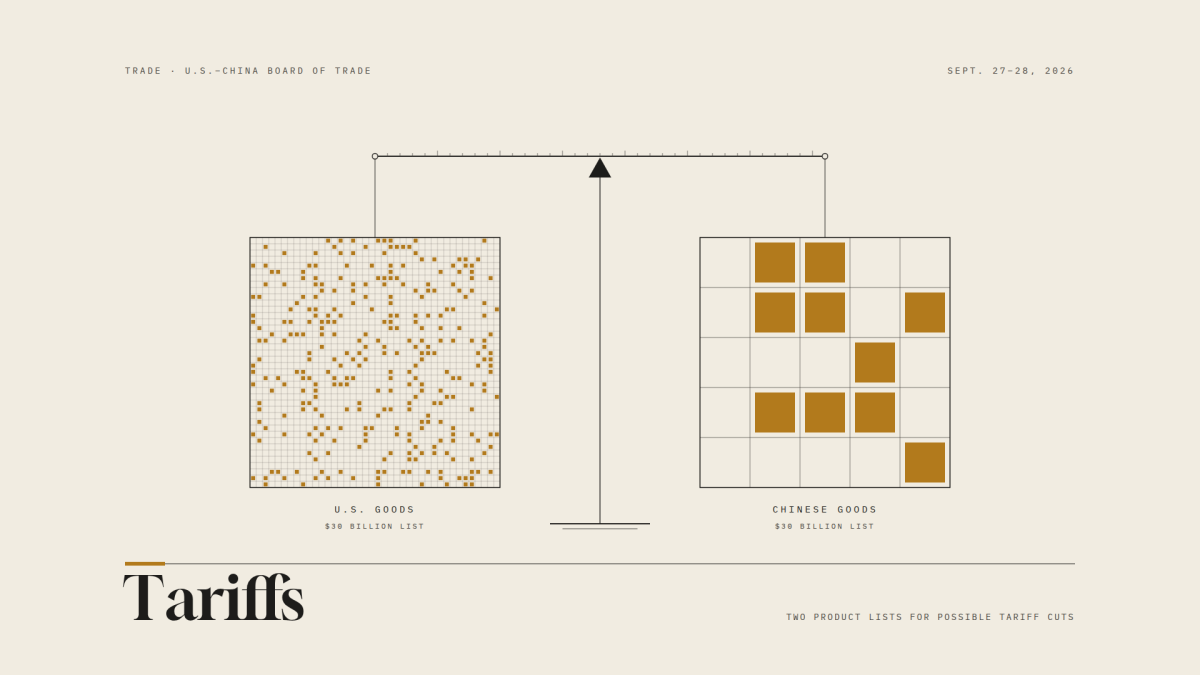
WASHINGTON, Sept. 29 (Nationwide Times) — The United States and China have identified about $30 billion in goods flowing each way for possible tariff relief, a step that could affect farmers, manufacturers and importers. It is not a tariff cut yet: The White House described the plan as a set of recommendations, and neither government has announced final rates or an effective date.
The lists, released after a summit between Presidents Donald Trump and Xi Jinping, cover 1,619 categories of U.S. goods entering China and 77 categories of Chinese goods entering the United States. U.S. products include farm goods, timber, medical equipment and coal. The Chinese list includes fireworks and Christmas ornaments.
The $30 billion figure describes the approximate value of goods proposed for more favorable treatment in each direction, not the amount businesses would save. Without final tariff rates and rules on which products qualify, exporters and importers cannot calculate the financial effect.
U.S. Trade Representative Jamieson Greer said the recommendations focus on nonsensitive goods that could receive better tariff treatment. He said U.S. farmers, manufacturers, businesses, workers and consumers could benefit. China’s Ministry of Commerce said the two sides would discuss a reciprocal framework and aim to reach a consensus. It said tariff rates on more than 90% of the products would be subject to most-favored-nation levels, a standard tariff treatment for trading partners.
The two governments’ descriptions mark a step in trade talks, but they leave a distinction for businesses making plans: Publication of a product list does not mean a lower duty is in force. The final rates, eligibility rules and start date will determine which sellers and buyers see a change in costs.