
Hakeem Jeffries unleashes personal attack on Karoline Leavitt, calls her “sick” and a “stone cold liar”
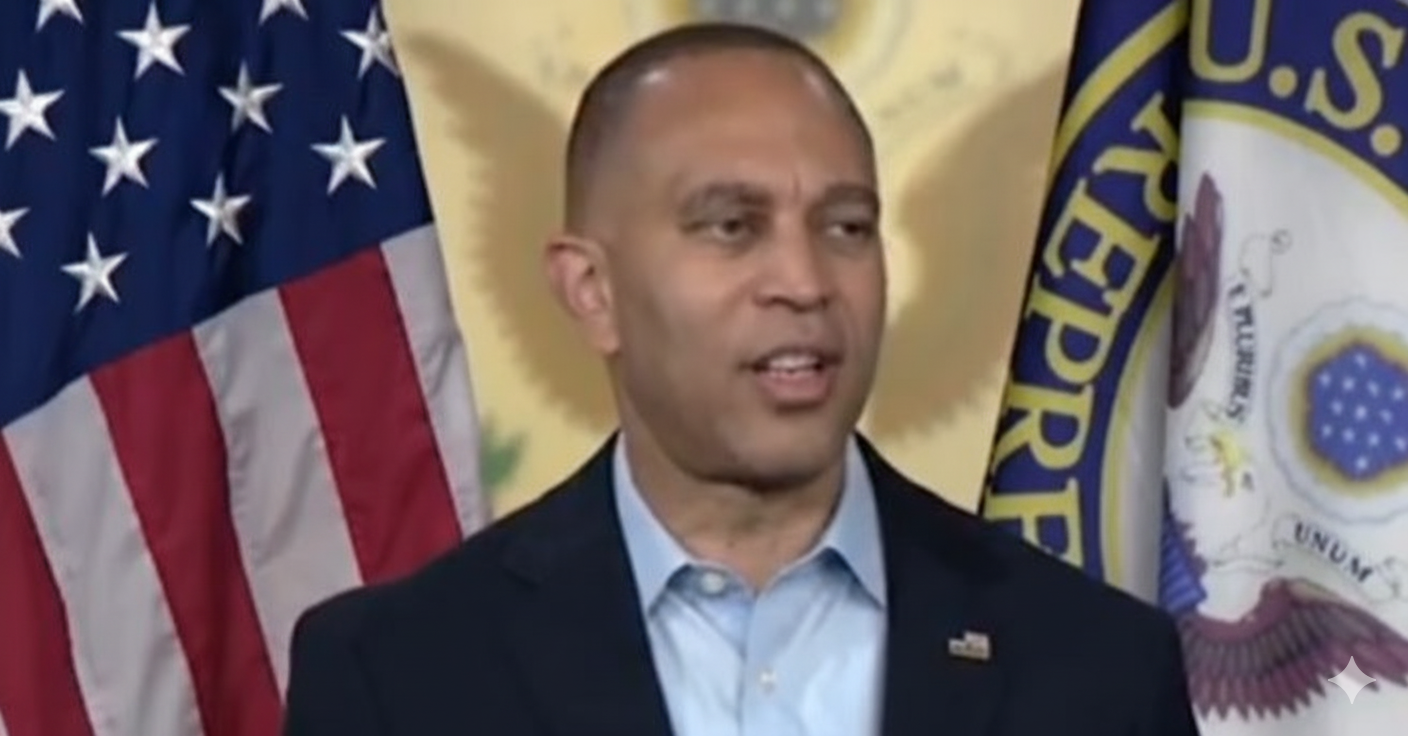
House Minority Leader Hakeem Jeffries rebuked White House Press Secretary Karoline Leavitt at a Washington press conference on Oct. 17, 2025, calling her “sick” and a “stone cold liar” after she accused Democrats of aligning with terrorists and criminals.
- Jeffries publicly attacked Karoline Leavitt, calling her “sick,” “demented,” “out of control,” and a “stone cold liar” after her Fox News comments linking Democrats to violent actors.
- Video and reporting of the exchange circulated online and were cited by multiple outlets, intensifying partisan debate amid a partial government shutdown.
- Coverage split across outlets: progressive sites emphasized Jeffries’ rebuttal, conservative outlets criticized the tone while reproducing the confrontation.
What happened at the press conference
At a packed Washington, D.C., press conference on Oct. 17, 2025, House Minority Leader Hakeem Jeffries sharply rebuked White House Press Secretary Karoline Leavitt for her recent television remarks. Jeffries said:
“You got Karoline Leavitt, who’s sick—she’s out of control. I’m not sure whether she’s just demented, ignorant, stone-cold liar, or all of the above.”
The exchange was recorded and has circulated online. For primary footage, see the Video of Jeffries’ press conference.
Context: Leavitt’s Fox News comments
Jeffries framed his remarks as a direct response to Leavitt’s Fox News interview, during which she said the Democratic Party’s “main constituency” included “Hamas terrorists, illegal aliens, and violent criminals.” Jeffries called those claims baseless and inflammatory, questioning why a senior White House messenger would make such statements while parts of the federal government remained closed.
Reporting and excerpts of Leavitt’s comments were published by multiple outlets, including the Daily Kos report and an aggregation by AOL.
How outlets covered the exchange
News and opinion sites across the political spectrum picked up the story. Progressive outlets highlighted Jeffries’ forceful rebuttal and portrayed Leavitt’s comments as part of a broader pattern of right-wing rhetoric. Conservative outlets criticized Jeffries for using personal insults against a White House official while reproducing the sharp language he used.
Examples of coverage include the Daily Kos report, Western Journal coverage, and an AOL summary.
Jeffries’ broader criticisms at the press conference
Beyond targeting Leavitt, Jeffries used the moment to denounce what he called a “surge in racist hate speech from the right”. He referenced unrelated controversies, including reports about racist messages among youth groups, to underline that inflammatory rhetoric has tangible social consequences.
Jeffries tied those trends to the government shutdown, arguing that destructive language from high levels of government heightens tensions during an already fraught political moment.
Reactions from lawmakers and media
Reactions were mixed. Some Democrats backed Jeffries’ condemnation of Leavitt’s comments as irresponsible. Some Republicans and conservative commentators criticized Jeffries for name-calling and urged civility, arguing that personal attacks undercut serious debate. Coverage appeared across outlets with differing editorial slants.
What’s missing in the public record
At the time of reporting, there was no direct, on-the-record reply from Karoline Leavitt to Jeffries’ press conference. Public records include Leavitt’s Fox News comments, Jeffries’ press remarks, and partisan coverage, but no follow-up statement from Leavitt responding specifically to the rebuke.
Implications: politics, economy, society and culture
Economic impact: The exchange adds to political drama surrounding the government shutdown. Sharp rhetoric can hinder compromise and prolong a shutdown, risking pay interruptions for federal workers and disruptions to public services.
Political consequences: The spat could deepen partisan divides ahead of upcoming elections and pressure lawmakers to respond more forcefully, possibly reducing space for bipartisan deals.
Social effects: Heated language from high-level officials can normalize extreme talk and encourage similar rhetoric at lower levels of politics and on social media, raising concerns about safety and civic norms.
Cultural relevance: The confrontation feeds a broader cultural argument about civility and standards for public officials: some view Jeffries’ rebuke as necessary pushback, others see it as lowering the bar for public discourse.
Practical guidance for citizens
- Voters and local leaders should monitor how national rhetoric affects policy outcomes, especially regarding the shutdown.
- Federal workers and contractors should track congressional negotiations and relief options.
- Communities experiencing spikes in hateful speech may consider strengthening local dialogue, reporting threats, and promoting civic programs to reduce polarization.
Evidence and sources
- Video of Jeffries’ press conference
- Daily Kos report, Oct. 17, 2025
- Western Journal coverage
- AOL summary
Reporting note
This article is based on a recorded press conference and contemporaneous coverage available at the time of publication. Primary sources include the video and reporting from the Daily Kos report, Western Journal coverage, and AOL.



