
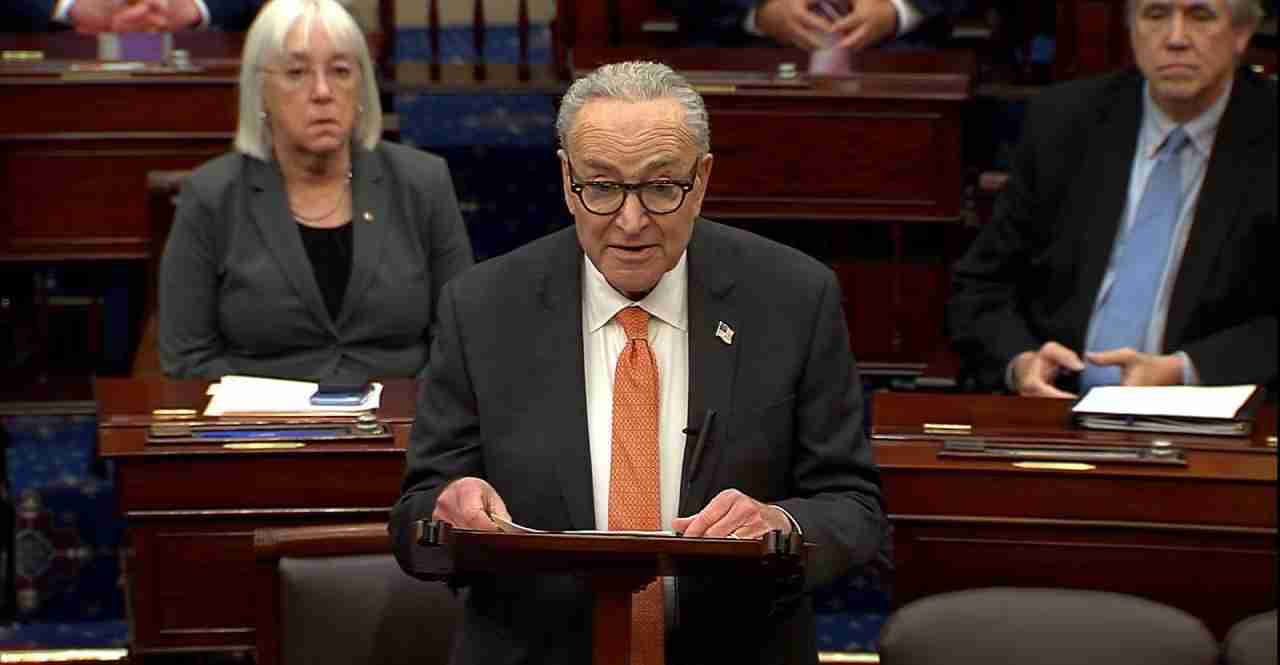
Schumer urges GOP to “just say yes” to one-year ACA subsidy extension to head off shutdown, warns of steep Obamacare premium spikes
Facing a potential government shutdown, Senate Majority Leader Chuck Schumer proposed a one-year extension of enhanced ACA subsidies to prevent steep premium increases and protect millions’ access to affordable marketplace coverage as budget talks continue.
- Short-term fix: Schumer asks Republicans to approve a clean, 12-month extension of enhanced Affordable Care Act premium tax credits to avoid premium spikes and coverage losses.
- Big numbers at stake: Analysts estimate average annual premiums could rise from about $888 today to roughly $1,904 in 2026 if enhanced subsidies lapse.
- Political standoff: Republicans resist a standalone extension without offsets; Democrats say the measure is narrowly tailored to prevent immediate consumer harm.
- Undocumented gap remains: The proposal would not expand eligibility to undocumented immigrants, who remain barred from marketplace plans under federal law.
What Schumer is proposing
Schumer’s office is pressing for a “clean” one-year extension of the enhanced premium tax credits that were raised under the American Rescue Plan and later extended by the Inflation Reduction Act. The stated goal: pair a 12-month subsidy extension with a continuing resolution to keep the government open while lawmakers resume long-term health and fiscal negotiations. Schumer has publicly urged GOP senators to
“just say yes”
to avoid immediate premium hikes and coverage losses. Schumer’s office
Why Democrats frame it as urgent
Democrats describe the extension as a narrowly focused, practical step to prevent sudden consumer cost shocks. Analyses from the Kaiser Family Foundation and the Congressional Budget Office show enhanced subsidies cut premiums and boost enrollment; letting them expire would sharply raise out-of-pocket costs for many middle-income and older enrollees who benefited from relief since 2021.
Republican response and fiscal concerns
GOP negotiators have pushed back on a standalone extension that increases federal spending without offsets or broader spending discipline. Some Republicans seek trade-offs, policy changes, or spending cuts tied to any funding measure — a stance that raises the odds of a funding lapse if neither side yields. (Reporting: Politico, The Hill; analyses: CBO.)
The numbers: how large could the premium increases be?
Analysts point to stark projections if enhanced subsidies expire:
- Current average annual premium payments for many subsidized enrollees: about $888.
- Projected average annual premium without enhanced subsidies in 2026: about $1,904 — more than double the current level.
Those averages mask variation: older enrollees and certain middle‑income households would face larger absolute increases. State marketplaces and insurers warn of market instability, reduced enrollment, and higher premiums across individual markets if subsidies lapse. (KFF; CBO.)
Who would be affected
The extension targets marketplace enrollees who currently benefit from enhanced premium tax credits. Most affected groups include:
- Low- and middle-income families buying coverage on ACA marketplaces who receive premium tax credits.
- Older marketplace enrollees, who have higher baseline premiums and therefore larger absolute increases when subsidies fall.
- States that saw enrollment increases during the enhanced-subsidy period, which could face enrollment declines and market instability.
What the data and policy experts say
The CBO, Kaiser Family Foundation, and the Center on Budget and Policy Priorities have modeled outcomes showing trade-offs: the extension raises federal costs in budgetary terms but prevents large, immediate financial shocks for households and potential market disruption.
The undocumented gap: who remains outside the fix
Schumer’s plan explicitly excludes undocumented immigrants. Federal law currently bars undocumented people from enrolling in ACA marketplace plans even if they could pay full price. Policy advocates warn this leaves a persistent access gap; safety-net providers and state programs continue to absorb uncompensated care burdens. (CBPP; Schumer’s office.)
Timeline and the government shutdown 2025 risk
Congress must pass stopgap funding to avoid a government shutdown in 2025. Schumer seeks to pair the subsidy extension with a continuing resolution; Republicans must decide whether to accept a clean, temporary subsidy fix or press for concessions. Failure to compromise could trigger a shutdown, disrupting federal services and adding uncertainty for insurers and enrollees. (CBO.)
Political stakes ahead of 2025 elections
Both parties see political peril. Democrats warn that lapsing subsidies would be immediately felt by voters facing higher premiums; Republicans worry about being blamed for blocking relief while defending fiscal restraint. The standoff tests whether a narrowly drawn, bipartisan short-term fix can bridge divides ahead of the 2025 campaign season. (Reporting: CNN, Politico, The Hill.)
Implications for Americans
Economic impact
Household budgets would be strained by higher monthly and annual premium payments if enhanced subsidies expire. Insurance markets could see enrollment drops, marketplace instability, and increases in uncompensated care that ripple through hospitals and employers. (KFF; CBO.)
Political consequences
Voters may hold lawmakers accountable for visible premium hikes; a bipartisan short-term subsidy deal could blunt fallout. Congressional dynamics will reflect whether health affordability can be separated from larger budget battles. (Schumer’s office.)
Social effects
Millions facing higher costs may drop coverage, increasing the uninsured rate and straining community health providers. Equity concerns are central: rural areas, older adults, and some minority communities with higher marketplace enrollment shares could be disproportionately affected. (KFF.)
Practical effects for everyday Americans
- Premium payments: Expect higher monthly bills without Congressional action; an extension preserves current cost-sharing caps for one year.
- Enrollment decisions: Shoppers may delay enrollment or choose lower-tier plans if subsidies lapse, risking underinsurance.
Policy gap left open
Even with a one-year extension, undocumented immigrants remain excluded under federal law, leaving safety-net providers and some state programs to cover gaps in care. (CBPP.)



