
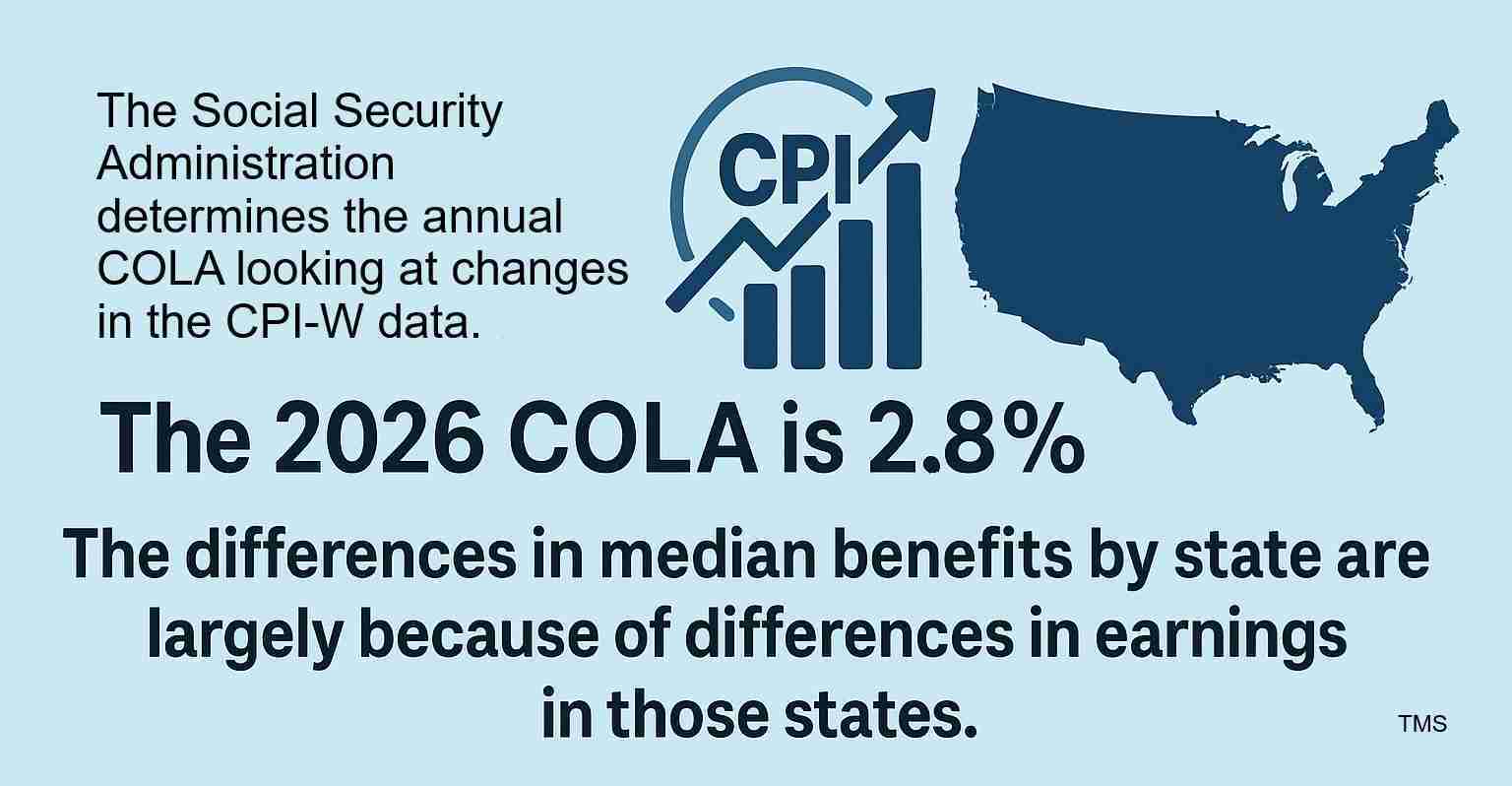
Social Security Announces 2.8% Benefit Increase for 2026, Boosting Monthly Checks for Nearly 71 Million Americans
The Social Security Administration has announced a 2.8% cost-of-living adjustment for 2026, raising average monthly payments by about $56 and affecting nearly 71 million Americans, with SSI increases effective Dec. 31, 2025 and other COLA-related thresholds.
Key takeaways
- COLA for 2026: 2.8% increase applied to OASDI benefits.
- Who’s affected: Nearly 71 million Social Security beneficiaries; ~7.5 million SSI recipients see higher payments.
- Timing: Social Security benefits effective January 2026; SSI payment standards effective December 31, 2025.
- Average impact: Roughly $56 more per month based on a July 2025 average benefit of $2,008.31.
What the 2.8% COLA means for beneficiaries
The 2.8% adjustment will be applied across Old-Age, Survivors, and Disability Insurance (OASDI) benefits, so nearly 71 million recipients should see higher monthly checks in January 2026. SSI recipients receive the new federal payment standards sooner — effective December 31, 2025 — affecting about 7.5 million people. For the SSA announcement, see the SSA announcement.
On average, beneficiaries will see about a $56 monthly increase—calculated by applying 2.8% to the July 2025 average benefit of $2,008.31. For many retirees on fixed incomes, even a modest rise helps with groceries, utilities, and medicine, though critics argue the COLA may not fully match seniors’ rising health care and housing costs. For the SSA blog discussion, see the SSA blog post.
How the SSA calculates the COLA — and the debate behind it
The COLA is based on the Consumer Price Index for Urban Wage Earners and Clerical Workers (CPI-W). SSA compares CPI-W values from the third quarter of two previous years to determine the annual increase. This long-used method draws criticism from some experts and advocacy groups who say CPI-W may understate costs that matter most to retirees, especially health care, long-term care, and housing. For SSA methodology details, see the SSA COLA page.
Critics favor senior-weighted alternatives such as the CPI-E, arguing it better reflects older adults’ spending patterns.
Advocates and researchers continue to debate whether switching indexes or changing weighting would better protect beneficiaries’ purchasing power; for commentary, see the Medicare Rights Center breakdown and analysis from the American Action Forum.
Other 2026 adjustments tied to the COLA
- Maximum taxable earnings: Rising to $184,500 in 2026 (from $176,100 in 2025), increasing the wage cap subject to Social Security payroll tax. See the SSA COLA page and the SSA blog post.
- Earnings limits for workers who continue working: Annual earnings limit for those under full retirement age rises to $24,480 (SSA withholds $1 for every $2 above the limit). For people reaching full retirement age in 2026 the limit is $65,160 (SSA withholds $1 for every $3 earned above until the month full retirement age is reached).
- SSI federal payment standards: Maximum monthly SSI payments for 2026 will be $994 (individual) and $1,491 (couple), effective December 31, 2025. See the SSA press release and the 2026 COLA factsheet.
Historical context: how 2026 fits recent trends
The 2.8% COLA is slightly above 2025’s increase of 2.5% and close to the decade average of 3.1%. This marks the fifth consecutive year with a COLA of at least 2.5%—a streak not seen since the 1990s. Steady, modest increases since 2021 have helped cushion inflation’s impact, though debate persists on whether the gains reflect seniors’ actual expense patterns. For background, see the SSA blog.
Policy implications and the fiscal picture
A larger COLA raises Social Security program costs and has federal budget implications. While a single-year 2.8% increase is modest, cumulative adjustments affect long-term solvency debates. Policymakers may consider options such as adjusting payroll tax rates, changing taxable earnings caps, or revising benefit formulas. Others emphasize protecting retirees’ incomes and reassessing how COLA is measured to better reflect seniors’ spending patterns. Analysis and commentary are available from the American Action Forum.
Medicare and other costs that affect seniors
Medicare Part B premiums for 2026 had not been finalized when SSA announced the COLA; early estimates suggested an average $21.50 increase, which could offset some COLA gains because premiums are often deducted from Social Security checks. Beneficiaries should await the Centers for Medicare & Medicaid Services (CMS) announcement to calculate net changes. For discussion, see the Medicare Rights Center.
State variation and who benefits most
The 2.8% rate is applied uniformly but dollar changes vary by state because average benefits differ. Some states will see larger average dollar increases if beneficiaries there receive higher average monthly checks. Demographics, lifetime earnings, and workforce patterns influence which states benefit most; for a state-by-state comparison see this state-by-state analysis.
Practical applications for beneficiaries
Beneficiaries should:
- Watch for personalized benefit notices from the SSA later this year.
- Workers who continue earning should review higher earnings limits and understand how additional wages could trigger benefit withholding.
- People on Medicare should wait for the CMS premium announcement to calculate their net monthly change since premiums can be deducted from Social Security checks.
Ongoing questions to watch
- Will policymakers revisit the CPI-W and consider a senior-weighted index like the CPI-E?
- How will final Medicare premium decisions for 2026 affect beneficiaries’ net income?
- Will lawmakers propose reforms to address long-term solvency while protecting current retirees?
Sources and where to find more information
- SSA press release
- SSA blog post
- SSA COLA page and 2026 COLA factsheet
- Medicare Rights Center breakdown
- American Action Forum analysis
- State-by-state comparison
Bottom line: The Social Security COLA for 2026 delivers a modest but meaningful boost—about $56 on average—to monthly benefits for roughly 71 million Americans, while prompting renewed discussion about how best to measure and protect seniors’ purchasing power.



