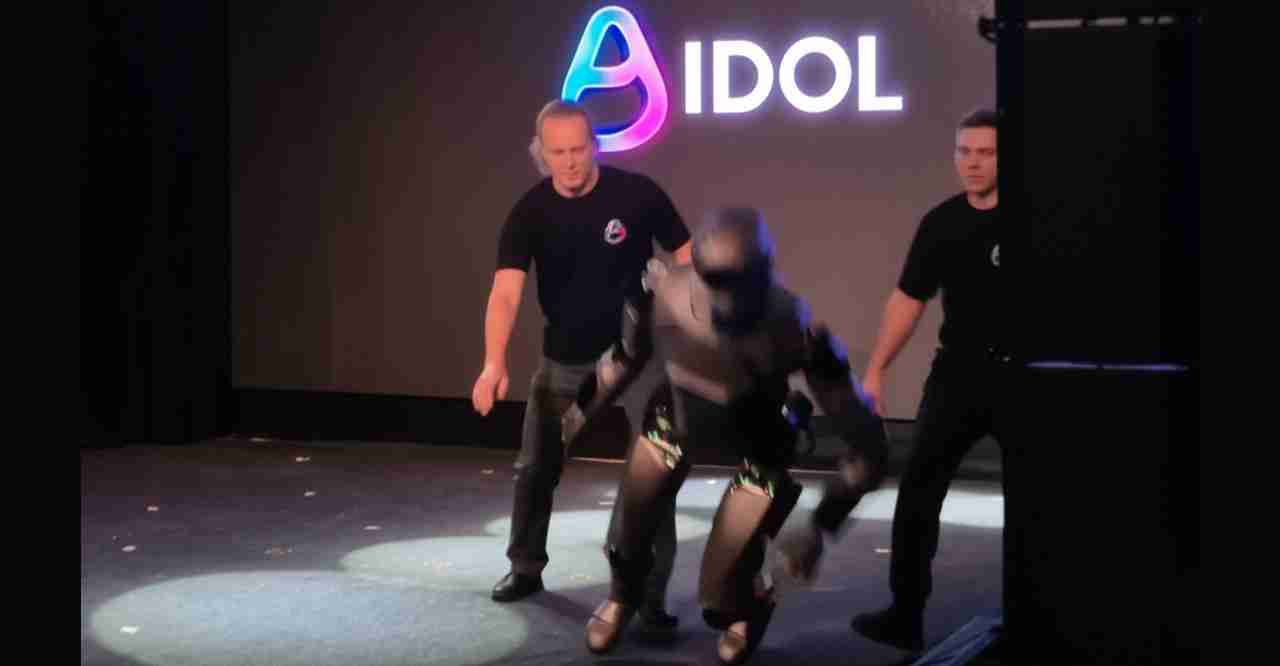
AIdol Robot Falls in Moscow: Russia’s First Humanoid Stumbles in Humiliating Debut
Lede: A highly publicized Moscow unveiling of AIdol, Russia’s first humanoid, became a viral spectacle when the robot fell face-first seconds after stepping onstage—raising questions about calibration, sensor interference and the nation’s robotics readiness and global ambitions.
Key takeaways
- AIdol fell seconds after debuting when attempting a greeting; staff quickly covered the robot while the presentation continued. Video
- Developers pointed to a calibration error in balance and motion-control systems and noted stage lighting may have interfered. Video
- The incident went viral and intensified discussion about the technical and systemic challenges facing Russia’s robotics ambitions. Fox Business clip
Main content
What happened on stage
At a major tech forum in Moscow, AIdol—a 1.7-meter humanoid robot presented as a showcase of Russian robotics—walked onto the stage and attempted a greeting gesture. Almost immediately, the machine leaned forward and fell face-first. Stage staff hurriedly placed a curtain over the device while the event went on and music reportedly played in the background. The clip was shared widely on social media and picked up by international outlets. Video Video
Developers’ explanation and technical context
Project developers described the mishap as a calibration error in the balance and motion-control software. They also cited heavy stage lights and the live environment as potential causes of sensor misreads. In post-event video statements the project CEO framed the incident as an educational moment:
“A good mistake becomes knowledge, and a bad mistake becomes experience.”
Balance and motion control remain among the hardest problems in humanoid robotics: small calibration errors, delays in sensor fusion, or misreads from cameras and lidar can turn a routine step into a fall. The team presented AIdol as an early-style service robot designed to walk, handle objects and interact with people in factories, warehouses, healthcare and entertainment—but the onstage tumble underscored how fragile those promises can be.
Experts and analysts: a reality check
Industry observers said the fall is a reminder of how difficult humanoid robotics remains even for projects with political backing. Humanoids must simultaneously balance, perceive uneven terrain and react to unexpected forces—tasks that require complex hardware and tightly integrated software. Analysts also pointed to systemic factors affecting Russia’s progress, including international sanctions, supply chain limits on advanced chips, and emigration of skilled engineers, all of which can slow development and make reliable production harder.
Global comparisons: the competition for robotic leadership
Countries and companies worldwide are racing to field practical humanoids. Japan and China have long strengths in robotics, while U.S. firms—ranging from startups to large companies—invest heavily in humanoid platforms. The global surge in investment since 2024 raised the stakes for national prestige. Public demos are often designed to signal capability; when they fail, they highlight the gap between aspiration and operational readiness. Video Video
Media coverage and public reaction
Footage of the fall circulated widely, drawing both mockery and technical analysis. Some commentators framed the incident as a public-relations setback for Russia’s AI ambitions; others used it to explain the difference between prototypes and dependable fielded systems. Russian outlets varied in tone—some emphasizing the quick response and learning potential—while international outlets highlighted the spectacle and compared it to other high-profile technology flops. Video Fox Business clip
Implications for the United States of America
Economic impact: The AIdol tumble highlights the competitive nature of global robotics. For U.S. firms it is a reminder that investment in reliable hardware, secure supply chains and rigorous testing matters. Companies that field robust, dependable robots can gain market share in manufacturing, logistics and care services.
Political and security consequences: A public stumble by a state-backed project can affect perceptions of Russian technological strength and may ease some near-term concerns about parity in advanced robotics. Experts warn against complacency: breakthroughs remain possible, and the U.S. should monitor developments while investing in resilient supply chains and talent retention.
Social and cultural effects: The viral fall shapes public perceptions of AI and automation, potentially reinforcing skepticism about premature deployment. For U.S. audiences it underscores that public demonstrations are not equivalent to field-ready systems and can fuel calls for measured policy.
Practical applications: The incident serves as a case study for rigorous testing and staged rollouts. U.S. companies and universities can use the episode to stress-test prototypes in controlled environments. Policymakers can cite the event in arguments for workforce retraining, domestic chip production, and standards for safe human-robot interaction.
Source links
- Video of the fall and presentation
- Additional footage and analysis
- U.S. media coverage clip (Fox Business)
Developers said the mishap will help refine balance and motion systems. For observers in the United States, the episode is a concrete example of the engineering challenges behind ambitious technology claims and a prompt to strengthen domestic capabilities in AI and robotics.