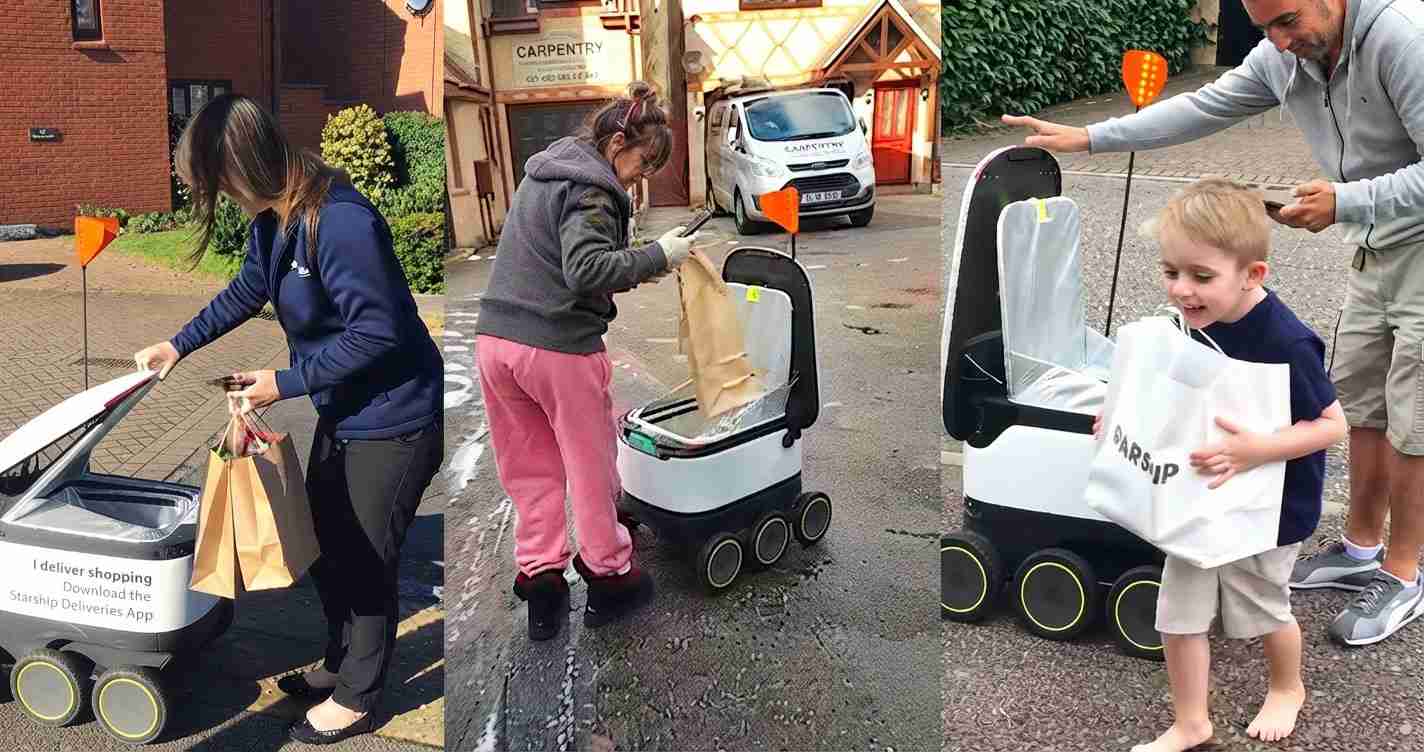
TALLINN, Estonia, July 7 (World Daily Times) — Starship Technologies is shifting more than 1,200 delivery robots away from U.S. university campus service and toward grocery and hot-food deliveries in cities across the United States and Europe.
The move is a good example of how delivery robots are being used in different settings. On campuses, robots usually handle short, predictable trips between dining halls, dorms, and nearby stores. In cities, the work is harder: the robots have to deal with more traffic, more people, and more varied delivery routes. Starship says that is where it sees the bigger business opportunity now.
What is changing?
Starship says it is winding down its U.S. campus robot operations while expanding grocery delivery and restaurant delivery in cities. The company says it has worked with university campuses and industry partners so service can continue through the 2026-2027 back-to-school season while the transition is managed.
Coverage of the company’s statement says the robots will be redeployed from campus work to grocery-chain and hot-food delivery. The company has not publicly named all of the campuses, grocery chains, or restaurant partners involved in the shift in the materials reviewed here.
Why move away from campuses?
Starship’s explanation is mostly about business fit.
According to the company, campus service is seasonal and contract-driven, while city grocery delivery is a year-round business that depends on different retail partnerships and different logistics. Starship has said its grocery delivery business is on a “10x growth trajectory” over the next two years, driven by demand from major retailers in the U.S. and Europe.
In other words, the company is betting that the same robot fleet can do more valuable work in urban retail delivery than on college campuses.
What does this mean for delivery robots?
The shift shows that autonomous delivery robots are moving from a test-like campus model into a broader retail delivery role.
That matters because campuses have been an easier place to deploy robots. Roads are usually simpler, speeds are lower, and the routes are more controlled. City delivery can offer more orders and more revenue, but it also brings more complexity. Starship says it is focusing on the type of service it believes can scale best in open urban environments.
What is still unclear?
A few details have not been fully spelled out in the public material reviewed here:
- Starship has not listed every campus that is affected.
- It has not named all of the grocery or restaurant partners that will receive the robots.
- The company has not provided independently verifiable data in the reviewed material to support its claim of 10x growth.
- It is not fully clear from the available reporting whether any campus operations outside the United States will continue.
So the broad change is clear: Starship is taking a large part of its campus fleet and using it for city deliveries instead. The company says that move matches where it sees the strongest demand and the best long-term growth.