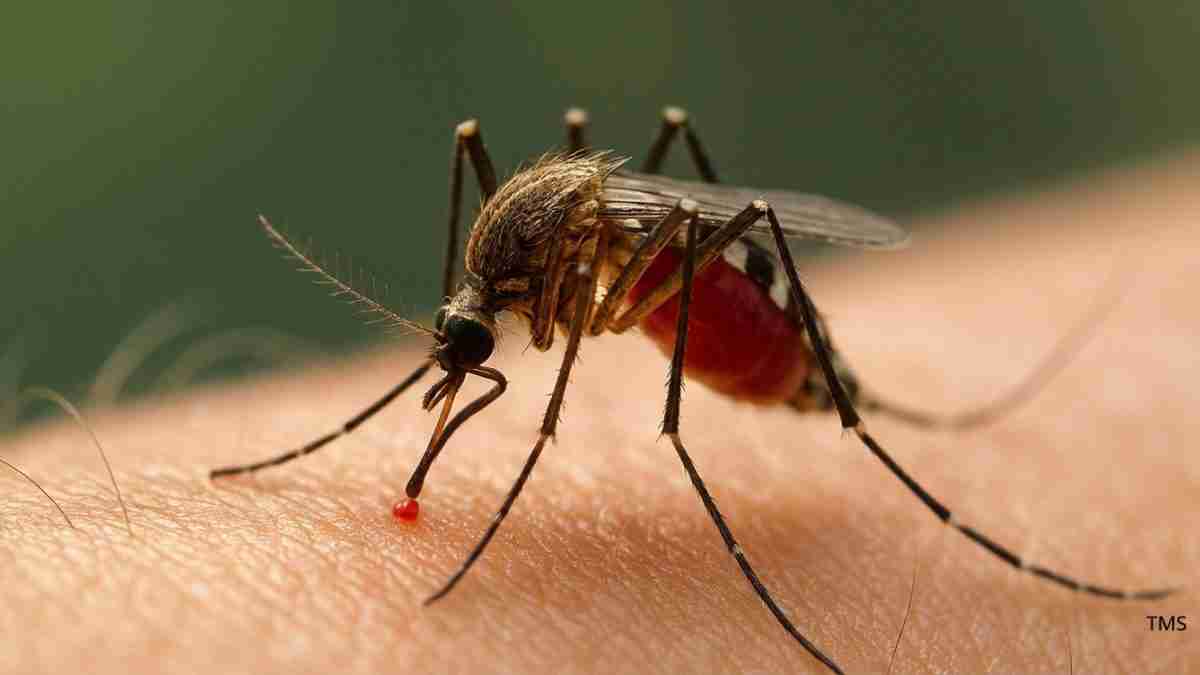
FRANKFURT AM MAIN, Germany, Aug. 28 (World Daily Times) — For people traveling through Frankfurt or living nearby, German public-health officials say the malaria cases among airport workers do not signal a broad community threat. The Frankfurt Public Health Department described the risk to the general population as very low or negligible and said malaria is not transmitted from person to person.
Six Frankfurt Airport employees became infected in cases described by Fraport, the airport operator, as “airport malaria.” Two workers died, according to the Frankfurt Health Department. Fraport said the other four recovered, although some reports described them as receiving or having received hospital treatment.
The incident is being investigated because officials believe an infected mosquito may have arrived on an aircraft from a malaria-affected region. That explanation remains unconfirmed.
Why officials think a mosquito arrived by plane
Malaria is caused by parasites and is usually spread through the bite of an infected Anopheles mosquito. Germany does not have sustained local malaria transmission, so investigators are looking for an imported source.
The Robert Koch Institute, Germany’s federal disease-control agency, and Frankfurt health officials consider an infected Anopheles mosquito brought into Germany by aircraft the likely source of the workers’ infections. The officials have not identified the flight, its origin or the specific mosquito involved.
The RKI initially confirmed four cases among airport workers. Its Epidemiological Bulletin said those workers fell ill between July 4 and 6, 2026. A sixth case was reported in mid-August, according to officials cited in reports about the investigation.
The timing and location of the workers’ exposure have not been established publicly. The supplied official information also does not identify the workers, their jobs or the airport areas where they may have encountered the insect.
What is being done at the airport?
Fraport said mosquito traps have been installed at Frankfurt Airport. Mosquitoes collected in the traps are expected to undergo genetic analysis at the Institute of Tropical Medicine in Antwerp, Belgium.
The testing is intended to identify the mosquitoes’ species and origin. Officials also are analyzing blood samples from affected workers. Those results could help determine whether the airport-borne mosquito theory fits the infections, but the suspected source has not yet been confirmed.
Frankfurt health authority head Peter Tinnemann said the mosquito involved was probably already dead, according to a statement reported about the investigation. That does not establish whether the insect was ever captured.
What does this mean for the public?
The Frankfurt Public Health Department said the risk to the wider population is negligible and that there is no likelihood of person-to-person spread. That means the cases do not, by themselves, indicate that travelers or residents can catch malaria through ordinary contact with an infected worker.
The suspected route is narrower: an infected mosquito may have entered the airport on an aircraft and later bitten workers. Whether that happened is still being tested. Until the mosquito and blood analyses are complete, officials cannot say with certainty where the infections originated.
The deaths show that malaria can be serious, but the number of cases and the risk to the general population are separate questions. In this incident, German officials have characterized the risk outside the affected workplace as very low or negligible.
The investigation follows an earlier airport-malaria case or outbreak at Frankfurt Airport in 2023, according to the RKI. The current testing is meant to clarify the source of the latest infections and help officials assess whether any further airport measures are needed.