BASEL, Switzerland, July 19 (World Daily Times) — A tiny robot developed at the University of Basel could one day help dentists prepare teeth for crowns faster, but it is still a laboratory prototype. For now, the main takeaway for patients is simple: standard crown care is still the norm, and the robot has not been tested in people in the sources available.
What is MIR?
The device is called MIR, short for Miniature Intraoral Robot. The research team at the University of Basel’s Department of Biomedical Engineering says it was built to help with tooth preparation, the step where a dentist reshapes part of a tooth before placing a crown.
A crown is a cap that covers a damaged or weakened tooth. Today, that process often takes more than one appointment. The Basel researchers say MIR could eventually make some of that work faster and may reduce the number of visits needed.
How small is it?
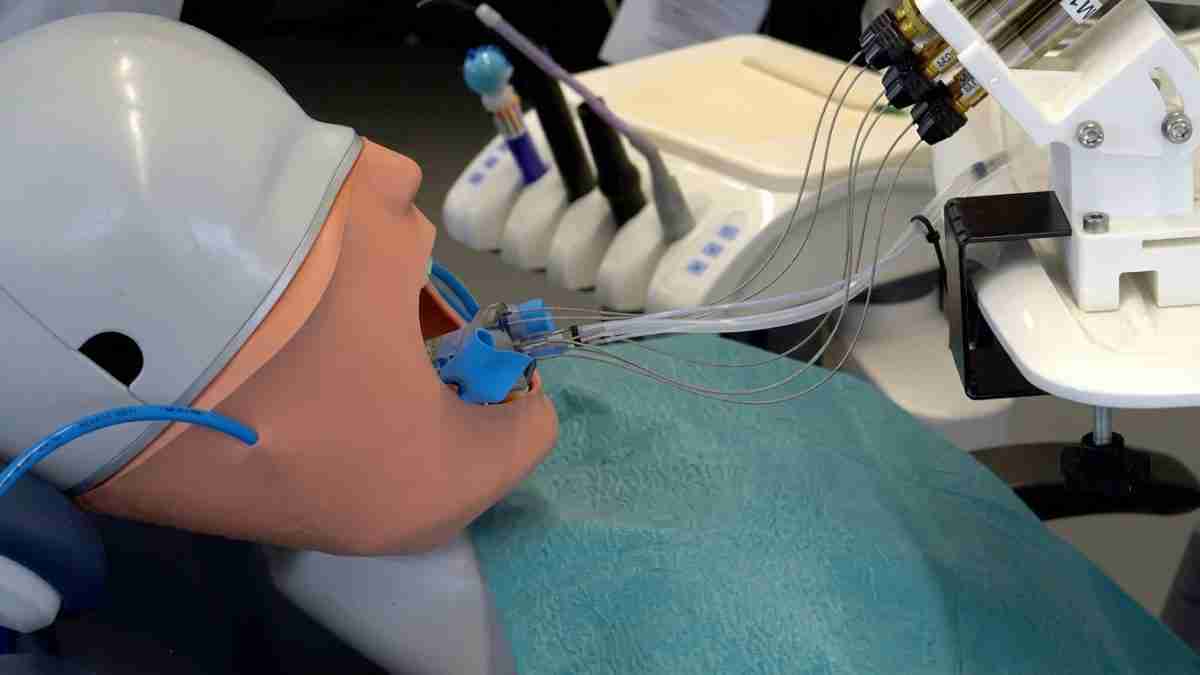
The prototype is about the size of a wine cork, measuring 43 by 26 by 28 millimeters, according to the University of Basel researchers and the paper published in IEEE Transactions on Medical Robotics and Bionics.
The robot is designed to sit on a custom dental splint made from a patient’s scan. In the setup described by the researchers, the motors and control systems stay outside the mouth, while flexible shafts, cables and tubes connect them to the tiny robot inside the mouth.
What would a visit look like if it ever becomes clinical?
The researchers say the goal is to streamline crown preparation. In the workflow described in the paper, a dentist would first scan the tooth, digitally plan the crown preparation, and order the crown right away. If that approach worked in real care, it could potentially avoid a second appointment.
That part is still hypothetical. The sources do not describe any patient treatment, clinic trial or regulatory clearance.
How well did it work in testing?
In laboratory tests, the robot was used on synthetic resin tooth models and on a ceramic material with hardness similar to tooth enamel, according to the study and the University of Basel team.
The researchers reported a positional error of less than 0.2 millimeters. They also said drilling forces stayed below 5 newtons. One of the reports compared that force with the weight of about a half-liter bottle of water.
The current version does not yet have sensors that directly measure or correct its position, the researchers said.
What still needs to happen?
Professor Georg Rauter, the research group leader, said the next step is to add sensors and a camera so MIR can monitor its position and treatment progress, including after a power outage. The team wants to do that without making the robot larger.
Dr. Yukiko Tomooka, the paper’s first author, said the robot is designed to be small enough to fit comfortably into an open mouth.
Should patients expect this soon?
Not yet. Based on the sources available, MIR is still an early-stage prototype. It has been tested in lab settings, not in patients. The available reporting does not show that the device is ready for dental practice.
For now, the practical meaning is limited: if the robot works as intended in future studies, it could help make crown preparation quicker and possibly reduce the number of visits. Until then, it remains a promising piece of engineering rather than a treatment patients can request today.