
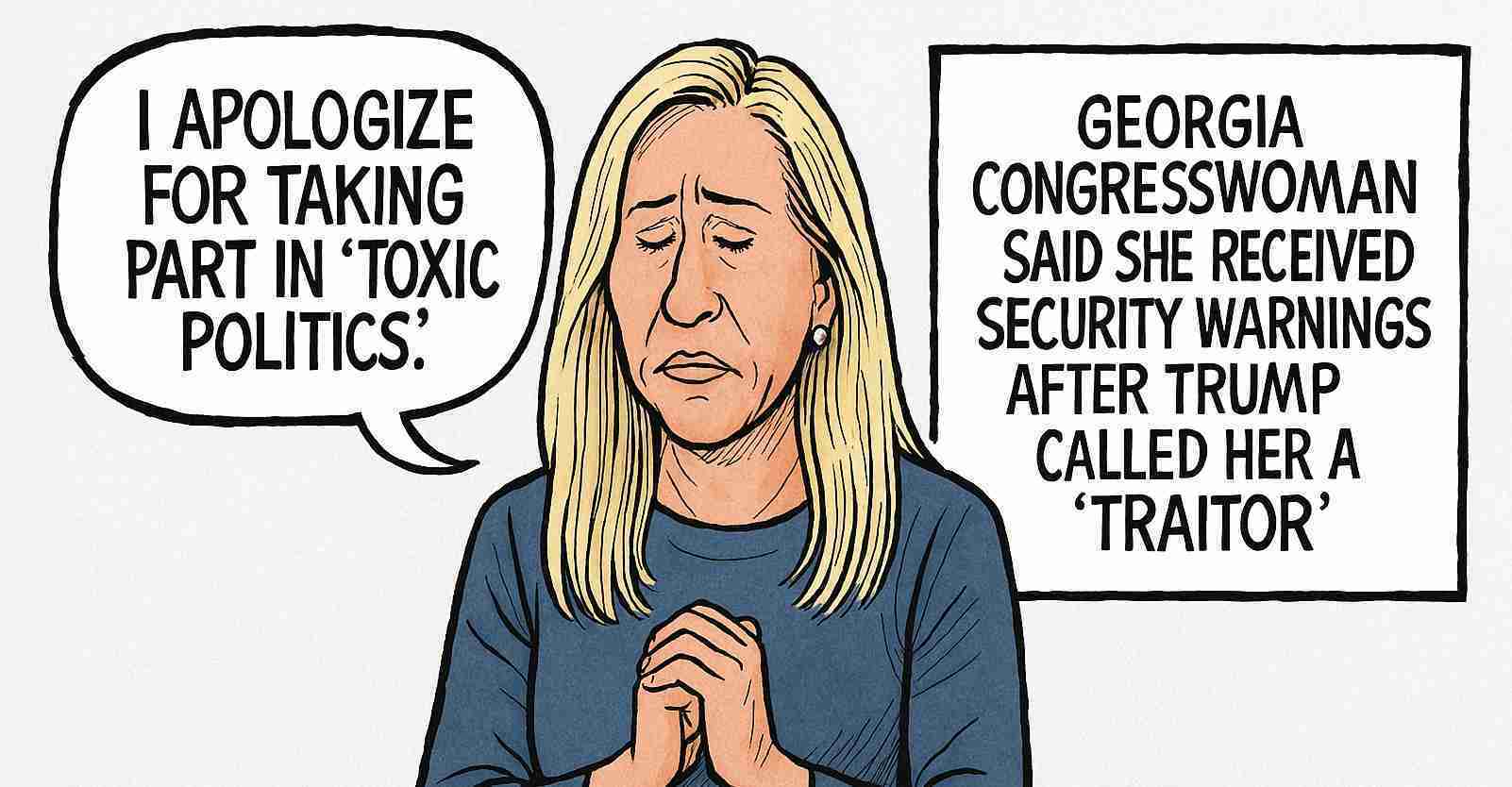
Marjorie Taylor Greene apologizes for “toxic politics” after Trump brands her a ‘traitor,’ says threats to her safety rose amid feud
Rome, Georgia — Rep. Marjorie Taylor Greene apologized on CNN for taking part in “toxic politics,” saying attacks from former President Donald Trump prompted increased security threats and affected her family amid a widening public feud.
Key takeaways
- Public apology: Greene told CNN she was sorry for taking “part in the toxic politics” that can fuel threats and violence — see the CNN interview video.
- Trump rebuke: Former President Trump publicly called her a “traitor,” urged a primary challenger and escalated the dispute on Truth Social — reported by NOTUS.
- Safety concerns: Private security firms warned of a spike in threats; Greene’s family publicly appealed for prayers and reassessed routines — coverage at AOL and Times of India.
- Epstein files dispute: Greene refuses to retract calls for release of files tied to Jeffrey Epstein, a key source of friction in the feud — reported by NOTUS and Time.
Main reporting and context
What Greene said on CNN
“I would like to say humbly, I’m sorry for taking part in the toxic politics, it’s very bad for our country,” Greene told CNN anchor Dana Bash as she reflected on how inflammatory rhetoric can feed threats. In the interview she said she is taking responsibility and “working on this a lot lately, to put down the knives.” She made clear she will not apologize for pushing for transparency for Jeffrey Epstein’s victims, describing that effort as a matter of justice. Watch the CNN interview video and related coverage at Fox News.
Trump’s public rebuke and escalation
Once a staunch ally, Greene was publicly rebuked by former President Trump on Truth Social, where he used epithets such as “wacky,” “raving lunatic,” “RINO” and called her “a traitor,” urging followers to back a primary challenger. That public denunciation — documented by NOTUS and analyzed in Time — elevated the conflict from intra-party disagreement to a visible fracture within the GOP.
Security warnings and family concern
Greene told CNN that private security firms contacted her after Trump’s posts, warning of increased threats that were deemed credible enough to change daily routines and security protocols. She said the warnings affected her family; her daughter publicly asked for prayers amid what family statements described as a “hotbed of threats.” See reporting from AOL and Times of India.
Greene’s stance on the Epstein files
A central element of the rupture is Greene’s push for release of files tied to Jeffrey Epstein. She has insisted she will not apologize for demanding transparency for victims and for seeking documents she says are critical to public accountability. That stance — referred to in coverage as the Greene Epstein files controversy — widened disagreements with Trump and some GOP allies who view the matter differently. Read related reporting at NOTUS.
Political fallout inside the GOP
The public split has created awkward dynamics for Republicans across the country. Greene’s apology and Trump’s rebuke illustrate how public shaming and enforcement of loyalty have become common intra-party tactics. Some Republicans may welcome Greene’s call to temper rhetoric to reduce threats and liability; others point to her continued push for Epstein-related transparency and policy critiques as reasons to distance themselves. Analysts and reporting at Time and Fox News explore the implications.
Implications for the United States
- Political consequences: A high-profile split between Trump and a former loyal ally could push lawmakers toward conformity or embolden challengers — analysis in Time.
- Public safety: Credible threat warnings underscore the link between rhetoric and real-world danger, forcing officials to increase security and alter daily life (AOL).
- Party discipline: Trump’s endorsement power shapes primary politics; calls for challengers signal the continuing role of loyalty in political survival (NOTUS).
- Transparency debate: Greene’s refusal to back down on Epstein files keeps pressure on committees and the Justice Department to clarify records policies and victims’ access (NOTUS).
- Voter perceptions: For moderate conservatives, the episode may heighten concerns about divisive rhetoric and stability ahead of future elections (Fox News).
Sourcing and coverage
Reporting and primary sources for this article include:
- CNN interview video
- Fox News coverage
- Time report
- NOTUS reporting
- Fox News video
- AOL coverage
- Times of India report
Reporting note: The primary on-record source for Greene’s remarks is the CNN interview video. Additional context and follow-up reporting are available via Time, Fox News, NOTUS, AOL and Times of India.
On the ground: Greene’s admission that she contributed to “toxic politics” came as she described fear for her personal safety. That admission may shift how allies and critics discuss escalation and risk. For now, she says she remains a Trump supporter “for the American people” while pressing for changes and transparency on issues she deems important (NOTUS).



