
Raskin Draws Fire for Calling Stacey Plaskett’s Epstein Texts “Constituent” Messages — Critics Call Defense “Sick” and “Dishonest”
Rep. Jamie Raskin faced backlash for defending Rep. Stacey Plaskett after released documents showed she messaged convicted sex offender Jeffrey Epstein during a 2019 hearing; critics call Raskin’s portrayal of the texts as “constituent” messages misleading and offensive.
Key takeaways
- Documents show Plaskett exchanged texts with Epstein during a Feb. 27, 2019 hearing, including questions and wardrobe discussion — Notus.
- Raskin defended Plaskett as acting in a delegate/constituent role on the House floor; critics called that defense “sick” and “incredibly dishonest” — Fox News.
- The November 2025 censure resolution failed after some Republicans joined Democrats to oppose censure, renewing debate about ethics and process — Axios, Notus.
Key information
During a Feb. 27, 2019 House Oversight Committee hearing where Michael Cohen testified, released documents indicate Rep. Stacey Plaskett repeatedly messaged Jeffrey Epstein about the wording of her questions and even wardrobe choices while the hearing was underway — Notus. This level of back-and-forth has drawn scrutiny because it appears more involved than a single, brief constituent outreach.
House Republicans, led by Rep. Ralph Norman (R-S.C.), introduced a censure resolution in November 2025 accusing Plaskett of “inappropriate coordination with convicted sex offender Jeffrey Epstein.” The resolution failed after some Republicans joined Democrats to vote it down — coverage available at Fox News, Notus, and Axios.
What the messages show
The documents released by House Republicans include text exchanges between Plaskett and Epstein during the Cohen hearing. They show Plaskett asking Epstein about the wording of her questions and discussing what she intended to wear on the House floor. The messages continued through the hearing, a pattern that many observers say suggests repeated coordination rather than a one-time constituent contact — see reporting from Notus.
“The level of back-and-forth suggests coordination,” some critics urged, arguing the exchanges deserve thorough review.
Raskin’s defense on the House floor
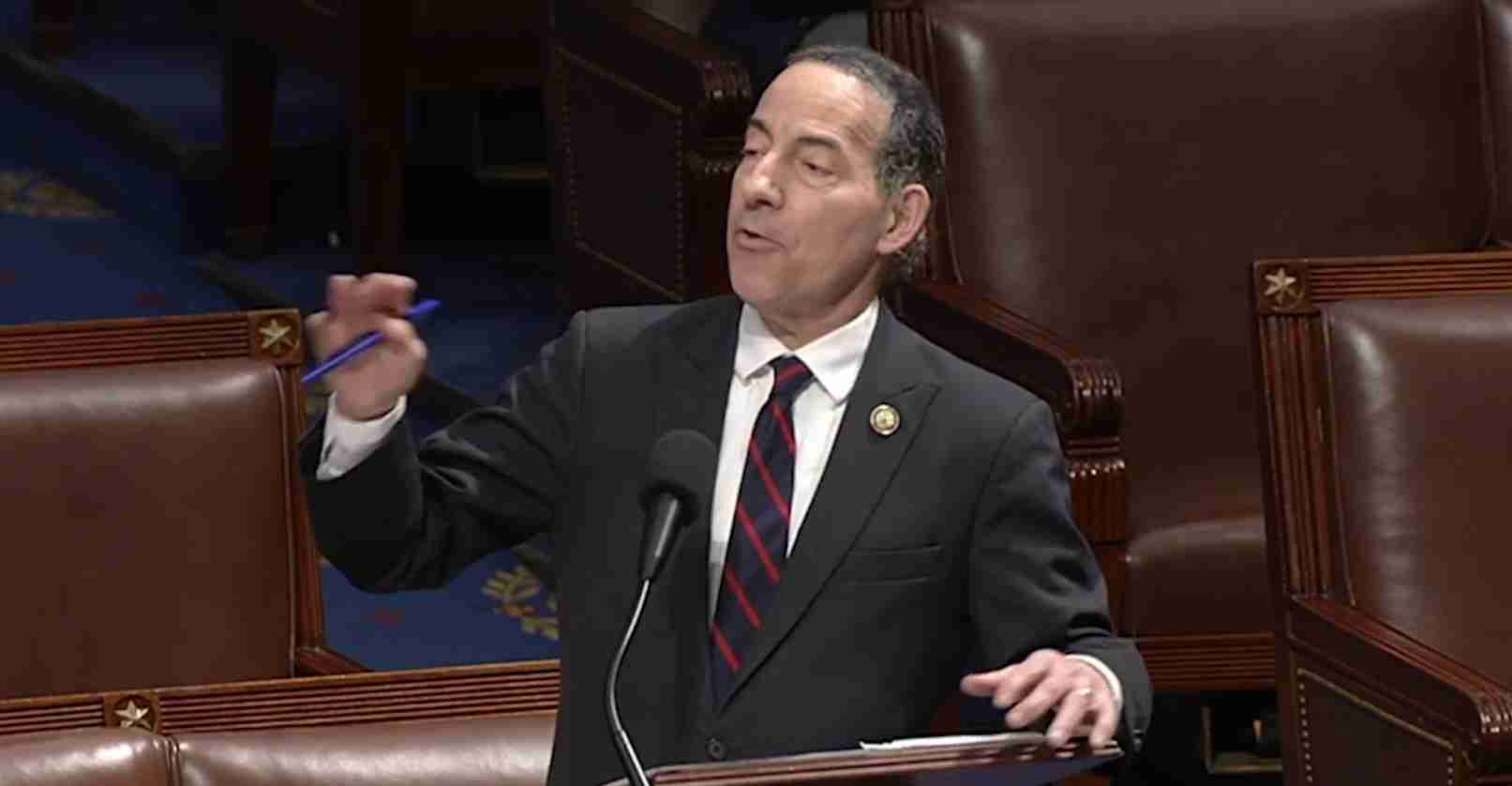
On the House floor, Rep. Jamie Raskin argued Plaskett’s messages were consistent with her role as a delegate from the U.S. Virgin Islands, where Epstein had ties. He likened the texts to standard constituent communications and urged colleagues not to rush to censure without an Ethics Committee review. Raskin called the contacts possibly “ill-advised” but said there was no explicit rule banning such contact — remarks available via YouTube and reporting at Notus.
Raskin also objected to moving directly to censure without first referring the matter to the House Ethics Committee, framing the floor effort as a form of guilt by association and warning it could set a precedent for punishing members based on relationships rather than clear rule violations.
Why critics call the defense “sick” and “dishonest”
Conservative critics and some independent reporters rejected Raskin’s framing. The White House Rapid Response team labeled his comments “sick,” arguing the defense minimizes the seriousness of Plaskett’s interactions with a convicted sex offender — coverage at Fox News.
Independent reporter Lee Fang and others point to a broader history of ties between Plaskett and Epstein that, they say, go beyond a simple constituent relationship: links to a law firm with Epstein connections, prior legal work for the Virgin Islands Economic Development Authority on matters benefitting Epstein, and reported outreach for campaign support from Epstein associates. Critics say that context undercuts the claim these were routine constituent messages.
The failed censure resolution
In November 2025, Rep. Ralph Norman and other Republicans introduced a resolution seeking to censure Plaskett for conduct that “reflects discreditably on the House of Representatives,” citing her communications with Epstein. The resolution accused her of “inappropriate coordination with convicted sex offender Jeffrey Epstein.” It failed when several Republicans crossed party lines to join Democrats in opposing censure — reporting at Fox News, Notus, and Axios.
Supporters argued censure is a severe sanction that should follow an Ethics Committee process. Opponents said the frequency and nature of the texts, given Epstein’s status, warranted immediate disciplinary action.
Plaskett’s explanation
Plaskett has said that when the exchanges occurred in 2019 it was not publicly known Epstein was under federal investigation. She maintained the interactions were with a constituent and argued she did not violate House rules — as reported by Fox News.
Her defenders emphasize legal standards: without evidence of paid coordination, direct wrongdoing, or a clear rule violation, members should not be punished. Critics argue ethical judgment and public trust require deeper review when a lawmaker maintains contacts with a convicted predator.
Broader context from the newly released files
The matter resurfaced after House Republicans released thousands of documents showing Epstein’s communications with prominent people. Plaskett’s exchanges stood out for their frequency and content, prompting renewed calls for transparency and review — reporting and analysis appear at Notus and Axios.
Those files have reignited debates over how investigators and lawmakers should treat longstanding relationships between public figures and Epstein, balancing legal standards with ethical expectations for members of Congress.
Raskin’s ties to Plaskett and conflict concerns
Critics highlighted a personal connection: Plaskett once attended American University’s law school where Raskin taught, a detail opponents say could color his defense and raise impartiality questions — discussed in coverage at Fox News.
Raskin’s supporters counter that his stance is principled: members should not be censured without Ethics Committee review and clear evidence. Opponents say the relationship makes his public defense more difficult to accept.
Implications for the United States
- Political accountability: The episode tests whether Congress applies consistent disciplinary standards and protects due process — see analysis at Axios.
- Trust in institutions: High-profile Epstein revelations can erode public confidence; transparent procedures are key to restoring trust — reporting at Notus.
- Ethics and rule-making: The debate highlights gaps in House rules around outside communications during official proceedings and contacts with ethically fraught individuals.
- National security and oversight: Ties between Epstein and government figures raise questions about influence and oversight; strengthening the Ethics Committee’s role may become a bipartisan focus.
- Voter sentiment: Perceived impropriety can influence voters across party lines, particularly among moderate conservatives who prioritize ethical clarity.



