
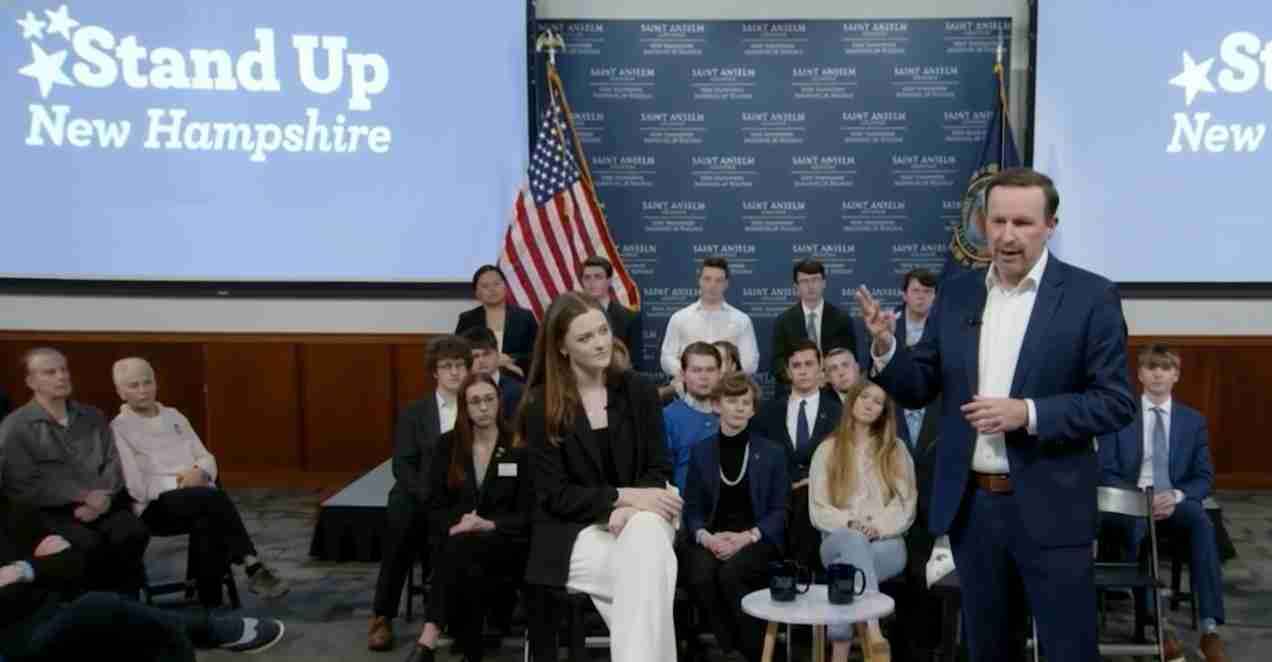
Sen. Chris Murphy presses Schumer to act on Senate Democratic disputes, urges backing of bipartisan Trump policies
Sen. Chris Murphy urged Senate Majority Leader Chuck Schumer to take a more active role resolving disputes among Senate Democrats, pressing for clearer legislative direction and urging support for bipartisan measures, including some once backed by Donald Trump.
Key takeaways
- Murphy urges Schumer to lead: Sen. Chris Murphy said Senate Majority Leader Chuck Schumer needs a more active role settling disputes and setting a clearer legislative direction (Fox News Digital; reporting summarized).
- No call for removal: Murphy did not call for Schumer’s ouster but said the leader has a “significant responsibility” to manage caucus tensions (reporting summarized).
- Pragmatic bipartisanship: Murphy urged backing of policies retaining bipartisan support — including some once backed by Donald Trump — arguing for merit-based evaluation (Fox News Digital coverage).
- Measured tone: When asked about Schumer’s future, Murphy offered a cautious, incomplete praise — “I think Chuck has a super…” — signaling restraint rather than outright criticism (reporting summarized).
Main content
What Murphy said and why it matters
Sen. Chris Murphy told Fox News Digital that Democratic senators are at odds over strategy and priorities. He suggested it is Schumer’s job as majority leader to calm differences and present a clear path forward. In a narrowly divided Senate, small fractures can slow or block legislation.
Murphy stopped short of demanding a change in leadership. He explicitly said he was not calling for Schumer’s removal, yet his public airing of internal concerns — coming from a senior Senate Democrat — signals urgency within the caucus. His appeal to support bipartisan measures frames a pragmatic approach aimed at moderate and conservative voters who prioritize results over rhetoric.
Backing bipartisan Trump policies
A notable portion of Murphy’s remarks urged Democrats to consider policies that previously enjoyed bipartisan backing — including some once advocated by former President Donald Trump. Murphy argued Democrats should not reflexively reject measures solely because Republicans or Trump once supported them; instead, lawmakers should weigh the merits and public support behind each policy.
Murphy did not name specific Trump-era policies he wants Democrats to revive or back. That lack of detail leaves room for interpretation. Possible areas where bipartisan consensus has existed include infrastructure, trade enforcement, criminal justice reforms, and certain immigration or foreign policy moves. The absence of explicit examples means Schumer’s response and the caucus reaction will be watched closely for clues about future legislative picks (reporting summarized).
Schumer’s role under scrutiny
As Senate Majority Leader, Chuck Schumer controls much of the calendar, negotiates across the aisle, and is expected to manage his members. Murphy’s call for more active leadership is essentially a request for Schumer to use those powers to reduce discord and shepherd bills with broad support. The appeal is tactical and process-oriented rather than personal.
“I think Chuck has a super…”
This incomplete praise, offered by Murphy when probed about Schumer’s future, underlines a cautious tone: supportive but urging clearer action. There has been no public statement from Schumer responding directly to Murphy’s interview as of the cited reporting (Fox News Digital / reporting summarized).
Context: Senate Democratic disputes and stakes
The Senate is narrowly split, so small disagreements can delay or derail business. Recent months have seen fights among Democrats over strategy, spending priorities, nominations, and responses to Republican tactics. While intramural disputes are not new, public comments from a sitting member asking for clearer leadership mark a shift from private negotiation to open concern. Voters and markets watch unity signals when evaluating the Senate’s ability to govern (reporting summarized).
What’s missing from the public record
The interview does not list the specific Trump-backed policies Murphy wants the Senate to support, nor does it capture private conversations among senators or internal strategy sessions. These gaps mean the story is evolving; further statements from Murphy, Schumer, or other Democratic senators could indicate whether this is a one-off appeal or the start of a broader push for strategic change (source reporting).
Implications for the United States
Economic impact: If Schumer heeds Murphy and pursues bipartisan policies with broad support, the Senate may pass measures that stabilize markets or boost investment. Bipartisan infrastructure or trade enforcement moves, for example, can spur private-sector confidence. Continued infighting could delay spending bills and add uncertainty for businesses and investors.
Political consequences: Murphy’s public nudge highlights internal pressures that could affect Democrats’ messaging ahead of elections. A Senate seen as capable of compromise may appeal to moderates and independents; persistent discord could be used by Republicans to argue Democrats are ineffective. Schumer’s prioritization of bills will shape the caucus’s public standing and committee strategy.
Social effects: Legislative gridlock or rapid compromise each produce different social outcomes. Backing bipartisan solutions that address shared concerns — like criminal justice reform or targeted infrastructure — could deliver practical improvements. If disputes stall action, issues such as healthcare costs or local funding could remain unresolved.
Cultural relevance: Murphy’s remarks reflect voter frustration with partisan conflict and a preference for results. The suggestion to adopt sensible ideas regardless of origin — including some supported by Trump — is likely to resonate with constituents who prioritize effective governance over party labels.
Practical applications for citizens: Voters should monitor Senate calendars and public statements from Schumer and Democratic leaders. Citizens can contact their senators to express support for bipartisan measures. For moderate conservatives, Murphy’s comments are an invitation to press elected officials to prioritize workable policy and cross-party cooperation.
What to watch next
- Any public response from Schumer clarifying how he plans to manage intra-caucus disputes (reporting summarized).
- Follow-up comments from Murphy specifying which bipartisan Trump policies he wants backed.
- Shifts in the Senate’s legislative calendar toward bills with bipartisan appeal.
- Reactions from other Senate Democrats, especially progressives who may resist perceived concessions.
Source
Reporting summarized from an interview published and cited at Fox News Digital interview reported by Times Media Service. All facts and URLs preserved from the cited reporting.


