
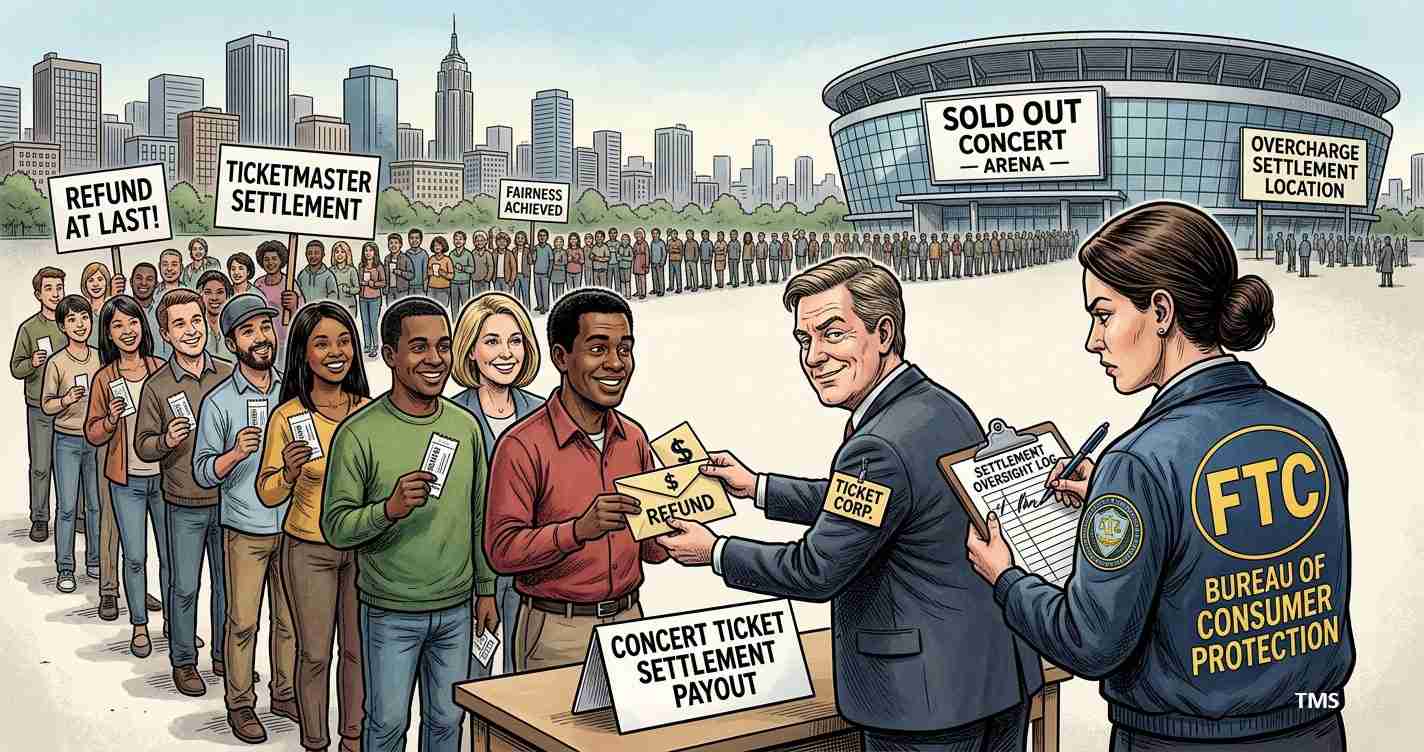
FTC says ticket platform failed to show total price up front; proposed StubHub settlement would refund buyers and enforce Junk Fees Rule
The FTC alleges a ticketing platform failed to display total ticket prices—including mandatory fees—during May 12–14, 2025, and proposed a settlement requiring refunds, a $10 million redress fund, and clearer price displays under the new Junk Fees Rule.
- Allegation: Listings during May 12–14, 2025, showed prices that did not include mandatory fees in the first display.
- Relief sought: A proposed order would fund a $10 million consumer redress program for eligible buyers and require more prominent total price displays.
- Company response: StubHub disputes the agency’s view but is refunding a portion of fees and limits the settlement to transactions in the three-day window.
- Rule context: The FTC began enforcing the Junk Fees Rule on May 12, 2025, and sent warning letters to platforms it believed were not compliant.
FTC action and the company response
The FTC’s complaint and proposed settlement filed in U.S. District Court for the Southern District of New York allege that during May 12–14, 2025 some listings on the ticketing platform displayed prices that omitted mandatory fees in the initial price shown to consumers, in apparent violation of the new Junk Fees Rule.
Christopher Mufarrige, director of the FTC’s Bureau of Consumer Protection, said:
“The Fees Rule makes it very clear that the total price of live-event tickets must be disclosed up-front to enable consumers to make fully informed purchasing decisions.”
Company position: The filings identify StubHub; a company spokesperson told the FTC the company disagreed with the agency’s view but would refund some fees to address concerns. The spokesperson said refunds would be issued to two groups of buyers within 90 days of the order: (1) consumers whose total ticket price was not disclosed on the initial pricing display, and (2) all other consumers who bought tickets during that period.
What the Junk Fees Rule requires
Finalized December 17, 2024, and enforceable May 12, 2025, the Junk Fees Rule requires sellers of live-event tickets and short-term lodging to:
- Display the total price—including all mandatory fees—clearly and conspicuously up front.
- Present the total more prominently than other pricing details to stop “drip pricing” or partitioned pricing practices.
- Exclude government taxes and shipping charges from the required total display in most cases, while allowing optional fees to appear separately if clearly disclosed before checkout.
The rule bars misrepresentations about a fee’s nature, purpose, amount, or refundability. Mandatory fees—examples include service, processing, delivery, resort, or cleaning fees—must be included in the displayed total price. The rule applies to consumer transactions and certain B2B sales and expects intermediaries and platforms to pass accurate total pricing to consumers.
Enforcement context and industry adjustments
Enforcement: The FTC has said it will seek civil penalties for violations and has sent warning letters to merchants appearing out of compliance after the rule became enforceable on May 12, 2025.
Industry response: Major platforms, including primary and secondary ticket marketplaces and short-term rental sites, updated listing displays and seller tools to show upfront totals and clearer fee breakdowns. Platforms have cited the need to adjust search results, listing pages, and seller interfaces to ensure total prices are visible at the first price display.
Legal and market implications
Potential consequences: If the proposed settlement is approved, the ticketing platform would issue refunds and change display practices, and the order would likely signal to other marketplaces that brief lapses in compliance can trigger enforcement. The FTC’s rulemaking under Section 18 of the FTC Act targets deceptive material terms—like price—so companies using complex fee structures must rework user interfaces and seller tools to avoid liability.
Analysts: Legal commentators note the rule’s reach into secondary markets and some B2B contexts may create new compliance burdens but also standardizes transparency expectations.
Implications for the United States
Economic: The rule aims to reduce transaction friction and make comparisons easier, potentially pushing platforms to compete on lower total prices over time.
Political: For a moderate conservative audience, the action can be framed as a targeted fix to hidden fees rather than broad regulation, demonstrating a rules-based approach to restoring honest competition.
Social and cultural: Consumers—fans, concertgoers, and travelers—should face fewer surprise charges at checkout, improving confidence in online purchases and access to events and travel.
Practical applications for consumers and sellers
- Consumers should expect full ticket prices in search results or initial listings, not only at checkout.
- Businesses selling tickets or short-term lodging must ensure listing tools show total mandatory fees prominently.
- Sellers relying on third-party platforms should verify how fees are presented to end users and auditors.
Sources and reporting notes
Background on the FTC’s Junk Fees Rule and analyses are available at InsideClassActions, the Brushfire explainer, and a Foley & Lardner summary. A legal update is available from Perkins Coie.
Coverage of the rule taking effect and enforcement context: Fox4News. Video referenced by the agency: YouTube video.
Reporting note: This article reports on the FTC’s public allegations and the company’s response as described in agency filings and company communications. At the time of publication, independent court records or additional news coverage may provide further confirmation and full documentation.



