Jashanpreet Singh Charged in Deadly 10 Freeway Crash in Ontario; Critics Blast 2022 Release by Federal Authorities
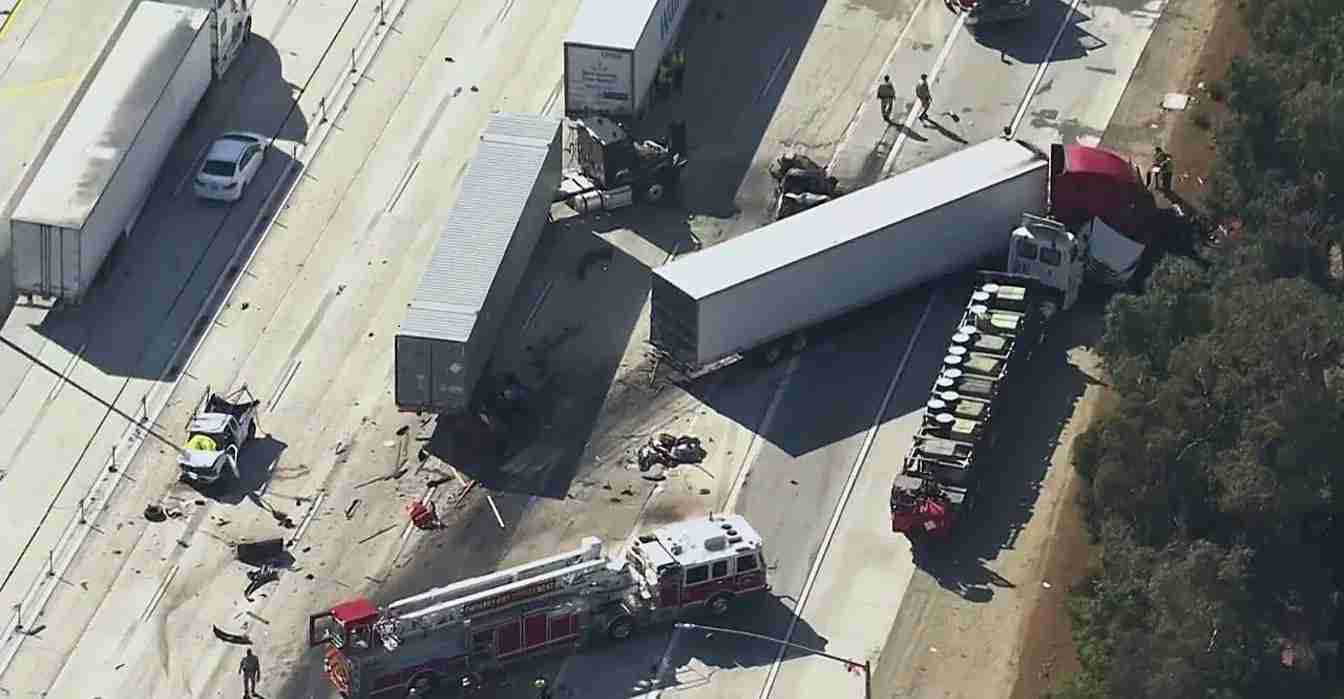
Jashanpreet Singh, an undocumented truck driver, faces gross vehicular manslaughter while intoxicated charges after a crash on the 10 Freeway in Ontario, California, that killed three people and triggered debate over his 2022 release by federal authorities.
- Crash and charges: Singh was arrested at the scene and booked on gross vehicular manslaughter while intoxicated after a collision that killed three and injured others.
- Immigration context: Reports say Singh crossed the U.S. border in 2022 and was released by federal authorities, a fact that has driven public and political backlash.
- Evidence pending: Toxicology, vehicle reconstruction, driver logs and employer records are central to both criminal and regulatory inquiries.
- Broader impact: The case has reignited debate over border enforcement, trucking oversight, and due process for immigrants.
The crash and criminal charges
Law enforcement in Ontario say Singh was driving a truck that struck several slow-moving vehicles on the eastbound 10 Freeway just before 1:15 p.m. on a Tuesday. Three people were killed in the collision and multiple others were injured. Authorities arrested Singh at the scene and booked him on charges of gross vehicular manslaughter while intoxicated, according to news reports that cite local officials.
Officials said Singh appeared to be under the influence of drugs at the time of the crash. Police testing and laboratory toxicology results will be central to the prosecution. Prosecutors say the manslaughter charge reflects their view that the driver’s impairment caused the deaths. Investigators are also examining vehicle speed, driver logs, and the truck’s condition as part of the probe.
Immigration status and prior release
News coverage has focused on Singh’s immigration history. Reports indicate Singh crossed into the United States in 2022 and was released by federal authorities at that time. Media accounts say he is not a U.S. citizen and that his release after crossing the border has become a flashpoint in public debate (Economic Times coverage).
Public records and news reports do not yet provide a full timeline of any immigration proceedings Singh may have faced after his 2022 entry. It remains unclear whether he had pending immigration hearings, a deportation order, or another formal immigration status when the crash occurred. Those details could affect both immigration and criminal case timelines and will likely be clarified as federal immigration authorities review the case.
Public and political response
The crash has provoked strong reactions from politicians, activists, and members of the public. Critics of current border and immigration policies have cited the case as an example of risks they say arise when people released after entering the country are not removed. There have been public calls for Singh’s deportation and for more stringent enforcement measures (reports).
“Supporters of immigrants’ rights and due process have urged caution,” noting that criminal charges are separate from immigration proceedings and that suspects are entitled to legal protections.
Advocates warn against conflating individual criminal cases with broader immigration policy. At the time of reporting, federal immigration officials had not released a detailed public statement beyond confirming the prior 2022 crossing noted in news accounts (Economic Times reporting).
Legal questions and outstanding details
Several key questions remain open and will shape the legal path forward:
- Toxicology and evidence: Authorities have said Singh appeared to be under the influence, but laboratory toxicology results are necessary to prove impairment in court and those results were not yet public.
- Immigration proceedings: Public reporting does not show whether Singh had any pending immigration cases or orders after his 2022 release. That timeline could affect whether federal immigration agencies pursue deportation while a criminal case proceeds.
- Employer and trucking oversight: It is not yet known who employed Singh, whether the truck carried cargo, or if federal trucking safety rules were followed; investigators will review driver logs, licensing, and employer vetting.
- Criminal history: Available accounts do not detail any prior criminal record in the U.S. or abroad; such information could be relevant at sentencing if there is a conviction.
Investigators and prosecutors will work to establish a clear chain of evidence for gross vehicular manslaughter while intoxicated, including toxicology, vehicle and scene reconstruction, witness statements, and any available dashcam or surveillance footage.
Trucking industry oversight and safety concerns
The crash has renewed scrutiny of safety rules governing commercial truck drivers. Commercial motor vehicle operators must meet licensing, drug testing, and hours-of-service rules enforced by the Federal Motor Carrier Safety Administration (FMCSA) and by state agencies. If drug use is confirmed, questions will focus on whether required pre-employment screenings, random drug tests, or company policies failed to detect a problem.
Industry advocates emphasize that most commercial drivers follow safety rules and that carriers face heavy penalties for violations. Nevertheless, high-profile crashes often prompt calls for tougher enforcement and closer oversight of carriers, drivers, and dispatch practices.
Sources and reporting limits
This article is based on available reporting from Times Media Service and other outlets that cite local authorities. Key reports were reviewed from Economic Times reporting and Economic Times coverage, which summarized law enforcement statements and public reaction.
Specific details about toxicology results, immigration court records, employer identity, and full investigative findings were not available in those reports at the time of publication.
Implications for the United States
Public safety and immigration policy: The incident is likely to sharpen debate over border enforcement and how federal authorities handle people who cross illegally. Policymakers focused on law-and-order priorities may use the case to argue for stricter detention or removal practices, while advocates for reform will urge careful, evidence-based responses.
Border and enforcement practices: If federal records show Singh was released without follow-up or court dates, critics will argue enforcement gaps remain and federal agencies may face pressure to explain release criteria and tracking methods.
Criminal justice and public confidence: High-profile crashes involving undocumented drivers can erode public confidence in immigration systems and local road safety enforcement. Prosecutors will face public expectation for swift action while defense advocates will demand full process and evidence review.
Transportation safety and industry oversight: The trucking industry may see calls for stronger screening and testing of drivers, tighter background checks, and better enforcement of drug testing rules. Lawmakers and regulators could consider measures to reduce impaired driving among commercial drivers.
Political messaging: The case may be woven into national political narratives on immigration ahead of elections, with different actors using elements of the case to push contrasting policy goals.
Victims and communities: Beyond policy debates, this remains a human tragedy that leaves families grieving and communities demanding answers. How authorities support victims, handle legal processes, and communicate next steps will be closely watched.
Remaining questions that will shape legal and policy fallout include: toxicology results, immigration records and timelines, employer oversight, and the full investigative report. The answers will determine how this case is used in wider debates and whether it prompts legal or regulatory changes.