McEnroe slams pickleball’s name and ‘annoying’ pop while admitting he “sold out” to play it
Lede: John McEnroe blasted pickleball’s name and the sport’s “annoying” plastic‑ball pop during The MacZone, yet admitted he “sold out” by playing paid pickleball exhibitions that paid him more over two weekends than his tennis earnings.
- McEnroe criticized pickleball’s name and the “pop” of the plastic ball while appearing on The MacZone.
- He admitted he played two weekends of paid pickleball exhibitions, saying they paid more than his tennis work.
- Noise and facility tensions around paddle strikes have prompted neighborhood complaints and policy responses nationwide.
- Despite ridicule, pickleball’s rapid growth, TV exposure and celebrity appearances keep the sport mainstream and lucrative.
What happened on The MacZone with Genie Bouchard
During the French Open alternate broadcast The MacZone, John and Patrick McEnroe interviewed former tennis star‑turned‑pickleball player Eugenie “Genie” Bouchard. John did not hold back: he mocked the sport’s name and sound and questioned pickleball’s athletic seriousness compared with tennis.
Bouchard pushed back, noting McEnroe had played pickleball himself. McEnroe acknowledged that and framed his appearances as a financial decision: “I played two weekends, and they paid me more money for that than I got paid for tennis.” The exchange was reported in a column by Greg Cote at the Miami Herald: Greg Cote column on McEnroe and pickleball.
Sound, name and image: McEnroe’s main gripe
McEnroe singled out two issues: the sound of the perforated plastic ball and the sport’s name. He called the pop of a pickleball a “big negative,” likening it to a wiffle ball “plinking and plonking off a court.” He said a tennis ball “sounds awesome”; a pickleball “sounds like what it is.”
“The name is too goofy sounding,” McEnroe said, recalling he assumed the sport was a high‑school invention or a way for a gym teacher to disappear from class.
Noise isn’t only aesthetic: across the U.S., residents near converted tennis courts have filed complaints about repetitive, high‑pitched paddle hits. Municipalities and clubs have explored acoustic barriers, curfews and court relocations to ease tensions — a practical dimension that feeds into McEnroe’s critique. (Reporting summarized in the Miami Herald: Greg Cote column on McEnroe and pickleball.)
McEnroe’s “selling out” line and the money question
McEnroe described his participation in pickleball exhibitions as a financial choice. He said short‑stint events, such as televised showcases, paid him more in two weekends than his tennis work. That aligns with industry trends: big‑money showcase events like the televised Pickleball Slam have offered sizable paydays and exposure (The Dink Pickleball: coverage of celebrity pickleball events and McEnroe’s comments).
Critics point out the contradiction: McEnroe’s brand is tennis purism and blunt honesty, so taking large paydays from a sport he mocks prompts accusations of selling out. Others interpret it pragmatically: high pay for short appearances is attractive to aging athletes who no longer compete on tour.
Technical critiques: TV, athletic ceiling and court concerns
Beyond name and noise, McEnroe has argued pickleball is harder to televise due to the small ball and compact rallies, and suggested the sport’s athletic ceiling is lower — a critique he’s framed with sharp lines such as “great if you aren’t athletic.” He’s also noted practical concerns for older athletes: many courts are cement, and the stop‑start motion can stress joints over time. These observations were part of broader coverage in sports reporting (see Miami Herald: Greg Cote column on McEnroe and pickleball).
Pickleball’s growth, changing demographics and facility tensions
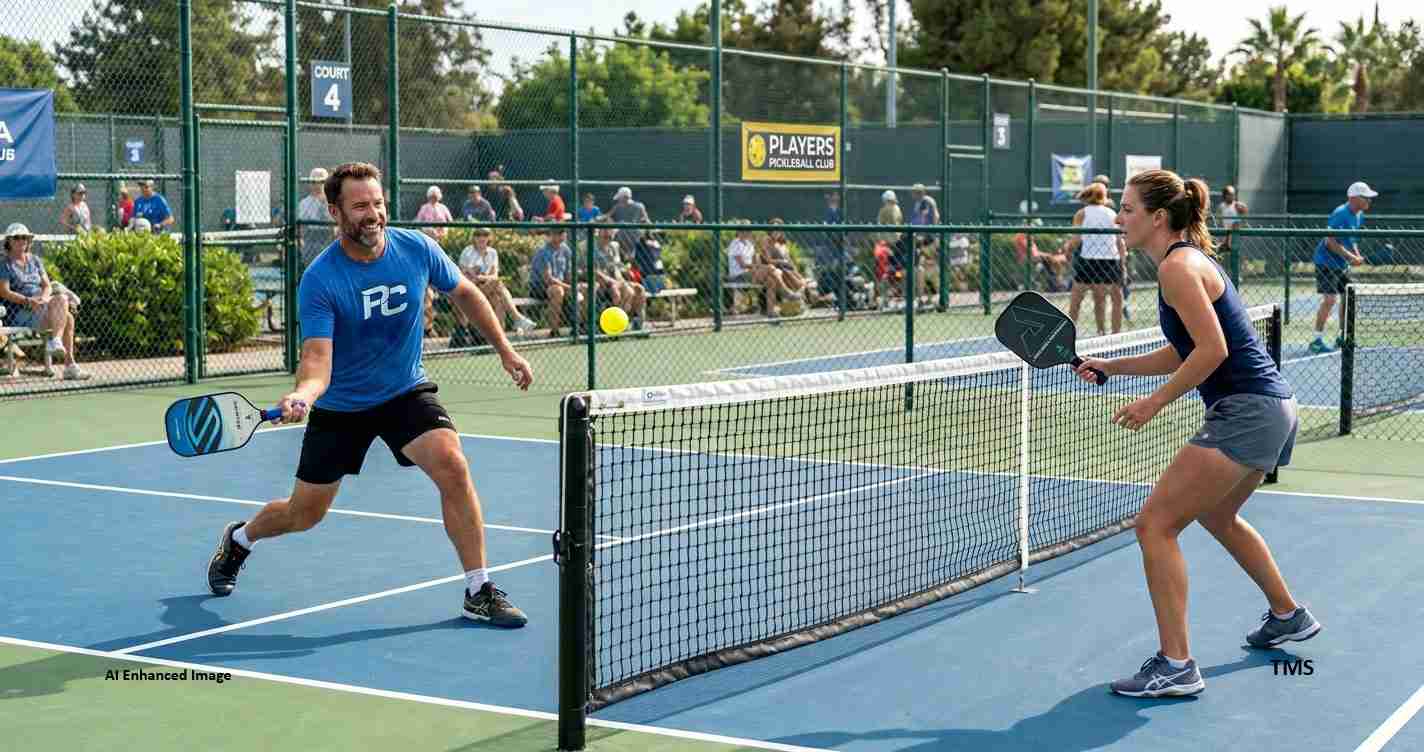
Pickleball’s expansion is clear: industry surveys list it among the fastest‑growing U.S. sports. Clubs, pro tours, broadcasters, celebrities and investors have all pushed the sport into the mainstream. The growth has shifted demographics — younger players and families now join older participants — and amplified facility conflicts as tennis courts are repurposed for pickleball, creating local political debates across municipalities.
Where McEnroe’s comments fit a broader pattern
This MacZone episode is consistent with McEnroe’s mixed posture: public derision alongside participation in high‑pay events. He has at times said bluntly, “I’m not a convert to pickleball, I think it sucks,” while also praising the sport’s camaraderie and equalizing effects. The duality — gatekeeping rhetoric plus lucrative appearances — helps explain headlines framing his actions as both critique and commerce (The Dink Pickleball: coverage of celebrity pickleball events and McEnroe’s comments).
Implications for United States
Economic impact: Pickleball’s growth has created business for private clubs, court builders, equipment makers and broadcasters. Events bring sponsorships and tourism revenue; celebrity appearances provide income streams for former tennis pros (The Dink Pickleball: coverage of celebrity pickleball events and McEnroe’s comments).
Political consequences: Local governments must balance public‑space use and noise concerns. Court conversions trigger public hearings and ballot measures in some towns; officials are pressured by competing voter blocs and neighborhood complaints (reporting compiled in the Miami Herald: Greg Cote column on McEnroe and pickleball).
Social effects & practical applications: The sport’s low barrier to entry encourages mixed‑age participation and can improve public health, but communities should weigh noise mitigation strategies such as sound‑absorbing fencing, staggered play hours, or dedicated pickleball parks to reduce tensions.
Sources and further reading
– Miami Herald: Greg Cote column on McEnroe and pickleball
– The Dink Pickleball: coverage of celebrity pickleball events and McEnroe’s comments
– Additional reporting and interviews referenced here include media appearances and event coverage archived on sports and pickleball specialty sites.