
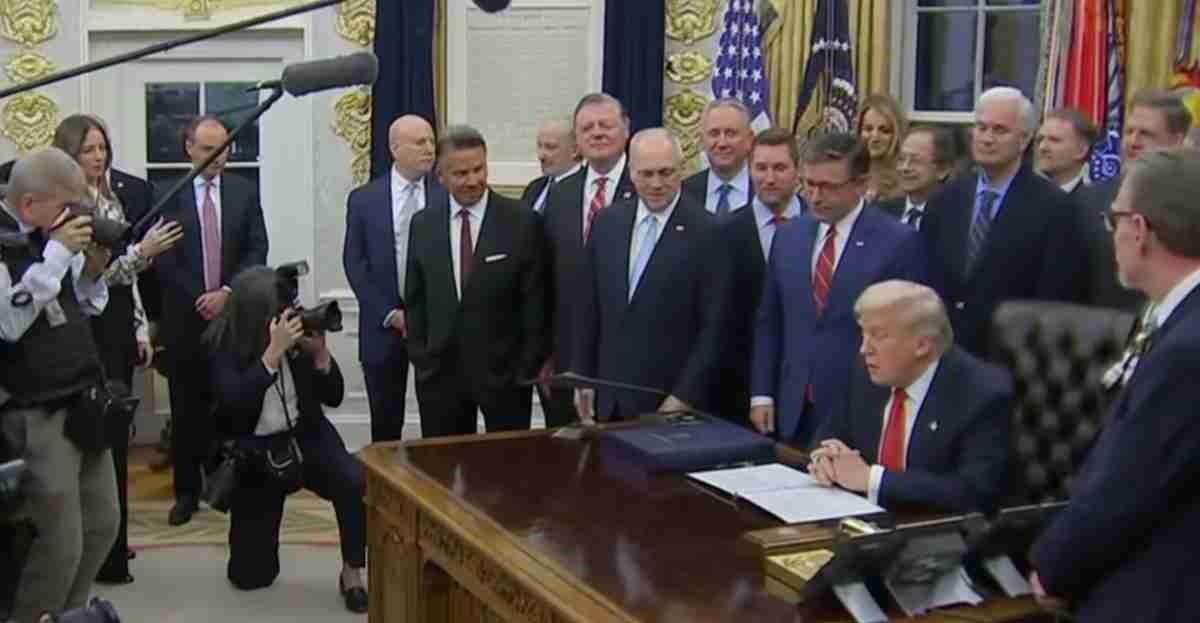
Trump ends government shutdown with stopgap bill, setting January 30 budget deadline
President Donald Trump signed a stopgap funding bill on November 12, 2025, ending a 43-day government shutdown and restoring operations through Jan. 30, 2026, while guaranteeing back pay as Congress resumes budget negotiations and disputed health policy talks continue.
Key takeaways
- Shutdown length: 43 days, the longest on record.
- House vote: The stopgap measure passed 222 Yea to 209 Nay.
- Funding window: Government operations funded through Jan. 30, 2026.
- Immediate effects: Federal workers guaranteed back pay; agencies reopen; food assistance and key programs continue.
What the bill does and how operations resume
The stopgap bill fully funds three annual spending bills while extending the remainder of federal funding only through Jan. 30, 2026. It restores normal operations across federal agencies and reverses many personnel actions taken during the shutdown. Federal employees who were furloughed or required to work without pay will receive back pay under the new measure via agency payroll systems and guidance from the Office of Personnel Management. Times Leader and ABC News report these provisions aim to reverse immediate harms caused by the 43-day lapse.
Nutrition and welfare protection: The Department of Agriculture’s nutrition programs and other key safety-net services are protected through the end of the budget year to prevent abrupt interruptions for families dependent on those benefits. Times Leader and The News and Sentinel provide further detail.
How the House and Senate moved the measure
The Senate approved the stopgap before the bill reached the House. In the House, the measure passed 222–209 with a small handful of Democrats joining Republicans to end the impasse. Floor debate focused on the compromise and the decision to remove an enhanced health coverage tax credit from the short-term funding vehicle. See floor video and coverage for full context: House vote video and debate highlights.
Why the shutdown happened
Lawmakers deadlocked over policy riders attached to short-term funding. Democrats pushed to extend an enhanced health care tax credit tied to the Affordable Care Act; Republicans resisted adding that policy item to a continuing resolution and argued for separate consideration. That disagreement prevented passage of a full-year appropriations package and led to the record 43-day shutdown that strained air travel, federal services, and safety-net programs. Times Leader and PBS Wisconsin documented the dispute.
Immediate impacts on federal workers and public services
The signed bill guarantees back pay and reverses many terminations that occurred during the shutdown. Millions of federal employees and contractors were affected by missed paychecks and workplace uncertainty; airport travel disruptions, reduced agency staffing, and heavier demand at food banks were reported nationwide. The stopgap aims to roll back those harms quickly while agencies address backlog and operational recovery. Reporting on these effects is available from Times Leader, ABC News, and The News and Sentinel.
Political reactions and the rhetoric that followed
President Trump blamed Democrats for the shutdown, calling their demand for the health coverage credit “extortion” and characterizing the impasse as a costly political stunt.
Democratic leaders vowed to continue fighting for the subsidy extension, saying it supports affordability for millions, while Republican leaders argued budget and health policy debates should be separated and handled through regular legislative processes. Video and statements are publicly available: congressional remarks and coverage and reporting at Times Leader.
What happens next — the immediate steps and calendar
- Now: Government reopens; agencies resume operations and federal workers receive back pay. ABC News.
- Mid-December: Republicans pledged a separate vote by mid-December on the health care tax credit extension Democrats demanded; passage requires cross-party support. Times Leader and PBS Wisconsin cover the timeline.
- Jan. 30, 2026: Short-term funding expires; Congress must pass a full-year budget or another continuing resolution to avoid a fresh lapse. Times Leader and The News and Sentinel.
- If talks fail: Lawmakers face the potential for another partial shutdown or targeted funding gaps after Jan. 30; negotiations will focus on the health care tax credit and broader spending priorities. Times Leader.
What Congress needs to do to avoid another lapse
To avoid another funding lapse, lawmakers must either pass the full set of appropriations bills for the fiscal year or agree to a longer continuing resolution extending funding beyond Jan. 30. That will require cross-party negotiation on spending levels and policy riders while balancing political pressure to provide stability for federal employees and essential services. PBS Wisconsin and Times Leader outline the key choices.
Timeline recap
- Now: Shutdown ends; federal agencies reopen; federal workers back pay authorized. ABC News.
- By mid-December: Separate vote promised on health care tax credit extension. Times Leader.
- Through Jan. 30, 2026: Stopgap funding keeps the government operating. PBS Wisconsin.
- After Jan. 30: Without a full-year deal, risk of another shutdown. The News and Sentinel.
Implications for United States of America
Economic impact: The immediate economic hit from the 43-day closure is softened by guaranteed back pay, which should help restore consumer spending for many families and support local businesses near federal workplaces. Longer-term costs — lost productivity, delayed contracts, and reduced confidence — will depend on whether leaders secure a full-year budget before Jan. 30. Times Leader analysis.
Political consequences: Parties will use the shutdown and its resolution for messaging: Republicans emphasize separating policy riders from short-term funding, while Democrats continue to press for the health coverage tax credit as support for working families. Failure to reach a long-term agreement by Jan. 30 could shape messaging ahead of elections. Video coverage and reporting document reactions.
Social effects: The stopgap restores food assistance and other vital programs, easing pressure on food banks and local service organizations, but many families and workers will still be recovering from missed paychecks and uncertainty. Stabilizing support through Jan. 30 will be critical. The News and Sentinel reports on community impacts.
Cultural relevance: The shutdown highlighted public frustration with partisan gridlock and sharpened debates about whether policy fights can be separated from funding responsibilities. How leaders manage the weeks ahead will influence public perception of governing competence. ABC News coverage.
Practical guidance: Federal employees should expect back pay through agency payroll systems; beneficiaries of nutrition and other assistance should see benefits resume. Travelers and businesses influenced by federal operations can expect services to normalize, though some backlogs and delays may persist as agencies catch up. Times Leader and PBS Wisconsin provide agency-level details.
Ongoing coverage and sources
This article draws on reporting and public records. Full sources:
- Times Leader — Trump signs bill ending government shutdown
- PBS Wisconsin — Funding bill ends record shutdown
- ABC News — Wire story on Trump signing funding bill
- The News and Sentinel — Coverage of shutdown resolution
- YouTube — House vote video
- YouTube — Congressional debate highlights
What lawmakers and the public will watch next
With the bill signed and the House recorded at 222–209, attention shifts to a promised mid-December vote on the health coverage tax credit and to the firm Jan. 30 deadline for a broader funding agreement. How quickly leaders negotiate a full-year appropriations package will determine whether the United States avoids another disruptive lapse and whether federal workers and the public can rely on sustained government services. Times Leader has further analysis.



