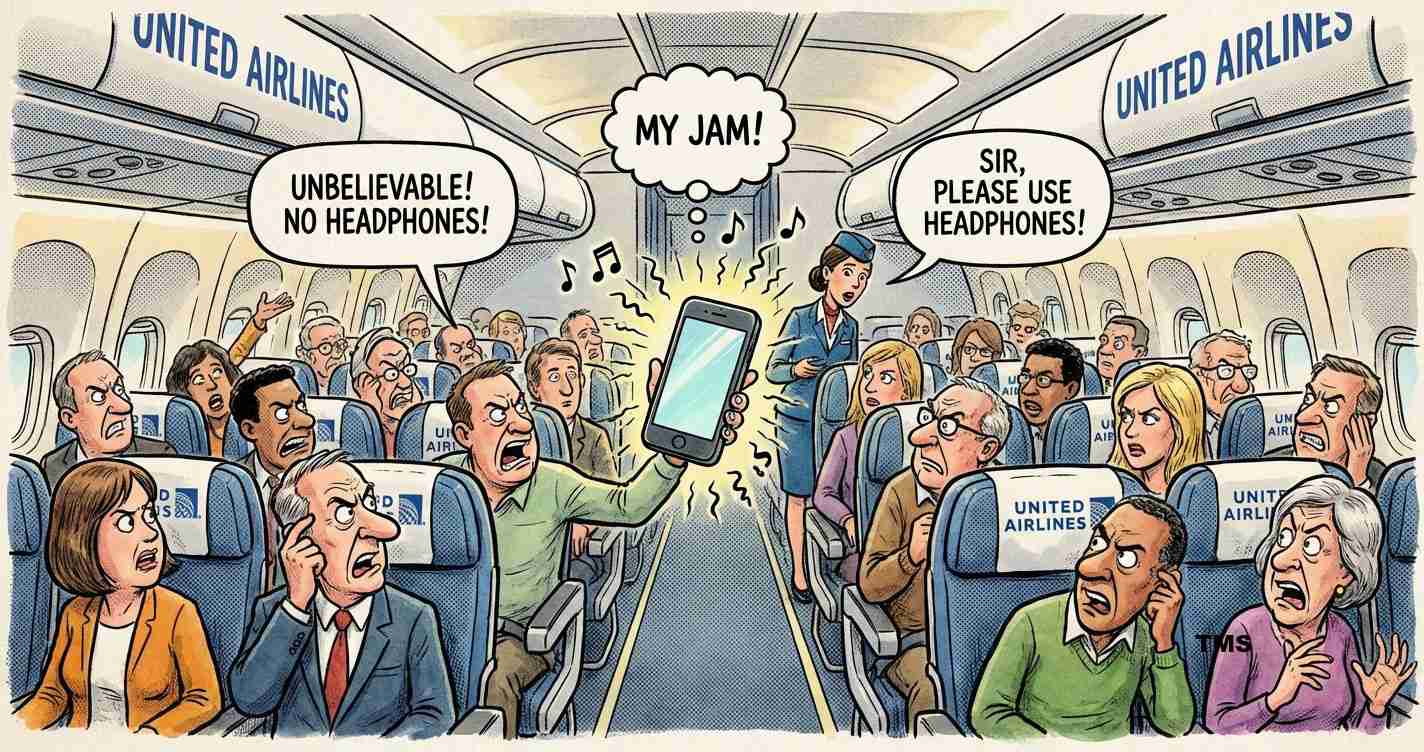
United makes headphones mandatory — and can now deny boarding or remove passengers who won’t comply
United Airlines has added a mandatory headphone rule to its Contract of Carriage, allowing crews to deny boarding or remove passengers who play audio without headphones, a move timed with expanded Starlink inflight internet and rising device use.
Key takeaways
- Rule change: United updated Rule 21 to include a headphone requirement, making noncompliance a formal ground to refuse transport (Fox Business).
- Enforcement: Crew may deny boarding, remove passengers mid‑flight, or permanently ban repeat offenders; complimentary earbuds are available while supplies last (CBS News).
- Why now: The rule coincides with United’s rollout of Starlink satellite internet, which is expected to increase streaming and audio use onboard (Fox Business).
Policy details: what changed and where it sits in the rules
United inserted mandatory headphone language into Rule 21 — the carrier’s formal “Refusal of Transport” clause — converting a long‑standing etiquette request into an enforceable condition of carriage. By placing the requirement in Rule 21, United tied headphone use to the specific contractual grounds that allow crews to deny transport or remove passengers (Fox Business).
What the rule covers
Under the update, any audio from personal devices that can be heard by others — music, video soundtracks, social media clips, or apps that emit sound — must be played through headphones. Crew members are authorized to ask passengers to comply and to escalate to denying boarding, removing passengers, or imposing permanent bans on repeat violators (CBS News).
Why now: Starlink and rising device use
United says the policy comes as it expands Starlink satellite internet across its fleet. Faster, more reliable inflight Wi‑Fi is expected to encourage more passengers to stream video and audio, prompting the airline to formalize headphone guidance it has long encouraged via onboard messaging (Fox Business).
Industry context: United is first among big U.S. carriers
United’s move makes it the first major U.S. airline to embed headphone use in a refusal‑of‑transport clause. Other carriers, such as Delta and Southwest, continue to ask passengers to use earbuds or headphones as a courtesy rather than as a contractual ground for removal. Delta’s site reads: “For the comfort of everyone around you, please use earbuds or headphones with any personal electronic device during your flight.”
Enforcement, penalties and passenger options
Escalating actions — crew may deny boarding before departure, remove a passenger during a trip, or add repeat offenders to a no‑fly list with United. The airline also says it will provide free earbuds to passengers who forget headphones, while supplies last (CBS News).
“The practical effect will depend on how crews enforce the rule in real time.” Flight attendants already manage many in‑cabin conflicts; formalizing the rule gives them clearer contractual backing but could also raise the stakes in confrontations.
Background: growing frustration over speaker mode
The change follows years of passenger frustration over speaker‑mode audio and cellphone speaker calls in cramped cabins. A notable 2023 video of an American Airlines pilot admonishing passengers about speaker mode drew widespread attention and applause, highlighting the issue of in‑cabin etiquette and enforcement.
Legal and consumer-watch considerations
United’s authority to refuse transport under its contract is longstanding; adding headphone language to Rule 21 ties the policy into existing contractual and safety frameworks. Legal and consumer advocates may monitor how consistently the rule is applied and whether disputes test the limits of airline contracts.
United Airlines headphone policy and public messaging
United has updated customer touchpoints, including Wi‑Fi guidance, to reference the headphone requirement. The company frames the change as protecting passenger comfort as inflight internet services enable more streaming activity (Fox Business).
Reactions from passengers and the industry
Responses range from support to concern. Many travelers welcome clearer rules to curb distracting noise; others worry about enforcement and cabin confrontations. Travel expert Scott Keyes told reporters the rule aligns with typical passenger expectations, while etiquette expert Alison Cheperdak called it “a move in the right direction” toward basic courtesy (CBS News; Fox Business).
Implications for United States
Economic impact
Airlines may incur modest costs stocking complimentary earbuds, but improved passenger experience and fewer in‑cabin disputes could reduce complaint handling and delay-related costs over time.
Political consequences
The rule relates to wider debates about private firms enforcing order in shared spaces. For some audiences, it may appeal as a contract‑based approach that protects paying customers without new government mandates.
Social effects
Formalizing headphone use reinforces a common social norm about noise in public settings and may improve comfort for business travelers, while also raising the possibility of enforcement‑related confrontations.
Cultural relevance
The policy signals a preference for clearer behavioral standards in shared environments and could influence other industries as technology increases potential for public audio disruption.
Practical applications for travelers
- Pack headphones: Carry earbuds or headphones to avoid being denied boarding or removed.
- Plan for streaming: Business travelers using inflight Wi‑Fi for work should include headphones in their packing routine.
- Backup: United will offer free earbuds when available, but supply is not guaranteed (CBS News).
Sources and further reading
- CBS News — United Airlines can remove passengers who don’t wear headphones
- Fox Business — United Airlines can now refuse transport passengers who won’t wear headphones
Republication note: This report is based on United’s updated Contract of Carriage and media reporting from CBS News and Fox Business, which include statements from United and comments from travel and etiquette experts. All original facts, information, and URLs have been preserved.