
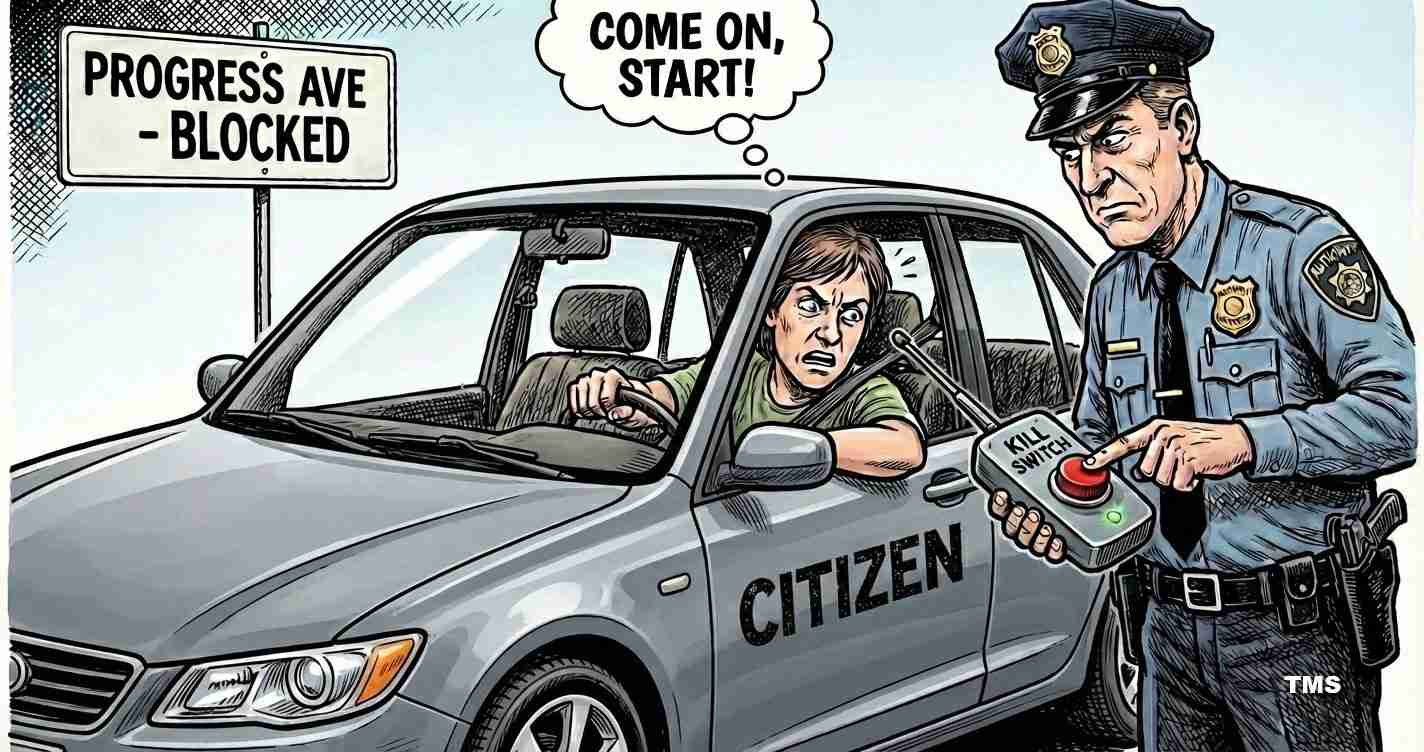
57 House Republicans Join Democrats to Defeat Massie Amendment, Preserving Biden-Era “Kill Switch” Vehicle Mandate
On January 22, 2026, the U.S. House defeated Rep. Thomas Massie’s amendment 164–268 after 57 Republicans joined Democrats, preserving a Biden-era mandate requiring new vehicles to include impaired-driving “kill switch” technology and igniting debate over privacy, safety and federal authority.
Key takeaways
- House vote: The Massie amendment was defeated 164–268 on Jan. 22, 2026; the official legislative record is available via H.R. 7148 amendments and H.R. 7148 actions.
- What the amendment would do: It sought to block spending and enforcement of Section 24220 of the 2021 IIJA that directs NHTSA to set standards for impaired-driving prevention technology.
- Broader package: The vote occurred during debate on a roughly $1.2 trillion minibus (H.R. 7148) that later passed 341–88 (Politico live coverage).
- Political reaction: The outcome provoked strong conservative backlash and renewed debate about safety, privacy and federal reach (Fox News reaction; Competitive Enterprise Institute).
Background on the mandate
Section 24220 of the 2021 Infrastructure Investment and Jobs Act directs the National Highway Traffic Safety Administration (NHTSA) to develop standards for technologies that can detect driver impairment and prevent or limit vehicle operation when impairment is found. Supporters say the measure targets drunk driving and could save lives; critics warn of false positives, technical limits and expanded government control of private vehicles.
NHTSA missed an earlier November 2024 deadline to issue final rules and officials say they remain in active work with automakers and researchers to ensure reliable detection and address privacy and technical problems before any final standard is set (reporting on agency work).
The amendment and floor debate
Rep. Thomas Massie’s amendment (listed as Amendment #1 in House Report 119-462, Part B) sought to repeal the NHTSA rule-making directive and bar federal funds from enforcing it. The amendment was cosponsored by Reps. Scott Perry (R-PA) and Chip Roy (R-TX), and was advanced by the House Rules Committee but ultimately failed on the floor (congressional amendment text).
Massie called the technology “bad science fiction,” warning it could strand drivers in emergencies — for example, a parent driving through a storm who might be mistakenly blocked from operating their car.
Supporters of the mandate argued for national standards to ensure manufacturers build systems that actually work and protect privacy, pointing to long-term federal roles in vehicle safety and the potential to reduce drunk-driving deaths. During the larger H.R. 7148 debate, proponents emphasized traffic-safety goals and the need to avoid a patchwork of state rules (live coverage).
Conservative backlash and concerns
The vote triggered immediate criticism from conservative leaders and groups. Florida Gov. Ron DeSantis decried the result as reminiscent of Orwellian control, posting his objections publicly, while Rep. Keith Self (R-TX) warned that Republicans had empowered the government to “shut off your car whenever it wants” (Fox News).
Advocacy groups such as the Competitive Enterprise Institute supported defunding the rule and cautioned that a mandate could erode personal accountability and extend federal power into everyday life (CEI release). Conservative media and grassroots organizations framed the outcome as GOP leaders aligning with Democrats on federal overreach (RoyFM commentary).
Arguments for safety and technical caution
Proponents emphasize well-established federal roles in vehicle safety — from seat belts to airbags — noting that consistent national standards can save lives and prevent a patchwork of state rules that would complicate manufacturing and consumer expectations.
Critics emphasize technical challenges: detection systems must accurately distinguish between alcohol impairment and other causes such as fatigue, medication or environmental conditions. False positives are a central worry and a reason NHTSA says more work with automakers and researchers is needed (coverage of technical concerns).
Where the process stands now
With the Massie amendment defeated, the IIJA requirement remains and NHTSA retains its mandate to develop standards. The agency has not finalized rules and says it is continuing collaboration with industry to ensure technologies are accurate, secure and protective of driver privacy (legislative actions; reporting).
There was no immediate formal White House statement about repealing or altering the mandate in the immediate aftermath of the vote (media coverage).
Implications for the United States
Economic and industry impact
A federal mandate would push automakers to design and build advanced impaired-driving prevention systems into new vehicles. That could raise near-term costs for manufacturers and consumers and favor larger automakers and technology suppliers that can absorb engineering and testing expenses. New demand for sensors, software and validation services would follow.
Political consequences
The vote exposed divides within the Republican conference. Fifty-seven Republicans voting with Democrats may face primary challenges or pressure from conservative groups. The episode highlights a broader debate ahead of midterms about federal regulation, federalism and Washington’s role in setting technology rules.
Social effects
Supporters argue the technology could reduce drunk-driving fatalities over time. Skeptics fear false positives that could disrupt travel during emergencies, create liability uncertainty, or erode trust in vehicles. Public acceptance will depend on demonstrated accuracy, privacy protections and reliable appeals or override mechanisms.
Cultural relevance and daily life
Car ownership is tied to personal freedom for many Americans, so mandates that enable remote shutdowns or automatic limits touch cultural nerves about government intrusion. If standards move forward, early adoption may be optional before systems become standard, making clear consumer information about operation, errors and data handling essential.
Policy and legal outlook
Expect ongoing legislative and legal battles: congressional riders, state measures, court challenges and rulemaking hearings are all likely. The House vote underscores internal party differences that will influence future hearings, rulemakings and possible bills shaping implementation or limits.



