BOZEMAN, Mont., July 26 (Bozeman Times) — Carl Isom-McDaniel says a bison attack at Yellowstone National Park left him with multiple broken bones, surgery and a long recovery at a Bozeman hospital. His account is also a reminder of one of the park’s clearest safety rules: stay at least 25 yards away from bison and never approach them.
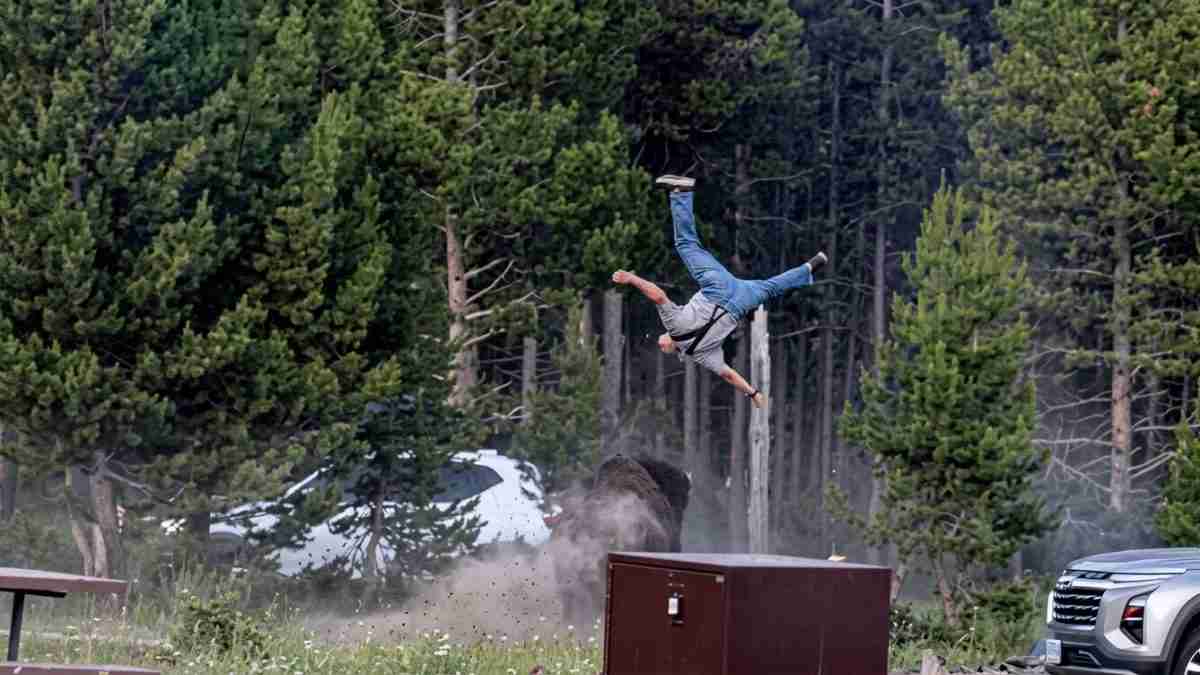
In a hospital-bed video from Bozeman Health, Isom-McDaniel said the animal first seemed calm before it suddenly focused on him at Bridge Bay Campground near Yellowstone Lake. “It picked a target. That target happened to be me,” he said.
He said the bison chased him around a tree and launched him into the air. “They move faster than you could ever imagine,” he said. A doctor speaking in the hospital video described the injury as a painful fracture broken in multiple pieces. Other coverage based on Isom-McDaniel’s comments said he suffered a broken femur in four places.
What happened at Yellowstone?
The National Park Service said park emergency medical personnel responded after the bison charged and tossed Isom-McDaniel on July 10 and took him to a nearby hospital. The incident happened inside Yellowstone, a federal park, while his treatment and recovery were reported in Bozeman, Montana.
Why are bison dangerous?
Bison can look slow and peaceful, but they are wild animals that can move quickly. In Yellowstone, the National Park Service warns visitors to keep at least 25 yards away from bison and never try to get closer.
That distance matters because a bison can react fast if it feels crowded or threatened. In this case, the attack left Isom-McDaniel with serious injuries and surgery.
What is known about his injuries?
The reporting varies on the exact wording of his injuries, but every account says they were severe. Some sources say his femur was broken in four places. Others describe multiple bone fractures. The sources do not provide a full medical update or a discharge date.
What should visitors remember?
Yellowstone’s advice is simple: give bison room. The park says to stay 25 yards away and never approach them.
The attack shows how quickly a close encounter with wildlife can turn dangerous, even at a campground in one of America’s most visited national parks.