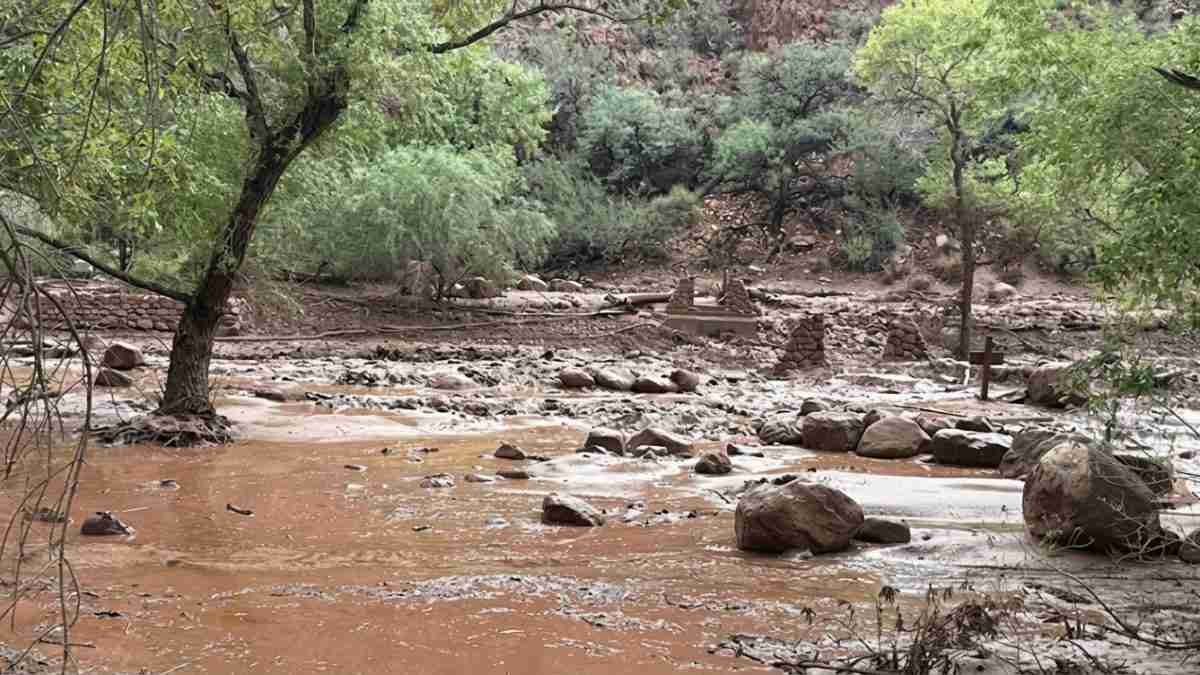
GRAND CANYON, Ariz., Aug. 31 (Our Arizona Times) — A flash flood in Arizona’s Grand Canyon National Park left about 14 to 15 people unaccounted for, killed at least one person and damaged trails, bridges and water infrastructure, according to the National Park Service.
The flood struck Bright Angel Canyon and the Phantom Ranch area at about 2:30 p.m. Aug. 29, 2026. The affected corridor includes Bright Angel Creek, Bright Angel Campground and the lower North Kaibab Trail, a route connecting the North Kaibab Trailhead with Phantom Ranch.
The reported number of people unaccounted for was first described as more than 20 before being revised in later park updates. The National Park Service has not provided a final count or said whether all of those being sought are confirmed missing or whether some have since been located.
What happened in the canyon?
The flood sent water through Bright Angel Canyon and affected visitors in and around Phantom Ranch, a group of cabins and facilities at the bottom of the Grand Canyon. The park service said 62 people had been evacuated from Phantom Ranch and the lower North Kaibab Trail by the morning of Aug. 30. More evacuations were planned from Cottonwood Campground and Phantom Ranch, with help from the Arizona Department of Public Safety.
The body of a 46-year-old man was recovered near Crystal Rapids along the Colorado River, the park service reported. His identity, cause of death and manner of death had not been released in the information available for this report.
Park officials asked for information about hikers, backpackers and campers who may have been traveling along Bright Angel Creek, staying at Bright Angel Campground or Phantom Ranch, or using the North Kaibab Trail between its trailhead and Phantom Ranch.
Why is access restricted?
The park service said nearly all footbridges over Bright Angel Creek were destroyed, leaving no way for hikers to cross the creek in those areas. The flood also caused extensive damage to infrastructure throughout Bright Angel Canyon.
Until further notice, the park has closed Phantom Ranch, Bright Angel Campground, the Phantom Ranch Canteen and cabins, the North Kaibab Trail between the trailhead and Phantom Ranch, and the Black and Silver bridges. Officials have not provided a reopening date.
The flood also damaged a water pipeline. The damage led to major water-conservation measures and planned restrictions affecting overnight accommodations. The full extent of the pipeline damage and how long the restrictions will last were not clear.
The American Red Cross assisted evacuees at the Maswik Lodge Cafeteria, according to information provided during the response.
What are officials warning about next?
The National Weather Service warned that more thunderstorms and heavy rain could cause additional flash flooding. Flash floods can develop quickly in narrow canyons and drainages, where water from storms upstream can reach areas with little warning.
The Aug. 29 flood was a single weather event. The available information does not establish whether it reflects a long-term climate trend. No peer-reviewed climate study or long-term monitoring analysis was included in the park updates about this incident.
How can people provide information?
The National Park Service Investigative Services Branch asked the public to report information about people who may have been in the affected corridor. Useful details include a person’s name, approximate location, travel plans, group size, clothing or backpack description, and when the person was last known to be in the area.
Tips can be submitted by calling 888-653-0009 or emailing nps_isb@nps.gov.