
Trump-backed map fails as Indiana State Senate rejects redistricting plan that would’ve added two GOP House seats
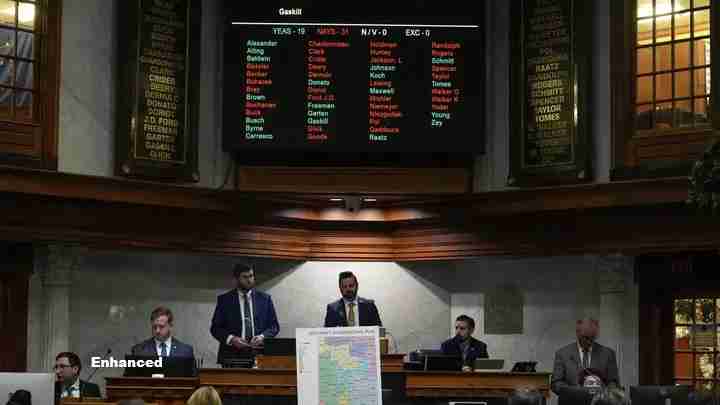
A Republican-controlled Indiana State Senate rejected a Trump-backed congressional redistricting map on Dec. 11, 2025, by a 31-19 vote — preserving the state’s current 9-1 GOP advantage amid intra-party divisions and legal risk.
Key takeaways
- Vote outcome: The Senate voted 31-19 to reject the plan, with 21 Republicans joining all 10 Democrats in opposition (Indianapolis Star, WTHR).
- Proposal aim: The map sought to redraw districts to create two additional Republican-leaning seats (Indiana Capital Chronicle, Ballotpedia).
- Next steps: Leaders plan to draft a more “court-proof” map and may reconvene in January 2026 (Inside Indiana Business).
Overview: What happened in the Indiana State Senate
On the night of Dec. 11, the Indiana State Senate voted down a Republican House-passed congressional redistricting map. The roll call was 31-19, with a surprising coalition of 21 Senate Republicans joining all 10 Democrats to block the plan. The proposed lines would have reshaped several central Indiana districts and were designed to produce two more reliably Republican U.S. House seats (Indianapolis Star; WTHR).
The vote followed a heated special session called by GOP leaders after the state House approved the map the day before. Supporters said the lines would reflect recent voting patterns and strengthen the Republican delegation. Opponents warned the map was too aggressive and posed a high risk of court challenges (Journal & Courier; Indiana Capital Chronicle).
Why the map mattered
Republican leaders framed the plan as a strategic move to protect or expand their majority in the U.S. House ahead of the 2026 midterms. Former President Trump publicly endorsed the map on Truth Social, urging lawmakers to “PASS THE MAP!” and calling it “FAIR AND SQUARE” (Indianapolis Star; Truth Social).
Many Senate Republicans argued the map went too far. Senate President Pro Tem Rodric Bray (R-Martinsville) warned it could lead to “endless litigation.” Defectors said they wanted a map that would survive legal scrutiny and avoid handing Democrats a court win — a clear sign of division within the state GOP between hard-line mapmakers and members focused on defensibility and public reaction (WNDU; WISH-TV).
Map specifics and legal risk
Analysts said the proposed lines would have packed Democratic voters into a few districts while spreading Republican voters elsewhere to create two additional safe GOP seats. Reporting and analysis pointed to changes affecting central Indiana and Indianapolis suburbs (Ballotpedia; Indiana Capital Chronicle).
Legal experts and advocacy groups highlighted major risks. The Brennan Center and academic models labeled the map’s partisan bias as significant and legally vulnerable. Prior Indiana maps were struck down over partisan bias, making lawmakers wary of repeating costly litigation losses (Cook Political Report).
How lawmakers voted and what they said
The final tally reflected a notable rebellion by Senate Republicans: 21 GOP senators joined Democrats to reject the map. Prominent defectors included Rodric Bray, who cited litigation concerns, and Jim Buck (R-Kokomo), who called the plan “too partisan.” Jeff Raatz (R-Richmond) warned of a national backlash against heavy-handed gerrymandering (WNDU; WISH-TV).
Supporters expressed disappointment but vowed to regroup. House Speaker Todd Huston (R-Fishers) said he was “disappointed” and suggested collaboration with Senate leaders on revisions. Indiana GOP Chair Kyle Hupfer criticized Republican senators who opposed the plan, language that echoed national fights over party discipline (Fox59; Indianapolis Star).
Reactions: national and state-level
Former President Trump reacted sharply on Truth Social, calling out Senate Republicans who opposed the plan and reiterating his call for strong maps to protect GOP control (Truth Social; Indianapolis Star).
Indiana Gov. Mike Braun remained publicly neutral but signaled support for a revised, legally defensible map. Outside groups and donors are watching; early fundraising data showed no immediate large-scale financial fallout for the state GOP, though a prolonged fight could mobilize outside spending in 2026 (AP News; OpenSecrets).
Broader context: why this fight matters nationwide
Indiana’s fight mirrors redistricting clashes in other states like Ohio and North Carolina, where hardline mapmakers and cautious Republicans have clashed. National analysts estimate state line-drawing in 2025 could shift control of the U.S. House by several seats in 2026, raising stakes beyond state borders (FiveThirtyEight; Cook Political Report).
Academic groups such as the Princeton Gerrymandering Project rated the proposed Indiana map as highly skewed toward one party — a factor that helped persuade a coalition of Senate Republicans to oppose the plan rather than risk another court reversal (Brennan Center).
Next steps for Indiana lawmakers
Senate leaders said they will return to the drawing board and aim for a “court-proof” map when they reconvene in January 2026. That approach seeks to balance political aims with legal defensibility to avoid repeat setbacks. For now, no new special session is scheduled and the current map remains in place (Inside Indiana Business; Journal & Courier).
Implications for United States
- Political consequences: The rejection lowers the chance Indiana will add two extra safe GOP seats in 2026, complicating national Republican plans to expand their U.S. House majority (Ballotpedia; Cook Political Report).
- Legal and institutional effects: Moving toward more defensible maps may reduce litigation risk across states — courts have shown willingness to strike maps engineered to shut out voters (Brennan Center; Princeton Gerrymandering Project).
- Voter perception and turnout: High-profile map fights can fuel voter anger and mobilize turnout among affected communities (FiveThirtyEight).
- Practical campaign effects: Parties and outside groups will reallocate resources; Democrats may see opportunities where aggressive maps fail, while Republicans must weigh litigation costs versus partisan gains (OpenSecrets).


