
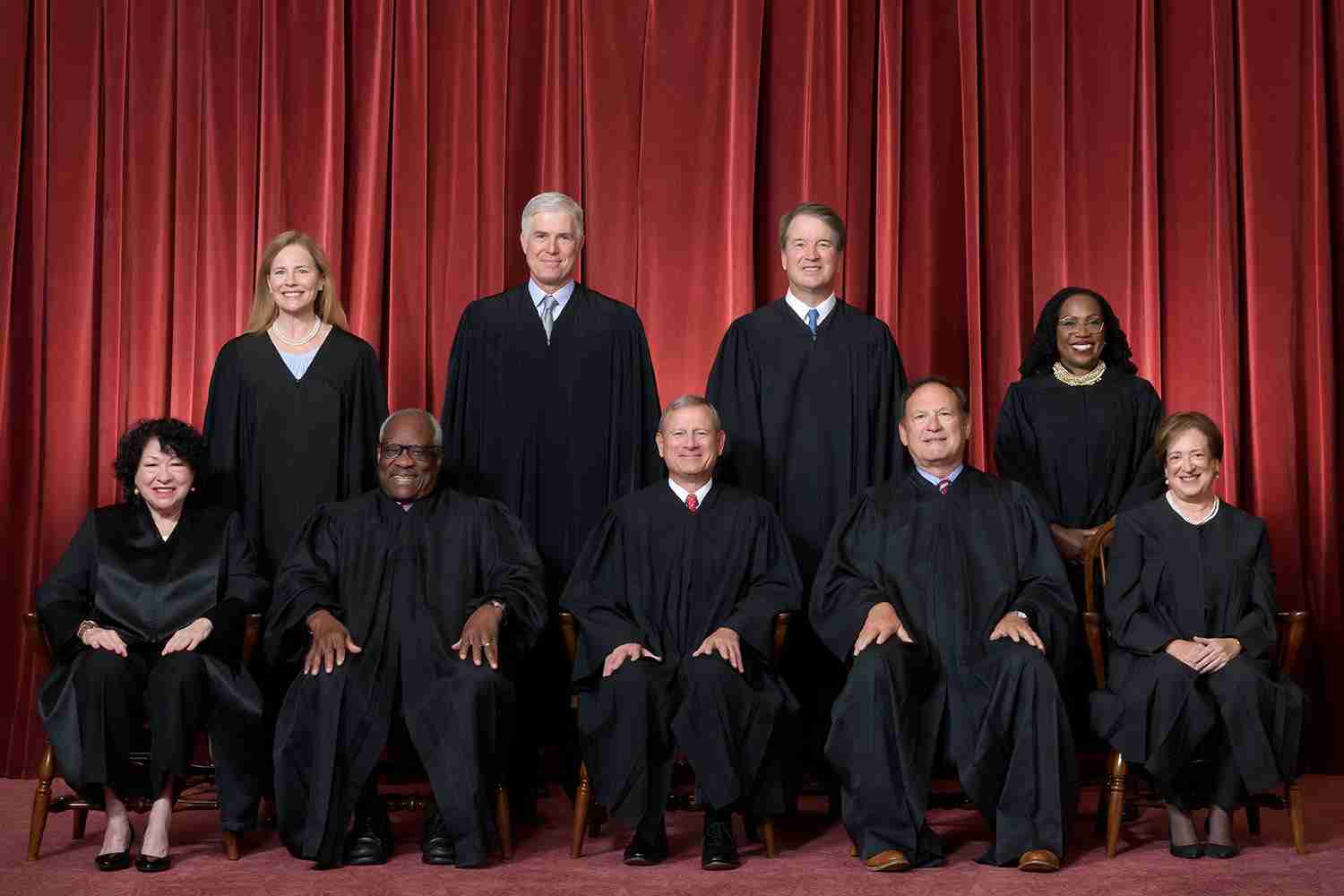
Trump lashes out after Supreme Court hearings on transgender athletes, saying justices who back trans plaintiffs “should lose a lot of credibility”
President Trump criticized Supreme Court justices after Jan. 13, 2026, oral arguments in cases over transgender girls in school sports, saying justices who back trans plaintiffs “should lose a lot of credibility” amid a contentious Title IX debate.
- Supreme Court heard West Virginia v. B.P.J. and Little v. Hecox on Jan. 13, 2026, a test of Title IX and equal-protection claims.
- Oral argument tone suggested conservative justices may favor state bans while liberal justices emphasized individualized review.
- President Trump publicly criticized justices he believed sided with transgender plaintiffs, framing the issue as protecting women’s sports.
- Decision will affect school policies, budgets and future litigation depending on whether courts allow categorical bans or require case-by-case assessments.
Key information
Cases: West Virginia v. B.P.J. and Little v. Hecox, argued Jan. 13, 2026.
Core legal claims: Plaintiffs say state bans violate the Equal Protection Clause and Title IX; states and the Trump administration argue bans are justified to protect fairness and safety. ACLU press release on oral arguments.
Presidential reaction: Trump criticized justices and touted his administration’s position.
Court tone: Questioning suggested conservative justices may favor the states’ bans; liberal justices pressed for individualized review and Title IX protections. See commentary from SCOTUSblog and Education Week.
What the president said
At a White House press conference Tuesday, Mr. Trump criticized several justices after the oral arguments, saying some “were fighting hard for men to be able to play in women’s sports”
and that any justice who rules that way “should lose a lot of credibility.”
He also noted his administration had taken steps he framed as protecting women’s sports, saying, “But we banned men from playing in women’s sports.” The comments were reported by Fox News.
What was argued at the Supreme Court — plaintiffs’ case
Attorneys for the transgender athletes argued that state laws that categorically bar transgender girls from girls’ and women’s teams violate the Equal Protection Clause of the Fourteenth Amendment and Title IX, the federal law that prohibits sex-based discrimination in schools that receive federal funds. The American Civil Liberties Union and other advocates said the bans treat transgender girls “differently from other girls on the basis of sex,” and urged the Court to protect individual rights under federal law.
Joshua Block, who represented B.P.J. (a pseudonym used in court filings), told justices the West Virginia law singles out transgender girls and harms them by denying access to the same school and athletic opportunities as other girls. Counsel relied on “but-for causation” — arguing the adverse treatment occurs because of sex-related characteristics and therefore fits within Title IX and equal-protection protections. They also argued that categorical bans are not narrowly tailored and that individualized assessment can protect fairness without total exclusion. See coverage in Education Week and JURIST.
What was argued at the Supreme Court — states and the Trump administration
Counsel for West Virginia, Idaho and other states defended their laws as lawful sex-separated sports rules designed to preserve fairness and safety in female athletics. They told the justices that biological differences matter in competitive sports and that legislatures are entitled to draw categorical rules to protect female competitors.
The Trump administration, represented by Hashim Mooppan, urged a lower standard of review — saying states need only show a “reasonable fit” between the law and the proffered interest in fairness, not a “perfect fit.” Mooppan relied on precedents that allow some government classifications related to sex when they serve important objectives. For background, see SCOTUSblog and JURIST.
How the justices questioned the lawyers
Observers said the tone of oral argument favored the states, based on many of the justices’ questions. Conservative justices pressed on historic norms that treat sports as a category separate from other Title IX contexts and questioned whether courts should overturn state rules that legislatures enacted for perceived competitive fairness.
Justice Neil M. Gorsuch asked why longstanding sports regulations that treat male and female athletics differently for competition should not make this case “very different.” Other conservative justices, including Justices Clarence Thomas and Amy Coney Barrett, asked skeptical questions about the challengers’ claims and whether courts should displace legislative judgments. See analysis at SCOTUSblog and Education Week.
The Court’s three liberal justices — Sonia Sotomayor, Elena Kagan and Ketanji Brown Jackson — focused on individual claims and medical realities, pressing whether a transgender girl who has undergone puberty blockers and hormone therapy and who lacks any retained biological advantage could bring a valid challenge to a categorical ban. Justice Jackson asked whether there is a plausible claim for a transgender athlete “who does not have, because of the medical interventions and the things that have been done, who does not have the same threat to physical competition and safety.” That emphasis pointed to individualized assessments and narrower remedies under Title IX; coverage in Education Week.
Why Title IX and Equal Protection matter here
Title IX is the federal civil-rights law that bars sex-based discrimination in education programs that receive federal money. The legal fight centers on whether treating someone as a transgender girl is discrimination “on the basis of sex” and whether Title IX or the Equal Protection Clause requires individualized review rather than broad exclusions.
Plaintiff lawyers argue that Title IX protections should extend to transgender students, while state advocates say Congress and state legislatures may set rules for sex-separated sports to ensure fairness. See the ACLU press release and analysis at JURIST.
What observers saw in the courtroom
Coverage from legal analysts and education reporters described the arguments as historic and closely watched. SCOTUSblog and other outlets noted the justices’ questioning suggested a possible majority ready to uphold state bans, though the final vote is not public and can surprise observers.
Several outlets emphasized that much turns on the Court’s legal framing — whether sports can be treated as a special context allowing broader sex-based classifications or whether Title IX and the Equal Protection Clause protect transgender athletes on an individualized basis. See reporting in JURIST.
Coverage and reactions
Civil-rights groups framed the hearings as a pivotal test of transgender rights, urging the Court to protect students under federal law. Read the ACLU statement.
State officials and conservative commentators argued rulings must preserve fairness and safety in women’s sports. The split in the justices’ questioning reflects how divisive the issue is across the country and how deeply it resonates with voters and families; for analysis see Education Week.
Implications for United States of America
Economic impact
A decision that upholds state bans could prompt more states to pass laws limiting transgender participation, affecting school sports budgets, state athletic associations and potential legal costs for litigation. Conversely, a ruling in favor of transgender athletes could lead to changes in state athletic policies and possible federal guidance, with implications for school compliance and funding tied to Title IX. Analysis: SCOTUSblog.
Political consequences
The issue is likely to shape campaigns and legislative agendas. For moderate conservatives, the ruling raises questions about balancing protections for women’s sports and federal civil-rights law. President Trump’s public criticism of justices who appeared sympathetic to transgender plaintiffs may feed partisan messaging and energize voters on both sides ahead of elections. See reaction coverage at Fox News.
Social effects
Families, students and school communities will watch closely. A ruling that allows individualized assessments may encourage more schools to craft case-by-case policies. A broad ruling upholding bans would affect transgender students’ access to teams and could heighten tensions in school districts debating participation rules. Advocates on both sides warn of emotional and social fallout. See statements from ACLU and reporting at JURIST.
Practical applications
School administrators, athletic directors and state associations will need to update policies depending on the ruling. If the Court favors individualized reviews, schools may adopt medical and eligibility review processes. If it upholds categorical bans, schools in affected states will be required to follow state law, and families may need legal advice about participation rights. The decision also could trigger further litigation over Title IX transgender rights across education programs. See related analysis at SCOTUSblog and JURIST.
Sources and further reading
- President Trump comments: Fox News, “Trump calls out Supreme Court justices after trans athlete hearing: ‘Should lose lot credibility’”
- SCOTUSblog coverage: “Supreme Court appears likely to uphold transgender athlete bans”
- Education Week: “Supreme Court signals support for state bans on trans girls in sports”
- JURIST feature: “Supreme Court takes up transgender athletes in girls’ sports”
- ACLU press release on oral arguments
The story continues as the Court prepares opinions that could reshape how Title IX and equal-protection law apply to transgender athletes.



