
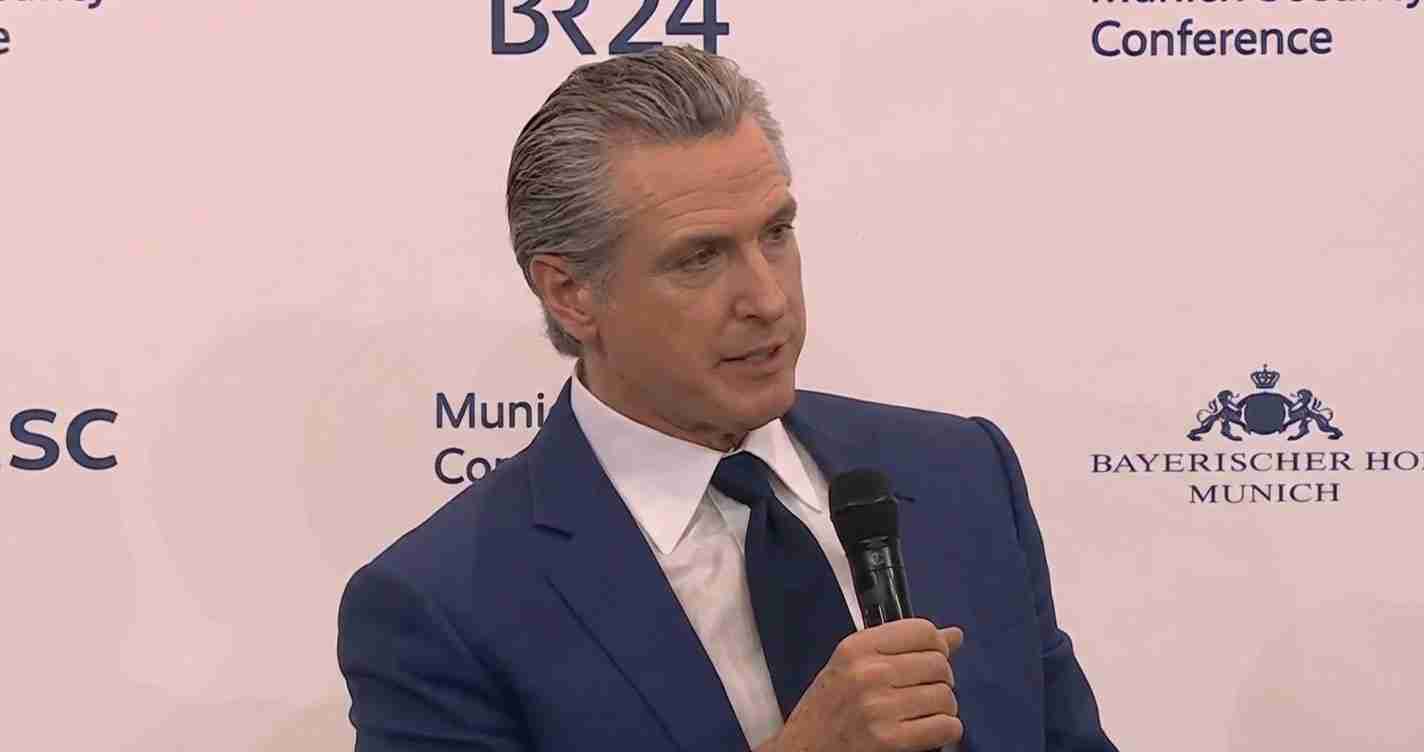
Newsom and AOC Put Trump on Trial in Munich as Democrats Build 2028 Foreign‑Policy Credentials
California Gov. Gavin Newsom and Rep. Alexandria Ocasio‑Cortez used the Munich Security Conference to publicly challenge President Trump’s climate and foreign‑policy choices, reassure European allies, and sharpen Democratic foreign‑policy credentials ahead of potential 2028 bids.
- Direct challenge: Newsom urged Europeans to partner with states like California and called President Trump “temporary,” while AOC warned the administration was undermining transatlantic ties.
- Policy focus: Newsom pushed state‑level climate diplomacy and trade ties; AOC linked democratic norms to domestic fiscal policy, urging rapid action on a wealth tax.
- Dual purpose: The appearances blended genuine outreach to anxious allies with early political positioning for 2028.
Newsom’s pitch: climate, stability and state diplomacy
On a climate and security panel, Gov. Newsom delivered a plainly political but policy‑heavy message. He told attendees, “Donald Trump is temporary. He’ll be gone in three years,” urging Europeans not to abandon low‑carbon cooperation with California and other subnational partners (ABC News; LA Times).
Newsom accused the federal administration of reversing long‑standing environmental protections (including the 2009 endangerment finding) and favoring fossil‑fuel interests. He used blunt language—saying Trump was “doubling down on stupid” and calling him “the most destructive president”—remarks captured in widely viewed YouTube and YouTube recordings of the panel.
Beyond rhetoric, Newsom sought concrete ties: he planned meetings in Munich, including with German Chancellor Friedrich Merz, to formalize a California‑Ukraine partnership and to expand trade and low‑carbon manufacturing collaborations—framing California as a stable, reliable global partner on jobs, trade and competition with China in EVs and clean manufacturing (LA Times).
AOC’s message: democratic norms and tax policy
Rep. Alexandria Ocasio‑Cortez used a town‑hall format at Munich to emphasize threats to the post‑war order, warning the administration was “tear[ing] apart the transatlantic partnership” and “rip[ping] up every democratic norm”—remarks meant to reassure European audiences that some U.S. leaders remain committed to rules‑based alliances (ABC News).
On domestic policy, when asked about a wealth or billionaire’s tax she replied:
“We don’t have to wait for any one president to impose a wealth tax… That needs to be done expeditiously.”
She framed taxation of the ultra‑wealthy as linked to democratic health at home and credibility abroad (ABC News).
Why Munich matters: rebuilding credibility
The Munich Security Conference is a high‑profile forum for debates on security, trade and foreign policy. For Democrats absent from the White House, it was a stage to reassure allies and show capacity to speak credibly on security and economic competition. Conference panels highlighted anxieties about climate‑energy security, populism and the fragility of the rules‑based order—captured by analysts as “wrecking‑ball politics.” Coverage and transcripts of sessions are available via LA Times and a panel transcript posted on YouTube.
Democrats stressed limits: party officials privately acknowledged they cannot reverse federal policy while President Trump remains in office, but argued that bolstering alliances and laying out alternatives matters both for diplomacy now and for 2028 positioning (ABC News).
Republican response and political pushback
The White House and some GOP voices dismissed the Munich appearances as partisan theater. A White House spokesperson mocked Newsom with the nickname “Gavin Newscum”, saying he was complaining rather than governing (LA Times).
Conservative outlets framed the event as an effort to raise national profiles ahead of 2028 (Fox News). Analysts see both motives—policy outreach and political positioning—at work, noting other Democrats such as Gov. Gretchen Whitmer and Sen. Ruben Gallego joined the Munich delegation to present a united, security‑focused alternative (ABC News).
Broader context: Trump’s international posture and GOP alternatives
Speakers at Munich repeatedly referenced recent U.S. actions that have strained allied ties—tariffs and trade threats, blunt commentary on Greenland and NATO burden‑sharing, and military moves in sensitive theaters. Critics view these as part of a transactional, isolationist turn that has unsettled partners (ABC News; LA Times).
The contrast with Republicans is nuanced: last year Vice President JD Vance alarmed many Europeans with a speech criticizing immigration policy and suggesting a narrow view of U.S. ties to Europe—opening space for Democrats to position themselves as steadier partners in 2028 debates (ABC News).
Implications for United States
Economic impact
If Democratic governors and lawmakers expand state‑level partnerships abroad, U.S. economic ties could diversify beyond federal channels. California’s push on low‑carbon manufacturing and EV supply chains aims to protect jobs and compete with China, but could also create friction with federal trade policy and will require coordination to scale nationwide (LA Times).
Political consequences
These Munich appearances form part of early 2028 jockeying: Democrats aim to reclaim credibility on security and frame Trump as a temporary disruption. Expect sharpened messaging from both parties—Republicans stressing executive action and strength, Democrats emphasizing alliances and norms (ABC News; Fox News).
Social effects
Framing democratic norms and wealth redistribution links foreign policy to domestic priorities. AOC’s call for a wealth tax signals the Democratic left will press fiscal change and social programs—heightening debates over taxation, growth, and government roles that matter to voters and business leaders.
Cultural relevance
Munich let Democrats address European audiences directly, showing subnational leaders and progressive figures can play diplomatic roles. That reassures some Americans skeptical of federal action but raises questions about coherence when state and national messages diverge.
Practical applications
Watch for follow‑up actions: state trade deals, public‑private clean‑energy pacts, and formal agreements like Newsom’s proposed California‑Ukraine partnership. Policymakers should prioritize clearer, consistent U.S. messaging to allies on NATO, China competition, and energy transition (LA Times; ABC News).


