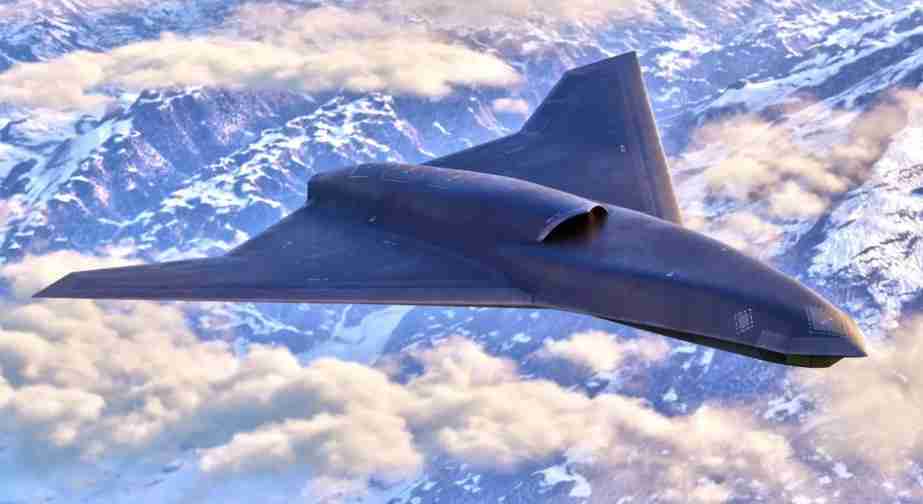
Lockheed’s Skunk Works Unveils Vectis — a Stealth Combat Drone Built to Fly with F-22s and F-35s
Skunk Works unveiled Vectis, a runway‑launched, stealthy Group 5 Collaborative Combat Aircraft that will fly as a ‘loyal wingman’ with F‑22 and F‑35 fighters, pairing advanced AI, modular payloads and survivability for contested airspace missions.
Key takeaways
- New CCA concept: Vectis is a Group 5, runway‑launched Collaborative Combat Aircraft (CCA) intended to act as a “loyal wingman” for F‑22 and F‑35 fighters — announced publicly in September 2025 (Axios).
- Stealth + AI: A tailless lambda wing, blended sensors and onboard autonomy aim to provide survivability and AI-driven mission execution for ISR, EW and precision strikes (Lockheed Martin press release).
- Prototype phase: A prototype is under construction; Lockheed has withheld engine, performance and timeline specifics while testing and reducing risk (Axios).
- Modular and reusable: Runway-dependent and reusable platform with a modular “Agile Drone Framework” to swap sensors and payloads for different mission sets (Skunk Works Vectis overview video).
Main story
What Lockheed announced
Lockheed Martin’s Skunk Works — the division behind the U‑2, SR‑71 and F‑117 — publicly revealed Vectis as a new stealthy, autonomous combat aircraft designed to fly with crewed jets. The company described Vectis as “the culmination of our expertise in complex systems integration, advanced fighter development and autonomy,” according to the Lockheed Martin press release.
The program is framed around Manned‑Unmanned Teaming (MUM‑T). Vectis is meant to operate as a collaborative combat aircraft (CCA) that can perform a wide range of missions to augment and protect manned pilots, reports Axios. Lockheed says Vectis will be a runway‑launched, reusable system sized between an F‑16 and the company’s smaller CMMT drone, per SlashGear.
“The culmination of our expertise in complex systems integration, advanced fighter development and autonomy.” — Lockheed Martin press release
Design and capabilities
Stealth-first airframe: Vectis uses a tailless lambda wing, top-mounted intakes, chine lines and blended antennas designed to keep the craft hard to detect in advanced air defenses. Lockheed characterizes the shape as optimized for survivability inside contested airspace (Skunk Works Vectis overview video).
Modular “Agile Drone Framework”: The platform is built for quick role changes. In the same airframe, operators can swap sensors and payloads so Vectis can shift between dogfighting, ISR, electronic warfare and precision strike roles as missions demand (Skunk Works Vectis overview video).
AI-driven autonomy: Described as a Group 5 lethal autonomous system, Vectis can fly independently or under the direction of manned aircraft. Its onboard AI is intended to handle navigation, target recognition and tactical choices — a central element for effective manned‑unmanned teaming (SlashGear).
Systems integration: Lockheed says Vectis will operate with its Multi‑Domain Combat System (MDCX) to share data in real time with 5th‑generation fighters like the F‑22 and F‑35 and other assets. That connectivity is critical for coordinated strikes and for keeping pilots informed while reducing their exposure (SlashGear).
Operational profile
Runway dependent and reusable: Unlike smaller loitering munitions or expendable systems, Vectis is designed to take off and land on runways and to be reused. That supports sustained operations and maintenance cycles familiar to current air forces (Axios).
Mission set: Lockheed lists ISR, targeting, offensive counter‑air (OCA), defensive counter‑air (DCA), electronic warfare and precision strike among Vectis’ intended roles. The drone can also act as a decoy or a communications relay to extend the reach of manned fighters (Axios; SlashGear).
Export, pricing and availability
Lockheed has said Vectis will be competitively priced and not tied to a single service contract. The company hinted the platform may eventually be offered to U.S. allies — an unusual step for Skunk Works programs, which traditionally remain tightly controlled (Axios).
Development status and unknowns
As of the September 2025 announcement, a prototype is under construction but not yet complete. Lockheed has withheld key technical details, including engine type, performance figures and production timelines. The public rollout appears aimed at demonstrating concept maturity while holding back specifics during Skunk Works’ step‑by‑step testing and risk‑reduction process (Axios; Lockheed Martin press release).
Why this matters
Vectis signals a strategic push to pair autonomous systems with manned fighters. MUM‑T can extend reach, reduce pilot risk and distribute effects across multiple platforms. For defense planners, such systems complicate an adversary’s targeting picture and increase deterrence by creating resilient strike options (Axios).
Skunk Works’ public reveal also reflects an evolving approach: showing the Vectis concept and discussing export potential suggests Lockheed perceives market demand and alliance value for CCAs that integrate with U.S. and partner forces (Axios; Lockheed Martin press release).
Implications for the United States
Economic impact: Vectis could create jobs and sustain supply chains across multiple states. A runway‑launched, reusable CCA requires sustained production, maintenance and upgrade cycles — work for manufacturers, technicians and contractors. Export sales, if pursued, could further support U.S. defense revenues and economies of scale (Axios).
Political consequences: The program sharpens debates about defense priorities, budgets and oversight. Lawmakers will demand clear acquisition plans, cost estimates and export controls if the platform moves beyond prototype status (Lockheed Martin press release).
Social effects: The introduction of lethal autonomous systems raises questions about rules of engagement, human oversight and civilian protections. Vectis emphasizes teaming with pilots, not replacing them, but lethal autonomy will prompt public and congressional scrutiny about safeguards and command authorities (SlashGear).
Practical applications: Vectis could extend the life and relevance of F‑22 and F‑35 fleets by adding sensors, weapons carriage and defensive screening. In theaters such as the Indo‑Pacific, Europe and the Middle East, runway‑based CCAs could offer flexible, survivable options for contested operations (Axios).
Oversight and risks: Key policy questions include how autonomous targeting is governed, cyber vulnerabilities in comms links, and proliferation risk if exports occur. Robust testing, clear rules of engagement and secure data links are essential before large‑scale fielding (Lockheed Martin press release; SlashGear).
Program next steps
Lockheed will continue building a prototype and conduct flight testing and integration work with MDCX and partner platforms. Officials say the program will proceed through careful risk‑reduction stages rather than leaping into production; operational timelines depend on testing, procurement and service interest (Axios).