Your next heart test could start with a T‑shirt: Imperial College’s AI smart T‑shirt heart monitor aims to catch hidden rhythm disorders
Imperial College London researchers are developing an AI‑assisted, machine‑washable smart T‑shirt with woven ECG sensors to enable comfortable, extended monitoring at home. Funded by the British Heart Foundation, it seeks earlier detection of inherited rhythm disorders that can be intermittent and life‑threatening.
Key takeaways
- Wearable design: A soft, sportswear‑style T‑shirt with up to 50 ECG‑style sensors woven into the fabric is being prototyped for days‑long, machine‑washable monitoring.
- AI analysis: Algorithms are trained on ECG data from >1,000 people, including those with known inherited rhythm problems, to spot fleeting dangerous patterns.
- Early trials: A feasibility study will enroll ~200 volunteers for up to three months of real‑world wear at Hammersmith Hospital.
- Timeline & caveats: Researchers estimate roughly five years to clinical use if trials, manufacturing and regulation succeed; costs, long‑term durability and data governance remain unresolved.
Why extended monitoring matters
Inherited heart rhythm disorders can be intermittent, so a standard 10‑minute clinical ECG often misses dangerous electrical changes. Extended monitoring provides context: patterns that appear normal on one reading can reveal elevated risk when viewed across hours or days.
Comfort and practicality are central to the Imperial team’s approach: a garment patients can wear while sleeping, exercising and showering may make long monitoring periods feasible and more likely to catch fleeting abnormalities.
Design and technology details
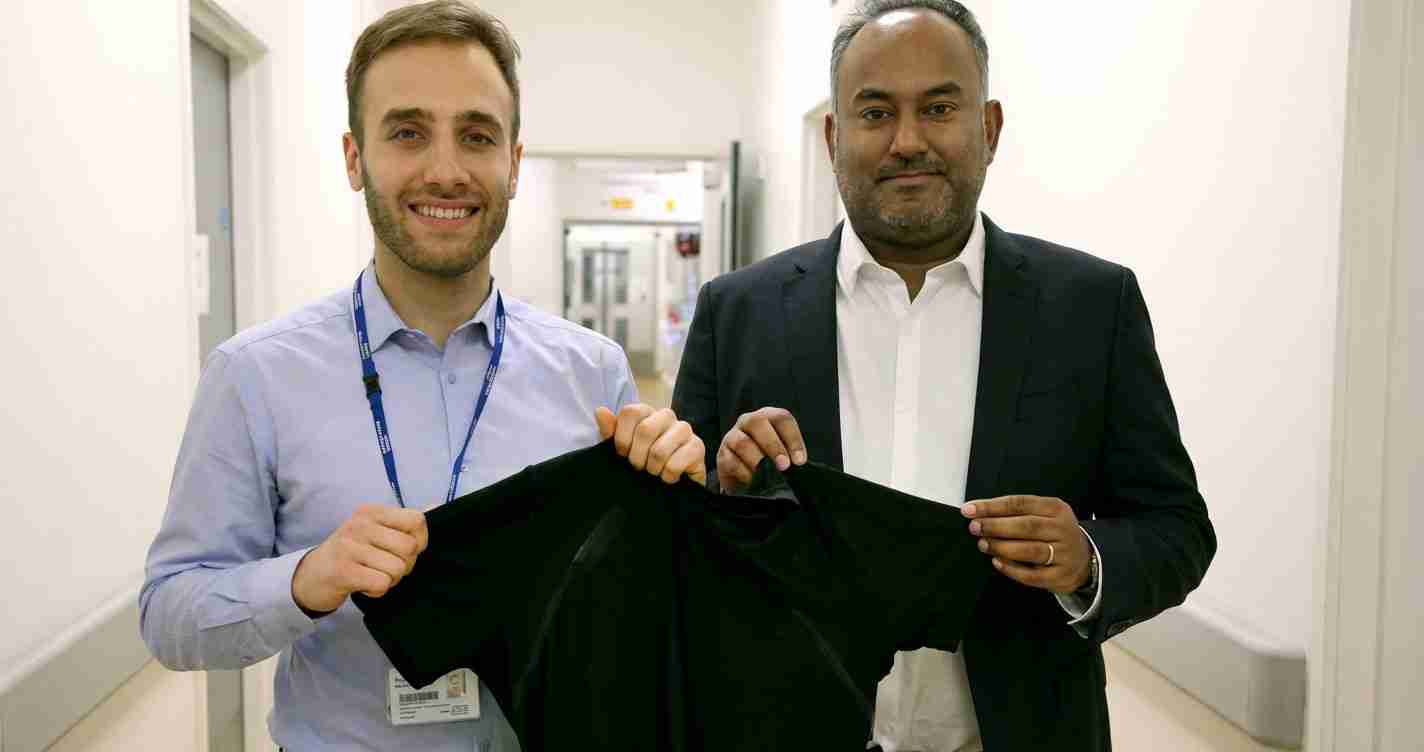
The prototype is a soft, sportswear‑style T‑shirt with up to 50 small ECG‑style sensors woven into the fabric. Onboard electronics collect continuous cardiac signals and feed them to AI models that search for patterns linked to inherited conditions, including Brugada syndrome. The garment is designed to be comfortable, machine‑washable and suitable for extended wear in prototype testing.
“Far too many people die from inherited heart conditions which could be treated if they were identified earlier… We hope our AI‑assisted t‑shirt will provide a practical and comfortable solution.” — Professor Zachary Whinnett
How the AI is being trained
Machine‑learning models are trained on a library of ECG recordings from more than 1,000 people, including individuals with confirmed inherited rhythm disorders and those without known problems. This mix helps the algorithm learn to distinguish normal variation from signals that may indicate elevated risk. Researchers emphasise diverse, high‑quality data to reduce false alarms and improve real‑world performance.
Testing and the path to clinics
The next phase is a feasibility study: ~200 adults will wear the shirt for up to three months at Hammersmith Hospital’s Peart‑Rose Research Unit while researchers compare continuous recordings and AI assessments with conventional testing and clinical follow‑up. The project is supported by the NIHR Imperial Biomedical Research Centre and the British Heart Foundation.
If results are promising, trials may expand to children and other rhythm conditions such as atrial fibrillation.
Safety, regulation and remaining unknowns
Investigators estimate about five years to routine clinical use if trials and regulatory reviews go well. Key unknowns include device manufacturing plans, per‑unit costs, long‑term wearability and durability beyond early tests, plus independent validation in larger populations.
Continuous monitoring creates large volumes of personal health data. Questions of storage, access, algorithmic auditing for accuracy and bias, and legal liability will need clear answers before widespread deployment.
Nationwide research context and scale
Imperial researchers note that inherited heart rhythm disorders affect many thousands in the UK and are linked to sudden cardiac death in young people. Short ECG tests can miss intermittent abnormalities; wearable AI monitors are one among several innovations aiming to detect these silent threats earlier.
Implications for the United States
Economic impact: Successful smart‑T‑shirt technology would likely spur U.S. commercialization, new manufacturing and research jobs, and markets for remote monitoring services. Cost and reimbursement (Medicare, Medicaid, private insurers) will affect adoption.
Regulatory pathway: Any U.S. product would require FDA review of sensors, algorithms and diagnostic claims; developers will need robust trial data demonstrating sensitivity, specificity and safety in diverse populations.
Privacy, equity and clinical practice: HIPAA will apply to many data flows, but wearables can create gray areas. Policymakers, payers and clinicians will need guidelines for use, data governance, coverage and programs to avoid widening disparities.
Research sources and further reading
- Imperial College London: AI‑assisted smart T‑shirt being developed to improve detection of inherited heart rhythm disorders
- Imperial College London: AI T‑shirt could improve heart monitoring
- British Heart Foundation news release: Smart T‑shirt could reveal heart conditions in danger of being missed
- MedicalXpress: Smart shirt could reveal heart conditions
- Related coverage and context: Fox News tech report on wearable monitor
Key information (project summary)
- Project lead: Professor Zachary Whinnett, National Heart and Lung Institute, Imperial College London
- Funding: More than £340,000 from the British Heart Foundation
- Technology: A soft, sportswear‑style T‑shirt with up to 50 ECG‑style sensors woven into the fabric; machine‑washable and designed for days of continuous wear — reported by Imperial College London and the NHLI article
- AI training: Algorithms trained on ECG data from more than 1,000 people, including those with known inherited rhythm problems (Imperial report)
- Early trial: About 200 volunteers will wear the shirt for up to three months at Hammersmith Hospital’s Peart‑Rose Research Unit to test real‑world detection (Imperial College London)
- Timeline: Researchers estimate the device could reach clinical practice in roughly five years if trials and regulatory reviews go well (Imperial College London)
Reporting based on materials released by Imperial College London and the British Heart Foundation, February 2026.