
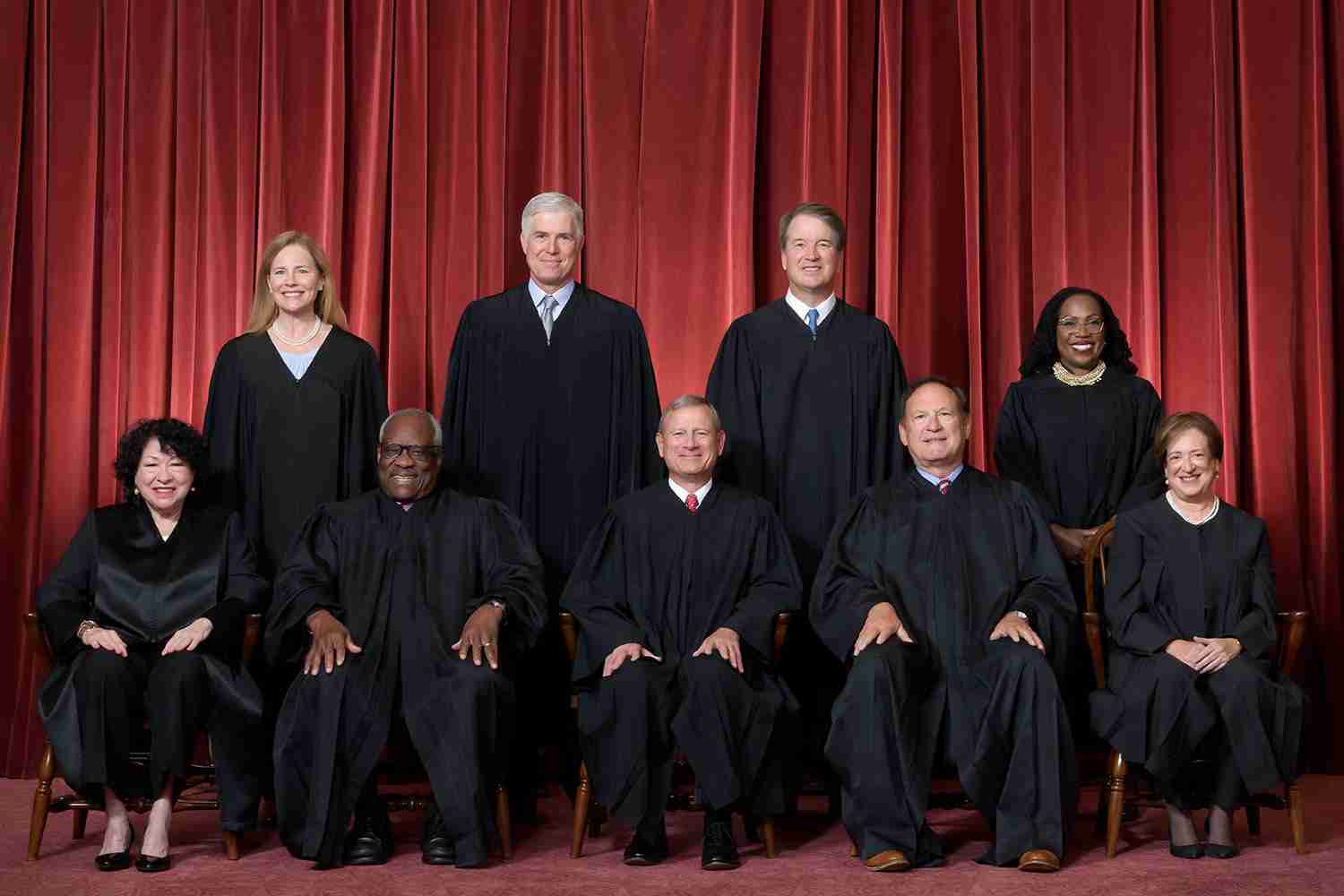
Alito Cites Scalia’s ‘Microwave’ Analogy as Supreme Court Weighs Birthright Citizenship
The Supreme Court this week debated whether the 14th Amendment’s birthright clause covers children born to parents who are in the U.S. unlawfully, as Justices challenged Solicitor General John Sauer and invoked Scalia’s “microwave” analogy.
- Text vs. history: Alito relied on a Scalia-style textualist example to argue that a general rule can cover unforeseen circumstances (Source).
- Government stance: Solicitor General John Sauer initially aligned with Alito’s framing while defending Executive Order 14160 (Source).
- Court skepticism: Chief Justice Roberts, Justice Kagan and others pushed back on using narrow historical exceptions to limit the Amendment’s plain text (Source).
- High stakes: Opponents warn that altering the longstanding understanding could put the citizenship of millions at risk (Source).
What Alito said and why the microwave analogy matters
Justice Samuel Alito told the Court that Justice Antonin Scalia’s approach to textualism illustrates how courts should apply a clear, general rule to facts the drafters could not have imagined. Alito recounted Scalia’s hypothetical: a theft statute written before the invention of microwave ovens cannot be read to exclude later cases about stealing a microwave; the statute’s general rule still applies (Source).
By analogy, Alito suggested the 14th Amendment phrase “born . . . in the United States, and subject to the jurisdiction thereof” could be read as a broad rule that reaches births to parents whose circumstances the framers did not foresee, including those who entered or remained unlawfully. He emphasized that illegal immigration was “basically unknown” in 1868 and asked whether the Amendment’s plain text should govern modern circumstances or whether courts should read in unstated historical limits (Source).
How the solicitor general responded
Solicitor General John Sauer, defending President Trump’s Executive Order 14160 — which would end automatic citizenship for babies born in the United States to mothers who are illegal immigrants or temporary visitors — told Justice Alito he “strongly agree[d] with the way that you framed it, that there is a general principle.” That initial alignment attracted attention because the government’s formal argument emphasizes a focus on temporary visitors and not a broad, status-based exclusion (Source).
Pushback from other justices
Several justices voiced skepticism about relying on narrow historical exceptions to reshape modern citizenship law. Chief Justice John Roberts labeled some government arguments “very quirky,” questioning whether a few historical examples — such as children born to foreign diplomats or wartime enemies — could justify excluding an entire class like children born to parents unlawfully present in the U.S. (Source).
Justice Elena Kagan pressed Sauer on consistency: if the government’s case hinges on temporary visitors, she argued, it cannot simultaneously adopt Alito’s broader textualist theory unless it concedes that an exclusionary principle for certain groups existed at the time of the Amendment. “Your whole theory of the case is built on that group … so you can’t really be going with Justice Alito’s theory,” she said (Source).
Lines of agreement and division among the justices
During oral argument, Justices Samuel Alito and Clarence Thomas appeared most receptive to the administration’s framing. Other justices — including Chief Justice Roberts and Justice Neil Gorsuch — expressed notable doubt. The split highlights not only disagreement over outcome but also over interpretive method: whether to apply plain text broadly to new circumstances or to confine it based on historical understandings and exceptions (Source).
Text, history and the scope of the 14th Amendment
At the heart of the dispute is the Amendment’s language: “All persons born . . . in the United States, and subject to the jurisdiction thereof, are citizens of the United States.” The clause centers on place of birth and jurisdiction, not parental status. Legal analysts note the words “parent” or “mother” do not appear in the clause or in the 1952 statute that codifies birthright citizenship — whereas the administration’s Executive Order 14160 repeatedly uses parental-status terminology, a point flagged by scholars and courts (Source).
The ACLU and other opponents warned the government’s theory could imperil the citizenship of millions. ACLU attorney Cecilia Wang opened her argument by stating the longstanding rule plainly: “Ask any American what our citizenship rule is, and they’ll tell you, everyone born here is a citizen alike.”
She cautioned that endorsing the government’s view could cast doubt on the status of many past and future births (Source).
Procedural stakes and the executive order
The litigation directly tests Executive Order 14160, which would end automatic citizenship for children born in the United States to mothers who are illegal immigrants or temporary visitors. The case asks whether the President may accomplish by executive action what the 14th Amendment and longstanding statutory interpretation have been read to guarantee, raising questions that mix textualism, original understanding, and real-world consequences.
Implications for the United States
- Economic impact: Narrowing birthright citizenship could complicate workforce planning, public benefits, and state budgets, creating new noncitizen statuses that increase administrative costs for hospitals, schools, employers and agencies (Source).
- Political consequences: A ruling upholding limits could energize immigration-restriction movements and alter campaign debates; a rejection would reinforce the traditional reading and push change toward Congress (Source).
- Social effects: Changing the rule could affect family life, access to education and healthcare, and increase demand for legal services for families uncertain about citizenship status (Source).
- Cultural relevance: Birthright citizenship is central to national identity; any major shift will provoke debates over belonging and the Constitution’s role in defining the political community (Source).
- Practical applications: If the Court allows the order, federal, state and local entities will need clear registration, ID and benefits rules; hospitals and registrars could face new reporting obligations. If the Court rejects the order, current practice remains and future executive actions may be constrained (Source).
Reporting and sources
This piece draws on court reporting and legal analysis of Wednesday’s oral arguments, including reporting on the Court’s exchange and the solicitor general’s statements, the 14th Amendment textual analysis, and video coverage of the hearing.
Preserved facts, sources and URLs are included verbatim where referenced.



