U.S. Clarifies Clade I Mpox Record, Debunks Connecticut‑Western Europe Report as Officials Monitor Rare Hantavirus Cases Abroad
Confirmed records show the first U.S. Clade I mpox case was reported in California in November 2024; reports of a Connecticut–Western Europe Clade I case are inaccurate as officials continue to monitor rare hantavirus reports abroad.
Key takeaways
- First U.S. Clade I case: California reported the index U.S. Clade I mpox case on Nov. 15, 2024 (CDC HAN 00519).
- Connecticut report unverified: There is no confirmed Connecticut Department of Public Health announcement linking a Clade I case to travel in Western Europe; social posts are misleading.
- Scope: Through February 2026, 11 U.S. Clade I cases were recorded, mostly travel-associated or small clusters; overall public risk remains low (CDC situation summary).
- Hantavirus: Rare globally and rodent‑associated; no verified Europe‑wide surge linked to mpox reporting (WHO hantavirus guidance).
What public records show about Clade I Mpox U.S. cases
Harmful or misleading social posts suggested a newly identified Clade I mpox infection in Connecticut linked to travel in Western Europe. State and federal records do not support those claims. The Centers for Disease Control and Prevention and state health departments documented the first U.S. Clade I case in California on Nov. 15, 2024, in a traveler from Central Africa (CDC HAN 00519), with no secondary U.S. cases reported at that time.
CDC surveillance through February 2026 recorded a total of 11 Clade I Mpox U.S. cases. These include travel‑associated cases and a small number of domestically acquired infections, some genomically linked to earlier travel‑related cases. Public health officials describe these as limited events and emphasize that the overall risk to the general public is low. The CDC continues to monitor non‑variola orthopoxvirus (NVO) positives that are clade II–negative and asks laboratories to report such findings and submit specimens for sequencing (CDC situation summary).
Clade I versus Clade II: what that means
Mpox viruses are categorized by genetic clades. Historically, Clade I (Central/Eastern Africa) has been linked to more severe disease and higher case‑fatality rates, while Clade II (West Africa) was the dominant clade in the 2022–2023 global outbreak and is generally milder.
- Clade I: Historically higher severity; recent outbreak data (e.g., Democratic Republic of Congo, 2024) reported case‑fatality rates ~1–2% in some series, with higher risk for children and pregnant people (WHO mpox fact sheet).
- Clade II: Associated with lower hospitalization and generally milder clinical course.
Clinical management is the same for both clades: isolation, supportive care, and antivirals in severe cases. Clade identification primarily informs public health risk assessment, contact tracing, and sequencing priorities (CDC clinical overview).
Verified timeline and notable U.S. developments
- Nov. 15, 2024: California reports the first confirmed U.S. Clade I mpox case in a traveler from Central Africa (CDC HAN 00519).
- Aug–Oct 2025: Additional travel‑associated cases and a small cluster of three genomically linked cases with no recent travel were reported; investigators treated these as isolated community transmission events, with intensified contact tracing and sequencing (CDC outbreaks page; JHU mpox reports).
Testing and reporting requirements
The CDC asks clinicians and laboratories to report NVO‑positive tests that are clade II–negative and to submit specimens for sequencing so public health labs can confirm clade and monitor spread. Laboratories seeking guidance may notify poxvirus@cdc.gov. These steps help limit uncertainty and reduce Mpox misinformation Connecticut and elsewhere.
What officials say about risk and vaccination
Public health authorities state that Clade I Mpox U.S. cases do not pose a broad risk to the general public, but they encourage targeted prevention. Connecticut and other states stress vaccine access for at‑risk groups. The two‑dose JYNNEOS vaccine is safe and effective; completing the series offers the best protection for people at higher risk, including some travelers and men who have sex with men (MSM) with multiple partners (CDC vaccine guidance).
“For people preparing for travel, festivals, and gatherings, vaccination remains an effective way to protect yourself and your partners.”
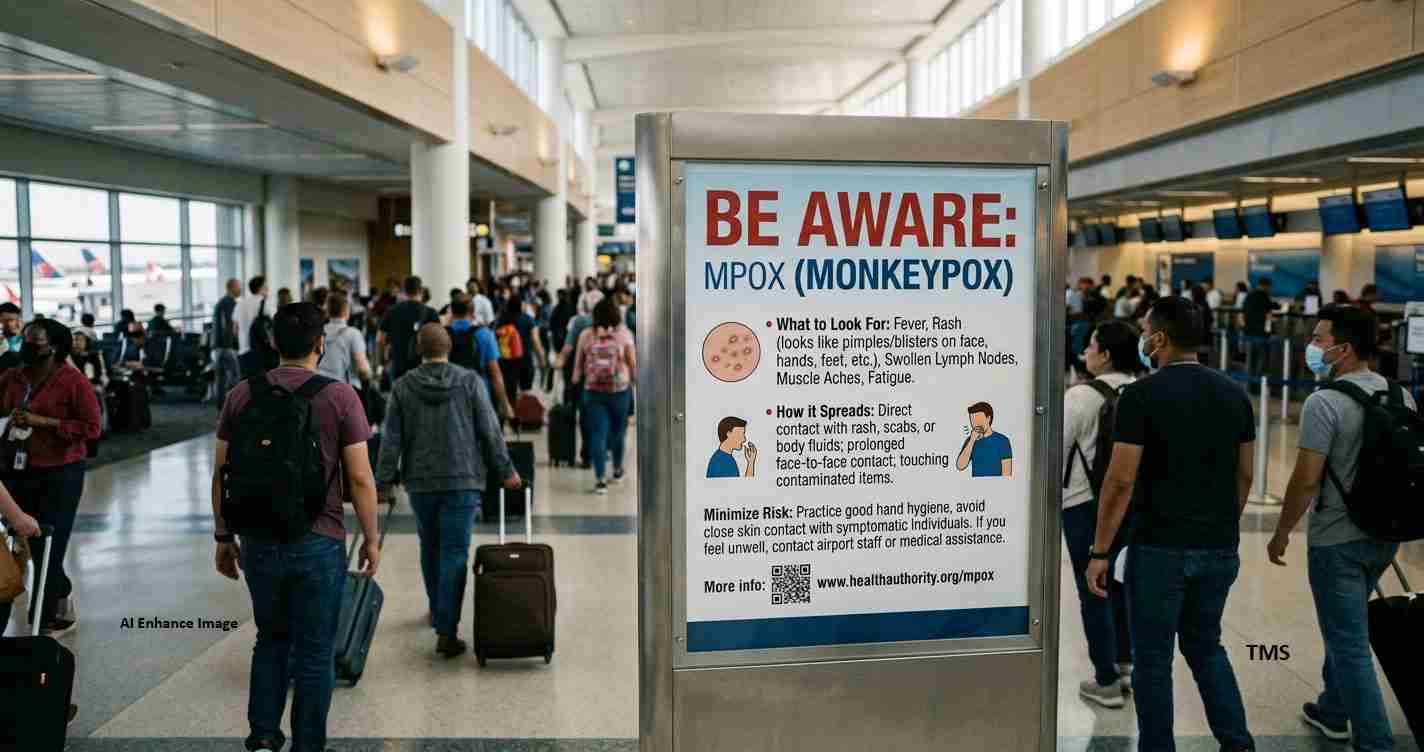
Clinicians are advised to recognize mpox symptoms — fever, swollen lymph nodes, and a characteristic rash or lesions — and to isolate suspected cases pending testing (CDC clinical overview).
Hantavirus reports in Europe: what’s known and what isn’t
Some social posts have tied hantavirus reports in Europe to mpox coverage, causing confusion. Hantaviruses are distinct viral pathogens transmitted primarily through contact with infected rodents or their droppings. Although hantavirus infection can cause severe respiratory illness, cases are rare in Europe and globally. The World Health Organization provides guidance emphasizing rodent control and avoidance of exposure (WHO hantavirus fact sheet).
Public health verification does not show a Europe‑wide hantavirus surge linked to recent mpox reporting. Agencies recommend routine precautions in rodent‑prone environments and seeking prompt care for severe respiratory symptoms. There is no evidence that hantavirus and mpox are linked in transmission.
Guidance for clinicians, labs and the public
- Clinicians: Consider mpox in compatible clinical presentations, isolate suspected cases, and notify public health authorities. Use CDC clinical guidance for testing and management (CDC clinical overview).
- Laboratories: Report NVO‑positive/clade II–negative tests and submit specimens for sequencing. Contact poxvirus@cdc.gov for specimen submission guidance.
- At‑risk individuals: Vaccination with JYNNEOS (two doses) is recommended for those at increased risk; complete the series for best protection (CDC vaccine page).
- General public: Risk remains low. Practice good hygiene, avoid contact with sick people or animals with unexplained lesions, and check official sources before sharing health claims to counter Mpox misinformation Connecticut.
Implications for United States
Economic impact: Limited and near‑term. With small, mostly travel‑linked case counts, broad economic disruption is unlikely. Targeted public health actions—testing, vaccination for high‑risk groups, and contact tracing—will carry modest costs compared with more disruptive responses.
Political consequences: Agencies face pressure to communicate clearly and transparently. Accurate messaging that counters Mpox misinformation Connecticut will be important to maintain public trust and avoid politicization of routine public health measures.
Social effects and cultural relevance: Vigilance may rise among higher‑risk groups and travelers. Clear, non‑alarmist public health messaging and vaccine access for vulnerable populations can help preserve normal social activity while protecting those at risk.
Practical applications for residents
Get information from verified sources before sharing health claims. If you are in a recommended vaccine group, discuss JYNNEOS with your clinician. Travelers to or from areas with known mpox activity should follow CDC guidance, monitor for fever or rash, and report suspected cases to local health departments promptly (CDC resources).
Sources and further reading
- CDC HAN 00519, Nov. 15, 2024
- CDC Mpox situation summary
- CDC clinical overview of mpox
- CDC mpox outbreaks page
- CDC vaccine information (JYNNEOS)
- WHO mpox fact sheet
- WHO hantavirus fact sheet
- Johns Hopkins Center for Health Security mpox summary
For ongoing updates, monitor the CDC and WHO pages and consult state health department notices before sharing unverified reports.