NEW ORLEANS, Aug. 8 (Nationwide Times) — People with open wounds should stay out of warm coastal or brackish water, and anyone who eats shellfish should cook it thoroughly, health officials say. Those steps can reduce the chance of infection with Vibrio vulnificus, a bacteria that can cause severe illness in some people.
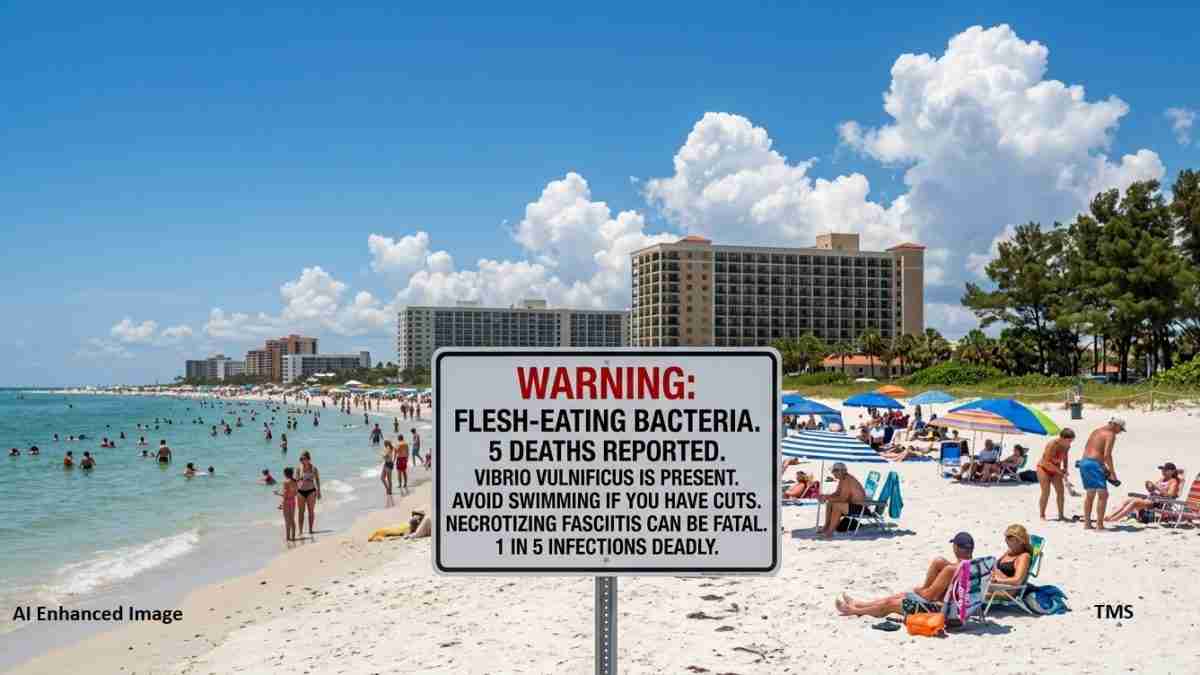
Louisiana has reported nine Vibrio vulnificus cases and five deaths in 2026, according to the Louisiana Department of Health. The department said all nine cases involved seawater exposure through wounds, and that each infected patient had an underlying medical condition.
The cases are a reminder of a seasonal risk in U.S. coastal areas, but the Louisiana figures do not mean that most people exposed to seawater will become infected. The Centers for Disease Control and Prevention’s estimate that about one in five people with a Vibrio vulnificus infection die applies to people who develop the infection, not to everyone who swims in or visits coastal water.
How infection happens
Vibrio vulnificus occurs naturally in warm saltwater and brackish water, which is a mixture of fresh and saltwater. The Louisiana Department of Health, the CDC and the Florida Department of Health say the bacteria are found in higher numbers from May through October, when water temperatures are warmer.
A person can become infected when an open cut, scrape or other wound comes into contact with contaminated coastal water. Infection can also occur after eating raw or undercooked shellfish, especially oysters, according to the CDC, Louisiana health officials and the Florida Department of Health.
The Louisiana cases reported in 2026 were linked to wound exposure. The health department information does not say whether any of those cases involved raw or undercooked shellfish.
Who faces the greatest danger?
The Florida Department of Health says healthy people who become infected typically develop mild disease. It says the greatest concern is for people with weakened immune systems and, in particular, those with chronic liver disease.
The Florida agency also cites a recent study that found people with certain pre-existing conditions were 80 times more likely to develop a bloodstream infection. The agency’s page does not identify the study or provide the underlying absolute risk, so the figure does not show how likely infection is for a typical beachgoer.
What severe illness can look like
Vibrio vulnificus can cause a bloodstream infection, septic shock, blistering skin lesions and necrotizing fasciitis. Necrotizing fasciitis is a serious infection that destroys tissue and is sometimes called “flesh-eating” disease in news reports. The term describes the damage caused by the infection; it is not the formal name of the bacteria.
The CDC says about one in five people with Vibrio vulnificus infection die, sometimes within a day or two of becoming ill. The CDC also says many people with wound infections require intensive care or surgical removal of damaged tissue. Louisiana health officials say severe infections may require intensive care or limb amputation.
Anyone who develops signs of illness after wound contact with coastal water or after eating raw shellfish should seek medical care promptly, according to health authorities. The supplied health department information does not provide a complete list of symptoms or a timetable for every case.
What the latest state numbers show
Florida Department of Health data recorded 12 cases and one death in Florida as of July 30, 2026. The death occurred in Palm Beach County, according to the state data cited in coverage of the announcement.
Florida reported 33 cases and five deaths in 2025, and 82 cases and 19 deaths in 2024, according to the Florida Department of Health’s records. Louisiana documented 26 cases in 2025, according to state health officials cited in a 2025 report.
The available information does not establish a complete national total for 2026. It also does not show that the recent Louisiana and Florida counts represent a nationwide surge.
Practical precautions
The CDC, Louisiana Department of Health and Florida Department of Health advise people to avoid exposing open wounds to saltwater or brackish water. People with wounds who must be near the water should follow health officials’ guidance on keeping them clean and covered.
The agencies also advise avoiding raw or undercooked shellfish and cooking shellfish thoroughly before eating it. People with chronic liver disease or weakened immune systems should take particular care, because health officials identify them as more likely to develop serious illness.
These precautions focus on specific exposures: contaminated water entering a wound and eating uncooked shellfish. They do not mean that every visit to a beach will lead to infection. The state reports show serious outcomes among a small number of reported cases, while the risk for any individual depends on exposure and health conditions.