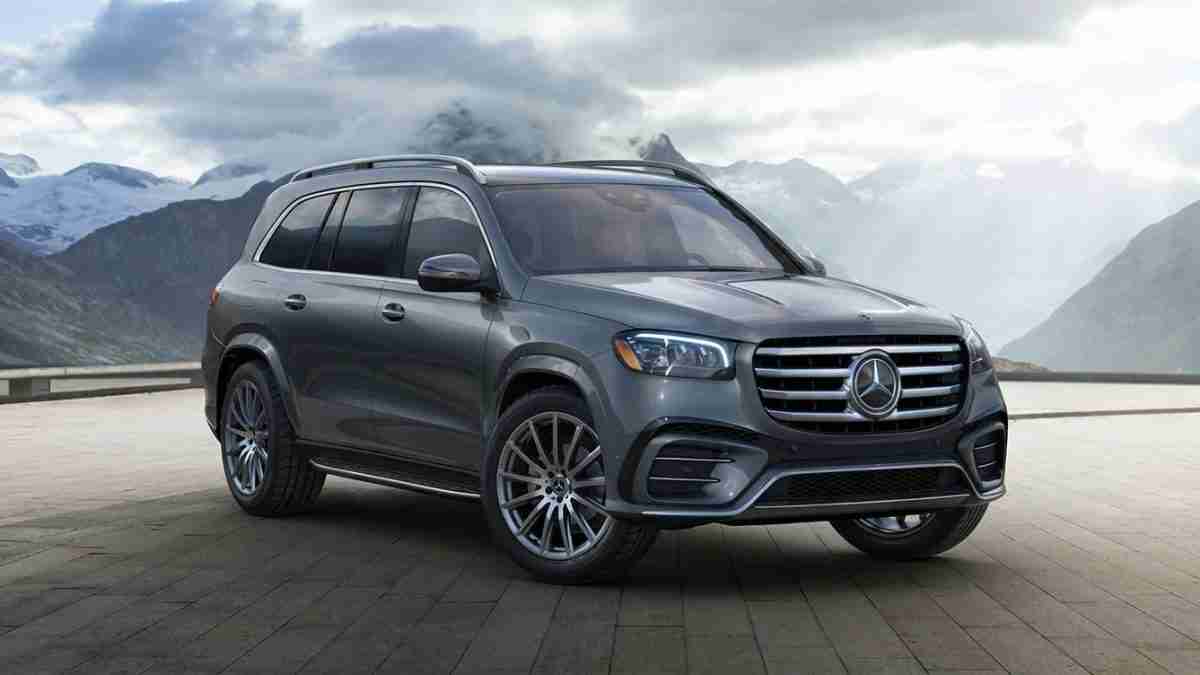
UNITED STATES, July 28 (Nationwide Times) — The Senate Commerce Committee has approved a bill that would limit sales of connected vehicles by automakers with more than 15% ownership by Chinese entities. That matters for Mercedes-Benz because reports say Chinese investors collectively hold close to 20% of the company.
The proposal is not law yet. It still needs more congressional action before it could change what automakers may sell in the United States.
What did the Senate committee approve?
On July 22, the Senate Commerce Committee advanced legislation aimed at keeping connected vehicles tied to Chinese ownership out of the U.S. market. During the committee markup, Chairman Ted Cruz said the 15% threshold would sweep in Mercedes-Benz. Sen. Bernie Moreno said the company would have until 2030 to comply and could seek a waiver.
The key point is that the bill looks at ownership, not just who runs the company day to day. If the final text stays the same, an automaker can run into trouble even if the Chinese stake is described as passive.
Why is Mercedes-Benz affected?
Several reports say Mercedes-Benz Group AG has Chinese shareholders that together approach 20% ownership. The names most often cited are BAIC, the Beijing-based automaker, and Li Shufu, the founder of Geely.
That is why the company keeps coming up in the debate. A 15% cap leaves little room when the reported stake is already close to 20%.
Cruz tried to calm fears that lawmakers wanted to target Mercedes-Benz directly. But his warning also showed the bill could have a wider reach than some senators intended.
What is a connected vehicle?
A connected vehicle is a car or truck that can send and receive data through built-in software and wireless systems. In plain terms, it is a vehicle that is linked to the internet or other networks.
Lawmakers say those systems can raise security concerns if a foreign government or foreign-linked company has too much influence over the maker of the vehicle.
That is why the bill focuses on ownership thresholds. The concern is not only about imports. It is also about the digital systems built into modern cars.
Would Mercedes-Benz be banned right away?
No. The company is not banned now, and the bill has not become law.
The Senate committee vote is only one step. The measure would still need to clear the full Senate, the House and then receive presidential approval before it could take effect.
Even if the bill eventually passes, Moreno’s comments suggest there could be a transition period. But the reports do not fully explain how any waiver system would work or what a 2030 compliance deadline would mean in practice.
How has Mercedes-Benz responded?
In May, Mercedes-Benz CEO Ola Källenius said he was “very confident that we will be able to handle that situation” if the legislation moves forward.
That signals the company is treating the proposal as a real risk, but not a final outcome.
Why does this matter for U.S. drivers?
If the bill becomes law in its current form, it could affect which Mercedes-Benz vehicles can be sold in the United States, especially models with connected features. It could also force other automakers with complex foreign ownership structures to reassess their U.S. plans.
For buyers, the practical effect would depend on the final bill text, the definition of a connected vehicle and any waivers or exemptions lawmakers write into the law.
For now, the main takeaway is simple: Congress is still debating whether Chinese ownership should block sales of certain connected vehicles, and Mercedes-Benz is one of the clearest companies that could be caught by the threshold.