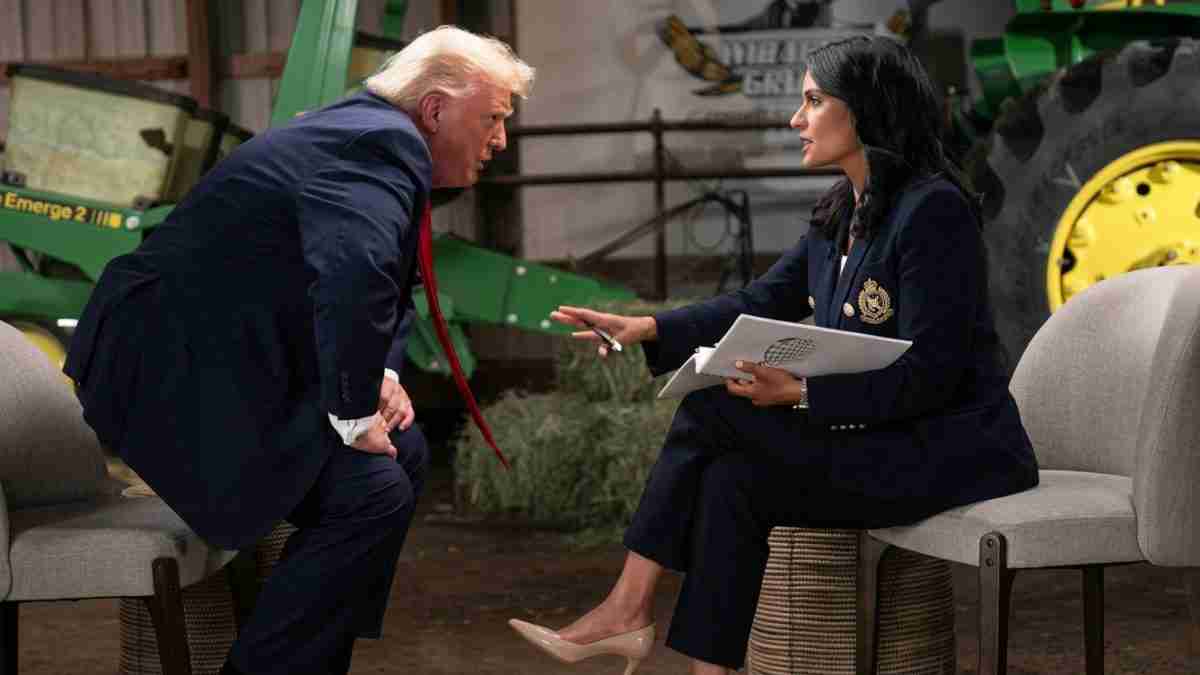
WASHINGTON, Sept. 1 (DC Times Online) — President Donald Trump said Aug. 30 that he would report NBC journalist Kristen Welker to the Federal Communications Commission after she described the results of his political endorsements as “mixed.”
Trump said in a post on Truth Social that Welker should face “rebuke or punishment” and urged FCC Chair Brendan Carr and other commissioners to take the matter seriously.
The dispute centers on remarks Welker reportedly made during a pre-show live segment on WRC-TV, NBC’s Washington, D.C., affiliate. The phrase was not used during the episode of Meet the Press, according to a transcript and an account by CNN journalist Brian Stelter cited in coverage.
What did Trump object to?
Trump pointed to the reported victories of Senate candidates Darline Graham in South Carolina and Mike Mazzei in Oklahoma. He said his endorsements produced a 100% success rate for U.S. Senate candidates and a 98% success rate for U.S. House candidates.
Those percentages are Trump’s own calculations. The information available for this report does not include a complete list of his endorsed candidates, the method used to calculate the figures or an independent election-results record verifying them.
Trump called Welker’s characterization “purposeful inaccuracy” and said the media were using the “freely given Public Airwaves” to make the claim.
What can the FCC do?
The FCC regulates communications, including broadcast stations. But the agency’s published guidance says it does not investigate alleged inaccuracies in news reports or disagreements over the truth or validity of parts of a news program.
That guidance directly addresses the type of complaint Trump described. It indicates that a disagreement over a journalist’s characterization of political events is not generally an issue the FCC investigates as a news-accuracy complaint.
FCC Commissioner Anna Gomez said the agency has no authority to punish journalists whom the administration dislikes, USA Today reported.
There is no confirmation that Trump has filed a formal complaint. The available information also does not show that the FCC has opened an investigation, rejected a complaint or taken other action.
How has NBC responded?
An NBC spokesperson defended Welker, saying: “Kristen is one of the best in the business and we stand by her.”
The episode illustrates the difference between a political official’s demand for regulatory action and an agency’s stated authority. Trump has asked the FCC to respond to a broadcast characterization he disputes, while FCC guidance says the agency does not investigate claims of inaccuracy in news reports or differences of opinion about a news program’s validity.