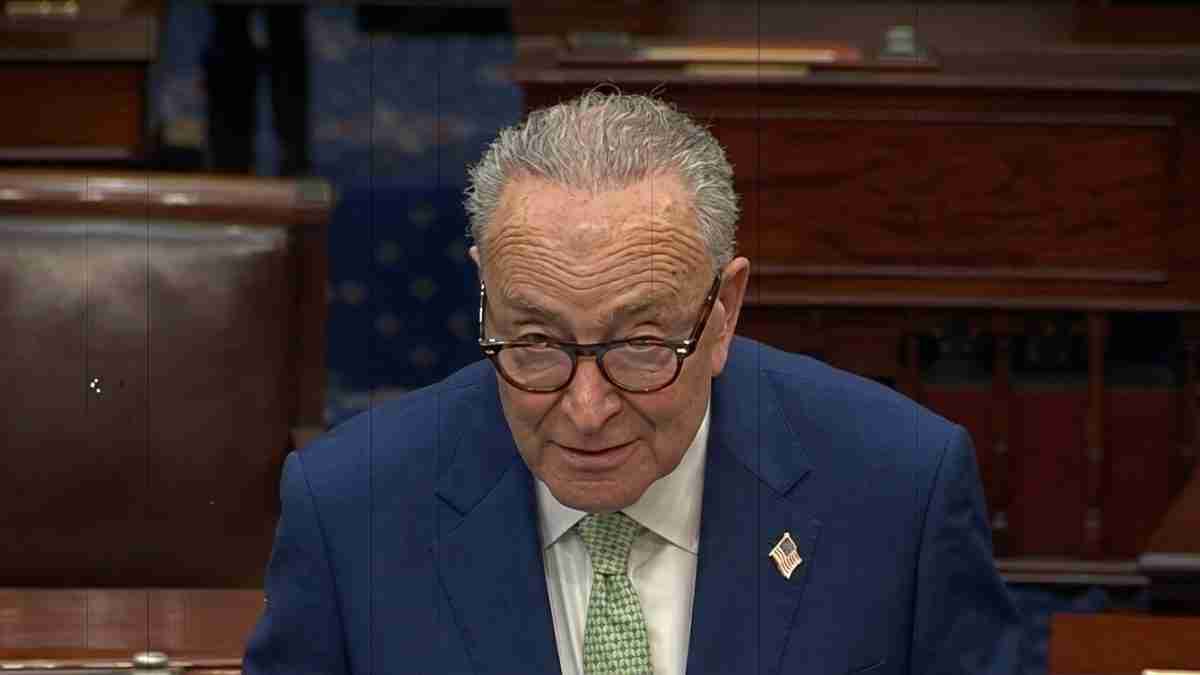
WASHINGTON, Aug. 13 (DC Times Online) — A Justice Department legal opinion could make it harder for Congress and others to obtain some communications between President Donald Trump and private advisers, according to the department’s Office of Legal Counsel. Senate Democratic Leader Chuck Schumer accused Attorney General Todd Blanche of using the opinion to conceal Trump’s communications with outside consultants and special-interest groups.
The 21-page OLC memo says presidential communications with private advisers may qualify for executive privilege when they involve official presidential decision-making, include or reflect communications with Trump or his direct advisers, and remain confidential.
The memo is nonbinding. It does not itself resolve whether any particular document is protected, and the supplied records do not show that a court has ruled on the issue or that Congress has issued subpoenas to the advisers involved.
What the opinion says
Executive privilege is a legal principle that can protect certain presidential communications from disclosure. It is intended to preserve confidentiality around presidential decision-making, although its scope can be disputed by Congress, courts and investigators.
The OLC memo says that protection may extend beyond government employees. It states that “the need for presidential confidentiality applies to communications with private advisers just as it does to communications with government officials.”
That does not mean every message involving a private adviser is protected. Under the conditions described in the memo, the communication must relate to official presidential decision-making, involve or reflect contact with the president or his direct advisers, and be confidential.
The opinion also does not identify the outside consultants or special-interest groups whose communications might be covered. The supplied records do not establish whether any specific privilege claim has been made.
Why Schumer objected
Schumer said Blanche was using the Justice Department to “cover up” Trump’s communications with private advisers and what he called “special interest cronies.” He also said, “Donald Trump is scared. He knows accountability is coming.”
Those statements are Schumer’s political allegations. The supplied records do not independently establish that Blanche or the department concealed communications, and no official Justice Department response to the accusations is identified.
The advocacy coalition Not Above the Law also criticized the opinion. Its co-chairs said Blanche’s Justice Department was trying to shield Trump and those around him from accountability. The coalition includes Stand Up America, the Constitutional Accountability Center, Public Citizen and MoveOn.
The criticism reflects a broader dispute over how executive privilege should apply. Supporters of a broad interpretation say presidents need confidential advice to make decisions. Critics argue that extending the protection to private advisers could limit congressional oversight and public accountability.
How Blanche became part of the dispute
The Senate confirmed Blanche as attorney general by a reported 50-49 vote, Newsweek reported. The report said Republican Sen. Bill Cassidy voted for Blanche while Republican Sens. Susan Collins and Lisa Murkowski voted against him.
Blanche was described in the supplied coverage as Trump’s former personal attorney. During his confirmation hearing before the Senate Judiciary Committee, senators questioned him about the Justice Department’s handling of Jeffrey Epstein-related files and other matters, according to Reuters and Bloomberg.
Sen. Richard Durbin, an Illinois Democrat, told Blanche at the hearing: “In less than 18 months at the Department of Justice, you’ve shown you’re still President Trump’s personal attorney.”
Democratic lawmakers and watchdog groups had already criticized Blanche over the department’s handling of Epstein-related files and a proposed anti-weaponization fund. Those criticisms are political claims, and the supplied records do not independently verify them. The administration rejected some of the allegations.
What happens next
The OLC opinion gives the Justice Department a legal basis for arguing that some communications with private advisers should remain confidential. But the memo alone does not decide a dispute over a particular record.
If Congress seeks documents and the administration invokes executive privilege, the disagreement could lead to negotiations, congressional enforcement efforts or litigation. The supplied records do not show that any such process has begun in this matter.
For now, the dispute is about the reach of presidential confidentiality: whether protection that traditionally covers communications with government officials can also cover communications with private advisers when those conversations concern official presidential decisions.