
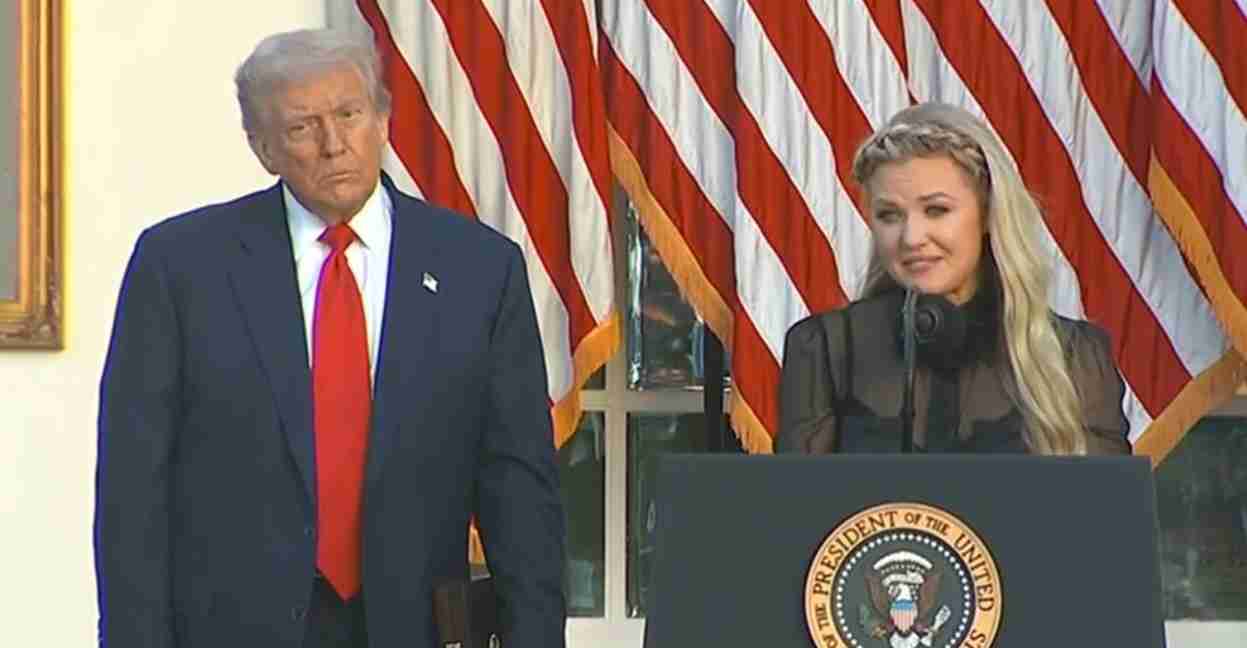
Erika Kirk Accepts Presidential Medal of Freedom for Late Husband in Emotional White House Tribute
At a White House ceremony during a 9/11 remembrance, Erika Kirk accepted the Presidential Medal of Freedom on behalf of her late husband, Charlie Kirk, who was honored posthumously on what would have been his 32nd birthday.
Key takeaways
- Erika Kirk accepted the Presidential Medal of Freedom for her husband, Charlie Kirk. Video
- The medal was awarded posthumously on what would have been his 32nd birthday, days after his death on Sept. 10. Video
- President Trump called Charlie Kirk a “champion of liberty” during the 9/11 remembrance. Video
- The White House released a tribute montage narrated by Erika Kirk. White House tribute video and article
Main content
White House ceremony and remarks
Erika Kirk rose to accept the Presidential Medal of Freedom for her husband during a ceremony that blended national remembrance with personal tribute. The award presentation took place during a 9/11 remembrance event, a date charged with national meaning.
President Trump framed the honor as recognition of Charlie Kirk’s commitment to liberty, calling him a “champion of liberty.” Erika offered heartfelt thanks to the president, the first lady, the vice president, family, friends and Turning Point USA staff as she accepted the medal. Video
White House tribute video
The White House released a montage pairing public appearances and intimate family moments with Erika’s narration. The video emphasized nationwide responses, memorials and prayer vigils, and included Erika’s line: “You have no idea the fire you have ignited.” The montage underlined the claim that Kirk’s life catalyzed a broader movement. White House tribute video and article
Family message and personal moments
One of the ceremony’s most intimate moments came when Erika relayed a message from their daughter, Gigi:
“Happy birthday, daddy. A free man made fully free.”
Those words framed both private grief and a spiritual framing of Charlie Kirk’s life and death.
Erika balanced personal loss with a public call to continue her husband’s work, specifically thanking Turning Point USA staff for their role in advancing civic engagement and free speech. Video
Context and chronology
The timing of the award—on what would have been Charlie Kirk’s 32nd birthday and during a 9/11 remembrance—was symbolic for family and supporters. The posthumous honor tied a personal narrative to a larger national moment and reinforced themes of patriotism and sacrifice. Video Video
Local and national memorials and prayer vigils appeared in the weeks after his death and were included in the White House montage, reflecting broad response across the conservative movement. White House tribute video and article
Media and public reaction
Reaction was mixed but intense: supporters framed the medal as rightful recognition of Kirk’s influence on young conservatives; critics questioned the criteria and the political framing of national honors. The ceremony’s prominence has propelled discussion across platforms.
Investigative observations
- Timing and symbolism: Awarding the medal on his birthday and during a 9/11 observance blends private mourning with national meaning. Video
- Movement-building: The montage and Erika’s narration framed Kirk as a catalyst for activism: “You have no idea the fire you have ignited.” White House tribute video and article
- Institutional ties: Erika’s thanks to Turning Point USA staff highlighted how honors can validate associated organizations. Video
Sources and documentation
- White House tribute video and article: “ICYMI: White House releases powerful tribute video honoring Charlie Kirk’s legacy”
- Ceremony and remarks video (White House event footage)
- Video of timing and birthday-related coverage
- Turning Point USA and remarks footage
Implications for United States
Political consequences
The posthumous award is likely to solidify Charlie Kirk’s stature among conservatives and becomes a touchstone for messaging by the GOP base and allied organizations. Expect debates over criteria for national honors and the political uses of presidential recognitions.
Movement and organizational impact
Turning Point USA may see increased attention, recruitment and donations following the national recognition of its founder. Erika’s links between the medal and the organization tie the group’s future to Kirk’s legacy. Video
Security and public discourse
Honoring a figure who died under violent circumstances elevates discussions about protection for activists and how rhetoric can influence public safety. Officials may reassess protocols for public events and security for prominent organizers.
Social and cultural effects
The image of a young family at the White House and a child’s birthday message humanizes political debate and reframes recognition in spiritual terms — notably the phrase “A free man made fully free.” That rhetoric will resonate in both faith and political contexts.
Practical applications for institutions and media
Newsrooms, political organizations and universities may study the ceremony as a template for legacy management: combining personal testimony, archival footage and public ritual to shape posthumous narratives and institutional futures.
Regional and national politics
Campaigns and local races may invoke the ceremony in messaging. Supporters will cite the honor to underscore priorities; opponents will challenge selection criteria. The debate will unfold across campuses, state legislatures and campaign events where Turning Point USA operates.
Reporting note: This article draws on the White House tribute video and multiple recordings of the ceremony. Sources include the White House article and video and ceremony footage: White House tribute video and article; ceremony video; birthday/timing video; Turning Point USA remarks.



