
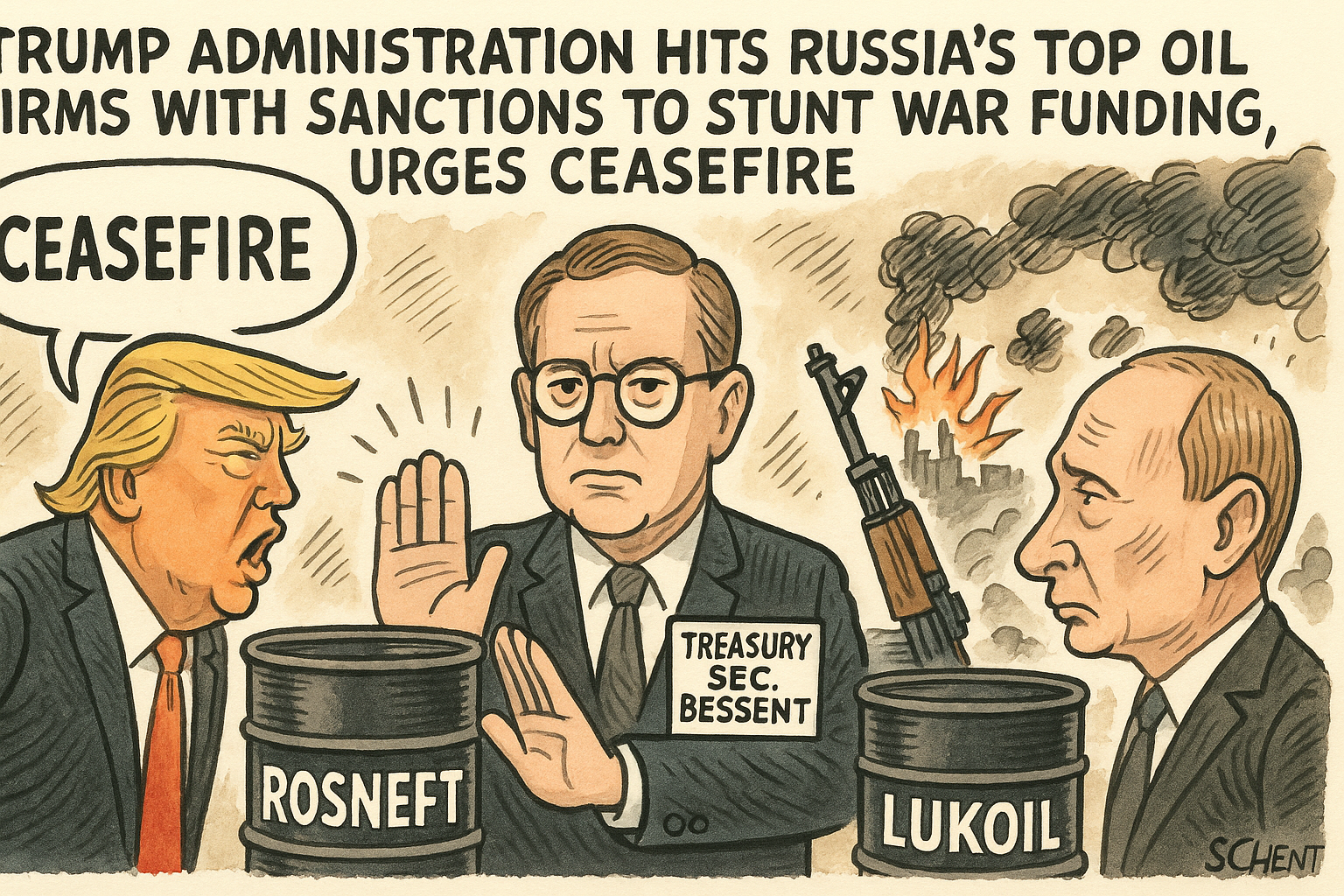
Trump team readies tough Russia oil sanctions targeting Rosneft and Lukoil as leverage for Ukraine ceasefire
The Trump administration is actively developing a Russia oil sanctions strategy intended to curtail energy revenues for Moscow and press for a Ukraine ceasefire — options include escalated asset blocks against Rosneft and Lukoil or conditional relief as a bargaining tool.
- Key takeaways:
- Reporting sources indicate the plan could range from tighter secondary sanctions and asset blocks to temporary easing — see Charter97 and Rigzone.
- Major producers named in reports include Rosneft and Lukoil, but sources stress the debate is ongoing and no final asset blocks have been confirmed — see Charter97 and Euromaidan Press.
- Allied coordination with G7 partners and sensitivities in global oil markets frame the debate; recent measures and market moves are documented by Transport Topics and Rigzone.
Sanctions options under consideration
Officials and advisers tied to the Trump transition are weighing two broad paths: an escalation approach that would apply maximum pressure on Russia’s energy sector, or a conditional relief path that would use easing as an inducement for a credible ceasefire.
1) Escalation: maximum-pressure approach
Under this option, policymakers would tighten secondary sanctions to target not only Russian firms but also the foreign companies and shipping networks that move Russian oil. Measures under discussion include blocking assets of major producers such as Rosneft and Lukoil, imposing greater penalties on third‑party buyers, and targeting chokepoints in shipping routes to choke revenue streams that fund Moscow’s military operations. Reporting on these options is available via Charter97 and Rigzone.
2) Conditional relief: incentives for a ceasefire
If negotiators judge a credible ceasefire or deal is near, the administration could offer targeted relief as a goodwill gesture. Options include issuing general licenses, raising the price cap on Russian oil, or easing some export restrictions — moves described by insiders as potential inducements. See reporting in Charter97 and analysis at Transport Topics.
Advisers and internal debate
Those advising the transition team include former sanctions officials, Cabinet nominees, and conservative foreign-policy think tanks. Reporting stresses the debate is active and no formal action has been taken; see Charter97 and Euromaidan Press for background.
Asset blocking and G7 coordination
The outgoing Biden administration’s late-term energy steps set a precedent by restricting some Russian energy assets and creating procedural hurdles — including congressional notification requirements before any rollback — that complicate rapid policy changes. See Transport Topics for details on those constraints.
The transition team reportedly prefers G7 coordination, recognizing that unilateral U.S. sanctions can be less effective if major buyers or shippers continue trade. Coordinated measures could reduce evasion avenues and amplify pressure on Moscow; reporting is summarized by Charter97 and Transport Topics.
Legal, political and logistical questions
Secondary sanctions aimed at third-country firms are complex to craft and enforce. They carry diplomatic costs if allies push back, and they can disrupt global markets if supply tightens sharply. Industry and market reaction is covered in reporting from Rigzone.
Ceasefire leverage and diplomacy
Publicly, President Trump has emphasized a quick settlement in Ukraine. Administration sources say sanctions are being framed as both a hammer and a lever: the threat of escalation could compel talks, while the promise of relief could reward progress. Reporting and analysis are available at Rigzone and Euromaidan Press.
“Sanctions could be a bargaining chip in high-level talks,” sources say — the dual-use approach is central to internal deliberations.
Who is blocking assets now?
Some accounts suggest incoming officials might move to block assets of Rosneft and Lukoil, but current reporting does not confirm a formal execution of such blocks by Treasury Secretary-designate Scott Bessent or others. Most coverage frames these as options under discussion while noting the Biden administration’s late measures have already set constraints; see Charter97, Rigzone, and Euromaidan Press.
Market impact and energy security risks
The oil market reacts quickly to sanctions signals. Brent crude rose sharply after recent actions, and analysts warn further moves could tighten supply and raise global prices, adding inflationary pressure. See reporting at Rigzone and Transport Topics.
Policymakers must balance strategic gains against economic costs at home: higher gasoline and heating costs would hit households and could become a political liability for any administration pursuing aggressive sanctions.
Reporting and sources
This account draws on reporting that describes internal transition deliberations and recent policy steps. Key sources cited in coverage include industry wires and regional outlets:
Implications for United States of America
Economic and household impact: Stronger sanctions could raise global oil prices, increasing gasoline and heating costs for American families and adding to inflationary pressures — a key consideration for a moderate conservative readership.
Energy security and domestic production: Tighter restrictions could accelerate calls to expand U.S. energy production, speed permitting for infrastructure, and bolster strategic reserves to protect consumers and bolster resilience.
Political consequences: Sanctions that spike fuel prices risk becoming a campaign issue, while successful pressure that helps end the war could be framed as a foreign policy win. The administration must calibrate measures to minimize domestic economic pain.
Allied coordination and trade ties: Effective measures will require partner cooperation from Europe and key Asian states; diplomacy will be needed to persuade allies to accept economic costs for strategic gains.
Legal and policy constraints: Congressional notification rules and legal hurdles from recent measures complicate rapid rollback or unilateral policy shifts, creating institutional checks on the administration’s options.
Military and strategic calculus: If sanctions help bring Russia to negotiate, they could reduce threats to European security; if they fail or provoke escalation, they could extend the conflict and its costs.
Policy choices ahead
Officials say both escalation and conditional easing remain viable. The central question for Washington is whether sanctions can be designed to limit Russia’s war funding and nudge a ceasefire while protecting U.S. consumers and preserving allied cohesion — a balance that will shape policy in the weeks ahead.



