
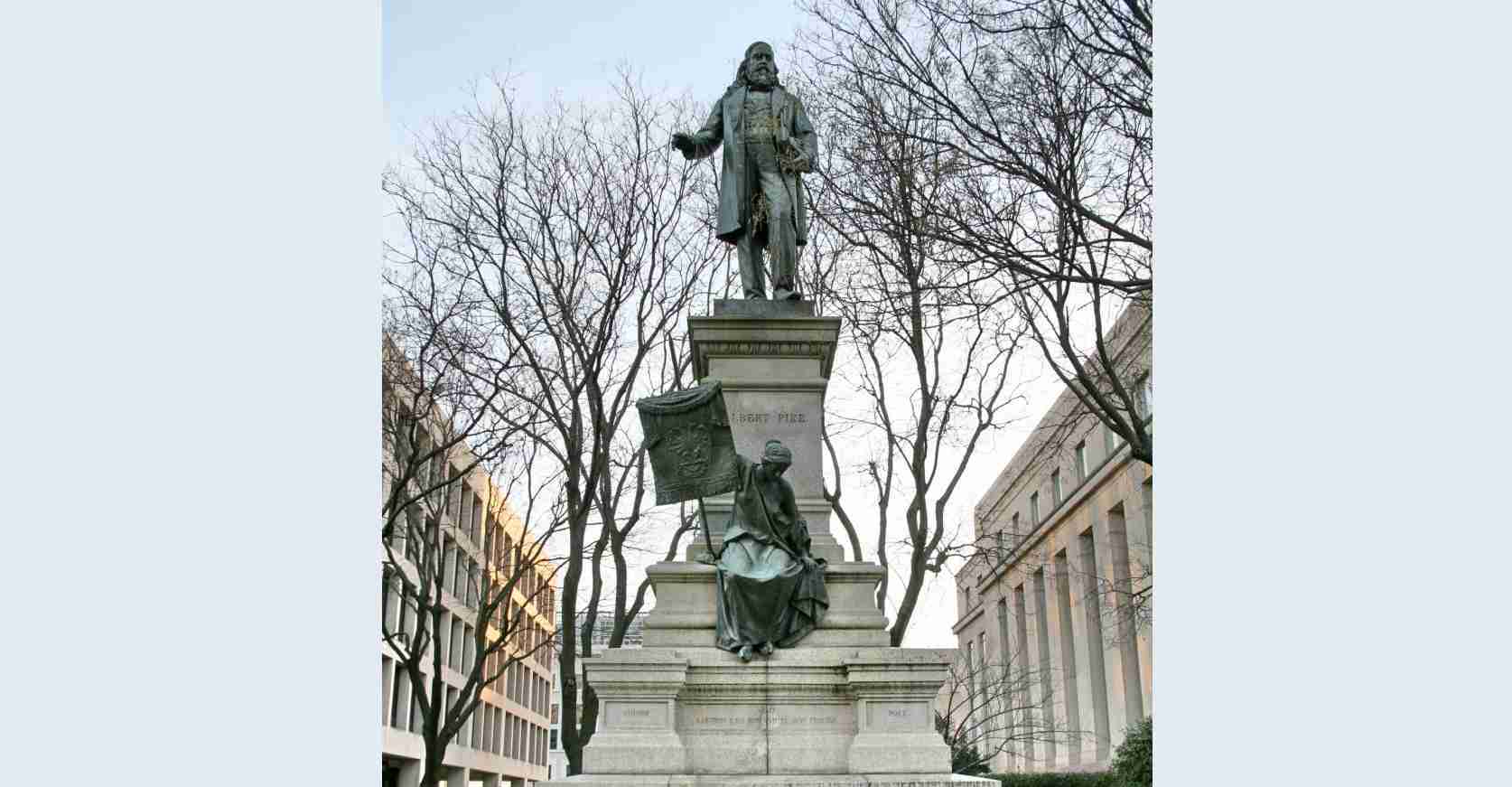
Trump administration condemned toppling but did not reinstall Albert Pike statue, records show — a flashpoint in the Confederate monument controversy
Following its June 19, 2020 toppling in Judiciary Square, the Albert Pike Confederate statue was taken into government custody. Public records and reporting confirm the Trump administration condemned the act but did not physically reinstall the monument.
Key takeaways
- Toppled on June 19, 2020: demonstrators dragged down, spray-painted and burned parts of the Pike statue in Judiciary Square.
- Trump administration response: the White House condemned the toppling and issued an executive order to protect monuments and pursue prosecutions.
- No verified reinstallation: public records and major news outlets show the statue was placed in government storage and was not reinstalled by the administration.
- Broader debate: the case highlights tensions between federal authority and local control over contested memorials.
Background: the statue and the 2020 protests
The bronze statue of Albert Pike, a 19th-century Confederate general and prominent Freemason, had stood in Judiciary Square since 1901. Installed during an era when many Confederate memorials were erected, the monument honored Pike’s Masonic role while critics pointed to his Confederate ties and controversial writings.
On June 19, 2020 — Juneteenth — demonstrators in Washington pulled the statue down with ropes, doused it with paint and burned parts of it amid nationwide protests over racial injustice after George Floyd’s killing. Journalistic coverage documented the toppling; authorities reviewed footage as part of investigations. See contemporaneous reporting at BBC and Reuters.
“The events in Judiciary Square were widely captured on video and became part of national coverage of the 2020 protests.”
Trump administration response and executive action
President Donald Trump publicly condemned the destruction and called for federal action to protect monuments. In late June 2020, the White House issued an executive order directing federal agencies to protect monuments and prioritize prosecutions for vandalism of federal property. The executive order text can be found on the White House website.
Despite the administration’s strong rhetoric, federal law enforcement in many places did not immediately arrest those seen toppling statues during the protests. Local police in Washington and federal park police reviewed events around Judiciary Square while news organizations including NPR and AP reported on investigations.
Records and reporting show statue was not reinstalled
Claims that the Trump administration “reinstalled” the Albert Pike statue circulated online. A review of public records, official statements and reporting shows no verified evidence that the statue was returned to Judiciary Square or placed on any other public site.
The National Park Service and other federal agencies took custody of the statue after its removal. Reporting through late 2020 and afterward indicates the statue remained in government storage, out of public view, while debates continued over its future. Major outlets — including The Washington Post, NPR, Reuters and BBC — did not report any reinstallation.
Why misstatements about reinstallation spread
Several factors fueled confusion: the administration’s forceful language and the executive order created an impression of imminent restoration; the federal location of the Pike statue made it a high-profile federal issue; and rapid social media circulation amplified rumors before fact-checks could follow.
Federal versus local control: the legal and practical tangle
When monuments sit on federal land or are installed by federal statute, federal bodies like the National Park Service generally hold authority. By contrast, many Confederate monuments belong to state or local governments and are handled by municipal processes. In Judiciary Square’s case, federal custody meant Washington’s Pike memorial fell into a complex zone between national policy and local opinion.
Voices on both sides
Supporters of restoring toppled monuments argued that restoration preserves history and deters lawlessness. Preservation groups warned that allowing vandalism to stand could undermine the rule of law.
Opponents argued many monuments honor figures who fought to preserve slavery or symbolize racial oppression, urging removal, relocation or reinterpretation. Activists and public historians recommended community-led processes to determine a monument’s future.
What the public record shows about Pike now
As of the latest public reporting and federal statements, the Pike statue remains out of public view in government custody. There is no credible public record that the Trump administration reinstalled the statue in Judiciary Square or any other public location after the June 2020 toppling. Investigations were pursued by local and federal law enforcement, and the executive order signaled federal intent to prosecute vandalism, but enforcement did not equate to physical reinstallation.
Implications for the United States
Economic: Restoring or protecting controversial monuments can be costly due to security, cleanup and legal fees; disputes can affect tourism and local commerce.
Political: The Pike episode highlights tensions between federal prerogative and local control, serving as a test for voters on priorities like law and order, historical preservation and community values.
Social and cultural: Monuments act as focal points for memory and protest. Removing controversial monuments from public spaces may ease tensions in some communities but can deepen polarization if decisions lack broad local buy-in. Some recommend moving contested monuments to museums or adding contextualization plaques.
Practical applications for policymakers
Policymakers should consider clearer procedures when monuments are damaged or contested: federal standards for incidents on federal land, local-federal task forces for removals and restorations, and expanded community engagement to guide outcomes.
Sources
- White House executive order (June 2020)
- National Park Service
- BBC coverage of protests and statue toppling
- Reuters coverage of monuments and protests
- NPR reporting on monument actions and investigations
- The Washington Post coverage of Confederate monuments and reactions
- The Associated Press coverage of the Albert Pike statue and related events



