
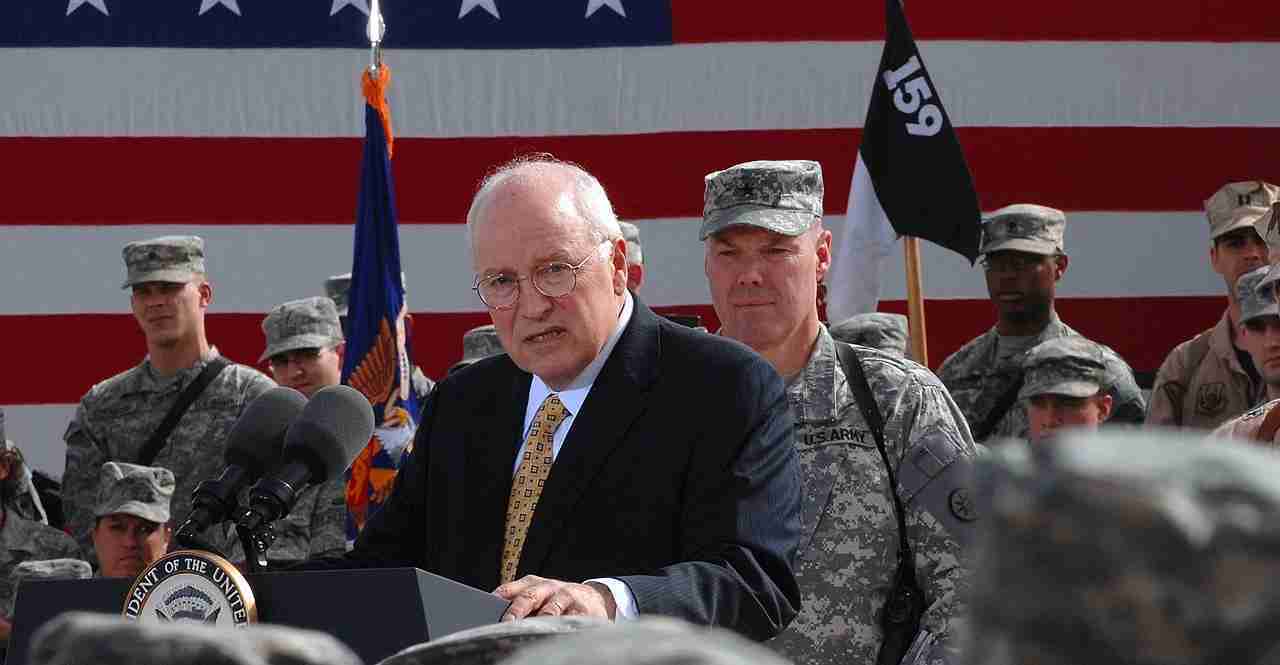
Dick Cheney, a Vice President Who Accumulated Power and Rewrote the Job, Dies at 84
Dick Cheney, vice president under George W. Bush and a central architect of post‑9/11 policy, died at 84 of pneumonia and cardiac and vascular disease — a death that closes a controversial chapter in modern American executive power.
- Name and role: Richard B. “Dick” Cheney, Vice President of the United States, 2001–2009 — sources: Britannica, Biography.
- Cause of death: Died at age 84 from complications of pneumonia and cardiac and vascular disease — source: KUOW.
- Legacy: Widely regarded as the most powerful modern U.S. vice president and an architect of post‑9/11 policy and expanded executive authority — sources: SLU Law scholarship, Wikipedia, Biography.
- Signature actions: Central role in Afghanistan and Iraq wars, expanded surveillance and interrogation policies, and aggressive use of executive power — sources: Wikipedia, SLU Law scholarship, Biography.
Early life and career trajectory
Richard B. Cheney was born in Lincoln, Nebraska, in 1941. His early years were uneven: he left Yale before graduating and had run-ins with the law as a young man, including two drunk-driving convictions that later drew scrutiny (see KUOW).
Cheney rebuilt his life in Wyoming, earning degrees from the University of Wyoming and the University of Wisconsin, and entered public service in the 1960s and 1970s. He worked as a congressional aide, served two terms in the U.S. House of Representatives, and later became a leading Republican staffer.
Political rise and hallmarks of power
Cheney returned to national prominence when George W. Bush selected him as running mate in 2000. Once in office, he transformed the vice presidency from a traditionally advisory role into a central policy engine. He cultivated control over personnel, policy drafts and legal advice, and he advocated a broader interpretation of executive authority that altered longstanding limits on presidential action (SLU Law scholarship; Wikipedia).
Following the terrorist attacks of Sept. 11, 2001, Cheney was a chief advocate for an aggressive response. He helped shape the Bush administration’s approach to the “War on Terror,” influencing decisions to go to war in Afghanistan and later Iraq, and supporting expansive surveillance and interrogation programs (Wikipedia; Biography).
Defining legacy: post‑9/11 policy architect
Cheney’s imprint on U.S. national security policy is central to his historical memory. He moved the vice presidency beyond advisory functions to shape legal doctrine, operational choices, and the balance among the branches of government. His influence affected detention policy, interrogation practices, surveillance authorities and the threshold for the use of military force after 2001 (SLU Law scholarship; Wikipedia).
Supporters credit Cheney with decisive action and a disciplined focus on national defense in a time of great danger. Critics argue his policies eroded civil liberties and sidestepped legal constraints — a debate that will continue to shape his historical reputation (Biography; KUOW).
Controversies and criticism
Cheney’s record drew sustained criticism: his five draft deferments during the Vietnam era were repeatedly spotlighted by opponents (KUOW). His role in advocating for the Iraq War, including reliance on flawed intelligence about weapons of mass destruction, remains a defining and contested element of his legacy (Wikipedia).
Legal scholars and lawmakers criticized administration memos and policies that expanded executive privilege and reinterpreted laws on surveillance and interrogation, prompting litigation, congressional inquiries, and ongoing public debate about the limits of presidential power (SLU Law scholarship).
Personal life and public image
Cheney married his high school sweetheart, Lynne Cheney, and the pair were a prominent political partnership. Lynne Cheney, an author and former chair of the National Endowment for the Humanities, was often active alongside her husband in conservative causes (KUOW).
Family statement: “courage, honor, love, kindness, and fly fishing.”
The family’s words emphasized a private side juxtaposed with his public persona.
Health and final years
Cheney faced serious health struggles for decades, including multiple heart procedures and a heart transplant in 2012. Those longstanding cardiac and vascular problems, combined with pneumonia, led to his death at age 84 (KUOW).
Implications for the United States
Economic impact
Cheney’s death itself is unlikely to move markets. However, the policies he championed — especially increased defense spending and long wars in Afghanistan and Iraq — shaped federal budgets, defense contracting, regional economies tied to military spending, and long-term fiscal debates over veterans’ care and national security funding (Wikipedia; SLU Law scholarship).
Political consequences
For the Republican Party, Cheney’s legacy is mixed: admired by many for his national security stance and criticized by others for the Iraq war and aggressive executive expansion. His death will renew internal debates over foreign policy, executive authority, and approaches to terrorism and state threats (Biography; KUOW).
Social effects and cultural relevance
Cheney’s passing will prompt reflection among veterans, intelligence professionals, civil libertarians, and the wider public. Debates about surveillance, detention, and civil liberties that intensified under his influence will likely resurface as policymakers and advocates reassess post‑9/11 practices (SLU Law scholarship; Wikipedia).
Cheney symbolized an assertive, security-first Republican approach and the ongoing national tension between safety and civil liberties that will shape his place in history.
Practical applications and forward view
Policymakers and legal scholars will study Cheney’s record when deciding future limits on war powers, surveillance authorities, and presidential control over intelligence and military action. Debates over congressional oversight, judicial review and public transparency will continue to be informed by the precedents set during his tenure (SLU Law scholarship).
Sources and further reading
- KUOW: “Dick Cheney — one of the most powerful vice presidents in American history — dies at 84”
- Biography: “Dick Cheney”
- Britannica: “Dick Cheney”
- Saint Louis University School of Law scholarship: analysis of Cheney’s vice presidency and executive power
- Wikipedia: “Dick Cheney”
- Public video materials and interviews (archival footage)



