
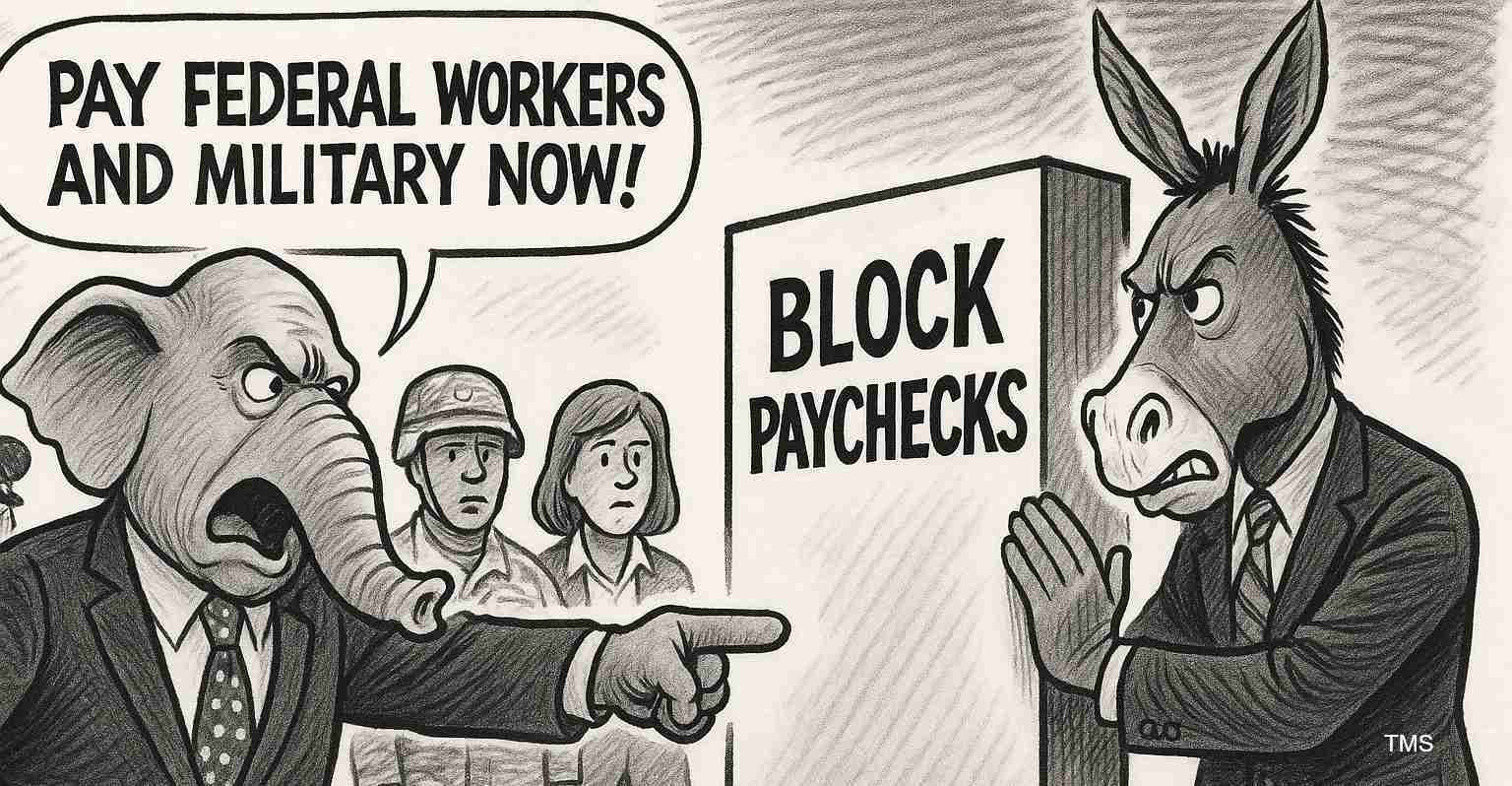
Senate Democrats Block GOP Plan to Guarantee Federal Worker, Military Pay During Shutdown
Senate Democrats blocked a Republican bill from Sen. Ron Johnson that sought to guarantee pay for federal employees and military during the shutdown; Democrats objected to vague safeguards while Republicans accused them of politicizing pay protections.
Key takeaways
- Procedural defeat: The Senate failed to reach the 60 votes needed to advance Sen. Ron Johnson’s bill, with a 53-43 vote and only three Democrats joining Republicans. (Washington Times)
- Scope of the bill: Johnson’s modified measure would have guaranteed pay for federal workers, including furloughed employees, and members of the armed forces during the shutdown. (Washington Times)
- Democratic concerns: Senate Democrats said the bill lacked standard appropriations guardrails and could allow the executive branch to repurpose funds. Sen. Gary Peters warned of an “unlimited and permanent slush fund.” (Washington Times)
- Political standoff: Democrats offered to end the shutdown if Republicans would accept a one-year extension of enhanced Obamacare premium subsidies; Republicans rejected the demand as a “nonstarter.” (Washington Times)
Main content
Key information
The Senate voted 53-43 on a procedural motion to advance a bill from Sen. Ron Johnson (R-Wis.). The measure did not reach the 60 votes needed to proceed; all Senate Republicans and three Democrats supported it while the majority of Senate Democrats opposed it. (Washington Times)
What the measure would do: Johnson’s modified bill would have guaranteed pay for federal workers, including furloughed employees, and for members of the armed forces during the shutdown. (Washington Times)
Democratic objections: Lawmakers said the bill lacked standard safeguards to ensure appropriated money could not be repurposed by the executive branch. Sen. Gary Peters (D-Mich.) warned the language could create “an unlimited and permanent slush fund for President Trump to use.” (Washington Times)
What the bill would do and why Democrats opposed it
Sen. Ron Johnson’s measure aimed to provide pay for federal employees and military service members while Congress lacks a full funding agreement. The language was altered from earlier versions to explicitly include furloughed workers. Supporters argued this closed gaps that left many workers out of prior proposals.
Democrats countered that the bill omitted the standard appropriations guardrails that typically restrict how the executive may allocate funds, raising concerns the administration could divert money from intended purposes. Sen. Gary Peters called the measure “an unlimited and permanent slush fund for President Trump to use,” reflecting broader Democratic unease about granting new or undefined authority during a funding lapse. (Washington Times)
Supporters’ arguments and GOP response
Sen. Johnson and other Republicans described the bill as simple and focused. Johnson said the language was “completely silent on presidential authority” and that the intent was to ensure appropriated money would go to paychecks only. He invited Democrats to debate and offer amendments.
Republicans framed the vote as a chance to protect federal worker and military pay amid a shutdown and argued Democrats were demanding unrelated policy items before restoring funding. Several House Republicans and GOP leaders accused Democrats of risking pay for service members and civilian staff. Representative Jen Kiggans (R-Va.) said Democrats “voted to abandon active-duty military members.” (Rep. Jen Kiggans statement)
Democrats’ counterproposal and the political standoff
Senate Democrats said they were willing to end the shutdown but sought policy concessions in return. Earlier the same day, Democratic senators proposed ending the funding lapse if Republicans accepted a one-year extension of increased Obamacare premium subsidies, arguing this would lower health insurance costs for many Americans. Republicans rejected that linkage as a “nonstarter,” refusing to negotiate policy changes as part of a stopgap funding measure. (Washington Times)
The impasse underscores how both parties are using the shutdown to press long-running priorities: Democrats aim to revive subsidies and protect affordability, while Republicans insist on a clean reopening of the government without added entitlements.
Procedural vote and Senate schedule
The procedural motion required 60 votes to advance but fell short, 53-43. The tally reflected strict party divisions, with only three Democrats joining Republicans. Senate leaders said the chamber would remain in session through the weekend searching for a path forward, though no immediate breakthrough was apparent. (Washington Times)
What this means for federal workers and the military now
Because the bill failed to advance, federal payroll protections remain tied to the broader shutdown fight. Many federal employees remain furloughed or uncertain about when pay will resume. Military families, who rely on steady pay, face particular strain. Lawmakers on both sides profess a desire to avoid missed checks, but disagree on legislative approach and necessary safeguards.
“Both sides say they want to protect pay, but they disagree on the correct legislative path and the safeguards required.”
Source documents and statements
- Washington Times coverage of the Senate vote and lawmakers’ statements
- Statement from Rep. Jen Kiggans’ office criticizing Democratic opposition on military pay
Implications for United States of America
Economic impact
A prolonged shutdown and failure to pass payroll protections can ripple through the economy. Furloughed federal workers reduce spending; contractors and local businesses lose revenue. Military families facing pay uncertainty may delay purchases, affecting retail and housing markets. Extended delays could widen effects to job losses and slower consumer spending that dampens growth nationwide.
Political consequences
The vote highlights the shutdown stalemate. Democrats are leveraging the moment to press for subsidy extensions; Republicans demand a clean bill. For moderate conservatives and undecided voters, the standoff raises questions about priorities: accept a narrow measure to protect pay now, or insist on stronger safeguards and limits before proceeding.
Social effects
Federal employees and military families face immediate stress from pay uncertainty. Households juggling mortgages, childcare, and budgets are especially vulnerable. Communities near bases or federal agencies may see strained services as employees cut back. Public trust in institutions could erode if leaders remain deadlocked while vital paychecks are in question.
Cultural relevance
Public sentiment often turns against lawmakers perceived to prioritize politics over people. Some voters view Democratic insistence on safeguards as prudent oversight; others see the refusal to pass immediate pay protections as neglect of frontline workers and the military. The debate will likely influence perceptions ahead of future elections.
Practical applications for residents
Households should prepare short-term budgets and identify local relief resources if they include federal employees or military members. Public charities and some employers provide short-term assistance. Citizens can track congressional action and contact their senators to press for timely solutions. Businesses reliant on federal work should plan for reduced demand and consider flexible staffing and credit options.
What to watch next
Watch for further procedural moves, amendments that narrow executive authority, or renewed offers that decouple pay protections from larger policy fights. The Senate staying in session over the weekend signals continued bargaining; any bipartisan amendment addressing Democratic safeguards could change the dynamics.
— Sources: Washington Times reporting on Nov. 7, 2025; Rep. Jen Kiggans statement



