
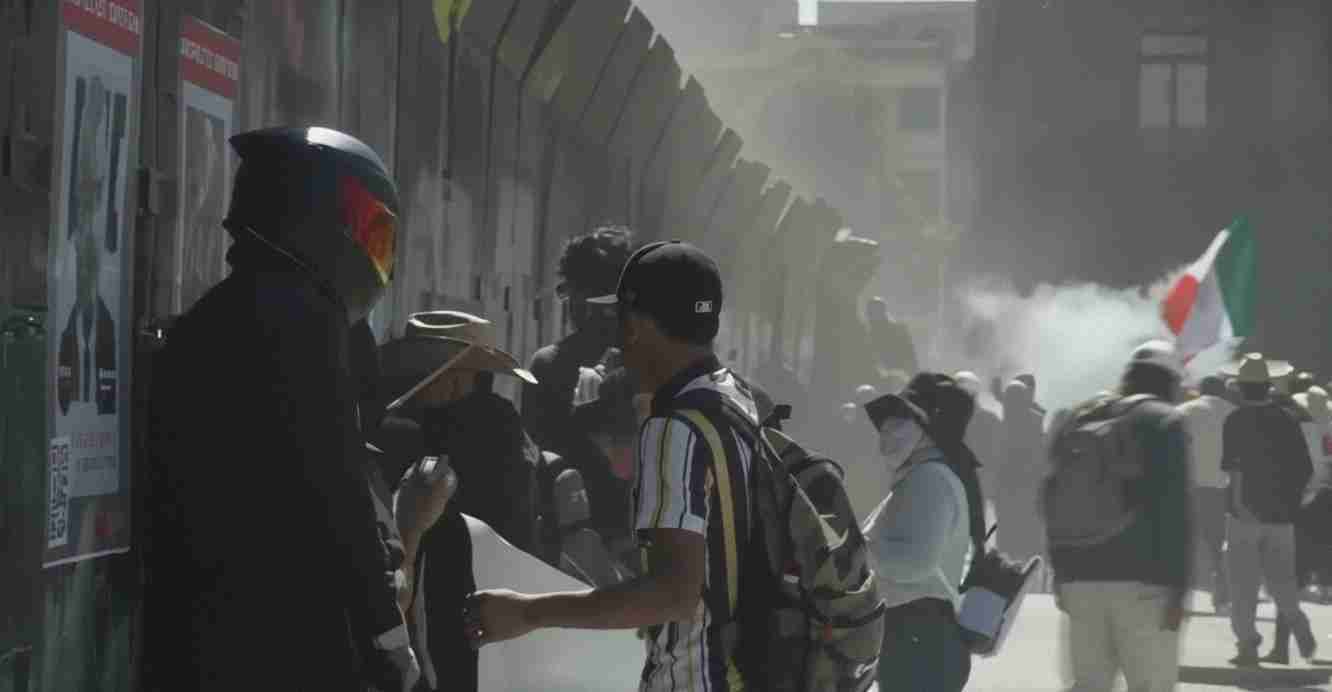
Protesters Attack Police, Breach Barrier at Mexico’s National Palace in Anti‑Cartel Rally After Mayor Manzo Assassination
Thousands of young protesters, mainly Gen Z, swarmed Mexico City on Nov. 15, 2025, after the assassination of Uruapan Mayor Carlos Manzo. Clashes at the National Palace with police escalated, highlighting public fury over cartel violence.
- What happened: Demonstrators clashed with police near the National Palace; protesters attacked officers, used makeshift weapons and broke through at least one security barrier.
- Why it started: The protest followed the assassination of Uruapan Mayor Carlos Manzo, a vocal critic of President Claudia Sheinbaum’s cartel policies.
- Who marched: Thousands, driven largely by Gen Z Mexico protests groups and youth activists; many flew the “One Piece” pirate flag as a symbol of resistance.
- Immediate response: Riot police deployed tear gas; authorities opened investigations and reviewed security protocols.
Clashes at the National Palace
Saturday’s demonstration began as an anti‑cartel march but turned violent in Mexico City’s historic center. Witnesses and local media reported that thousands marched toward the National Palace, the seat of the federal executive branch, producing chaotic confrontations captured on social media.
According to Times Media Service reporting and local outlets, protesters attacked police with makeshift weapons, pushed barricades and attempted to breach the palace security cordon. Authorities said at least one barrier was broken and officers responded with tear gas and riot-control tactics to regain order.
“Videos show chaotic scenes as demonstrators forced through perimeter defenses,” reported local outlets compiling eyewitness footage and police statements.
Casualties and arrests: Multiple people were reported injured among both demonstrators and police, and several arrests were made as authorities cleared the area. Authorities have announced investigations into the breach and the wider incident. (Sources: Times Media Service; local news reports; official statements)
The assassination that ignited the protests
The immediate trigger was the killing of Carlos Manzo, mayor of Uruapan, Michoacán. Manzo had publicly criticized President Claudia Sheinbaum’s strategies against cartels and demanded tougher protection for local officials and citizens. His assassination intensified public anger over cartel-linked violence and perceived government inaction. (Sources: Times Media Service; local reporting)
Experts and local officials emphasized that attacks on municipal leaders have become a grim facet of Mexico’s security landscape, fueling fear and frustration that national policies are failing to protect frontline officials. (Sources: Local media; interviews compiled by Times Media Service)
Government response and investigations
Authorities’ stance: Federal and Mexico City officials described the event as both a protest and a public‑order crisis, saying security forces acted to prevent access to restricted government areas and to protect public buildings and personnel.
Officials announced investigations into the clashes, the breach at the National Palace and the circumstances surrounding Mayor Manzo’s assassination. Authorities also signaled a review of security arrangements for high-profile public sites and interagency crowd-management protocols. (Sources: Official statements; Times Media Service)
President Sheinbaum’s administration faces criticism from opposition leaders and civil‑society groups demanding more effective measures to curb cartel power; government officials defended ongoing operations and the complexities of confronting organized crime. (Sources: Times Media Service; public statements)
Nationwide echoes and broader public anger
Similar protests and expressions of outrage were reported in other Mexican cities following Manzo’s killing, suggesting the moment tapped into a nationwide surge of frustration with violence, corruption and perceived ineffective leadership. Organizers said the movement draws from youth networks and grassroots groups increasingly active across regions. (Sources: Times Media Service; regional reporting)
Analysts noted the prominence of Gen Z-led groups marks a shift in civic engagement on security issues. Youth-led actions—often using social media to mobilize rapidly—have raised political stakes for the Sheinbaum administration ahead of upcoming electoral cycles. (Sources: Expert interviews and reporting compiled by Times Media Service)
Security and public‑safety concerns
Security experts warned that attacks on police and attempts to breach government buildings carry risks beyond immediate injuries and property damage. Confrontations can strain police resources, divert attention from organized‑crime investigations and create openings for criminal actors to exploit unrest.
The temporary breach of a security barrier at the National Palace underscores potential gaps in crowd-control planning and the difficulty of securing symbolic sites in central Mexico City. Authorities said they will review protocols for barrier placement, crowd management and interagency coordination. Civil‑rights groups also raised questions about balancing security with the right to protest. (Sources: Times Media Service; civil‑society statements)
Implications for the United States
Economic impact: Rising violence and visible unrest can affect investment and tourism, with potential spillovers into bilateral trade and cross‑border supply chains. U.S. firms in affected regions may face higher security costs and operational disruptions. (Sources: Economic analysts; trade reporting)
Political consequences: U.S. policymakers may face pressure to address border security, drug trafficking and law‑enforcement cooperation. Conservative and moderate lawmakers could use these events to argue for tougher cross‑border measures, while diplomatic and rule‑of‑law initiatives remain central to bilateral engagement. (Sources: Policy analysis)
Social and cultural effects: The rise of Gen Z Mexico protests highlights generational dynamics that may reshape domestic politics and regional stability. Cultural symbols like the One Piece flag show how youth culture and global media amplify political messaging across borders. (Sources: Social‑media analysis)
Practical steps: U.S. federal and state agencies should monitor developments, update travel advisories as necessary, and coordinate with Mexican counterparts on border and law‑enforcement issues. U.S. consulates should continue guidance to Americans and support local efforts to strengthen judicial and policing capacity. (Sources: U.S. government advisories; security experts)
Reporting notes and sources
This account is based on Times Media Service reporting, local Mexican media coverage, official security statements, eyewitness accounts and video shared on social platforms. Authorities in Mexico City and federal agencies announced investigations into the clashes and into the assassination of Mayor Carlos Manzo. Further details are expected as inquiries proceed and officials release formal reports. (Sources: Times Media Service; local media and official communications)



