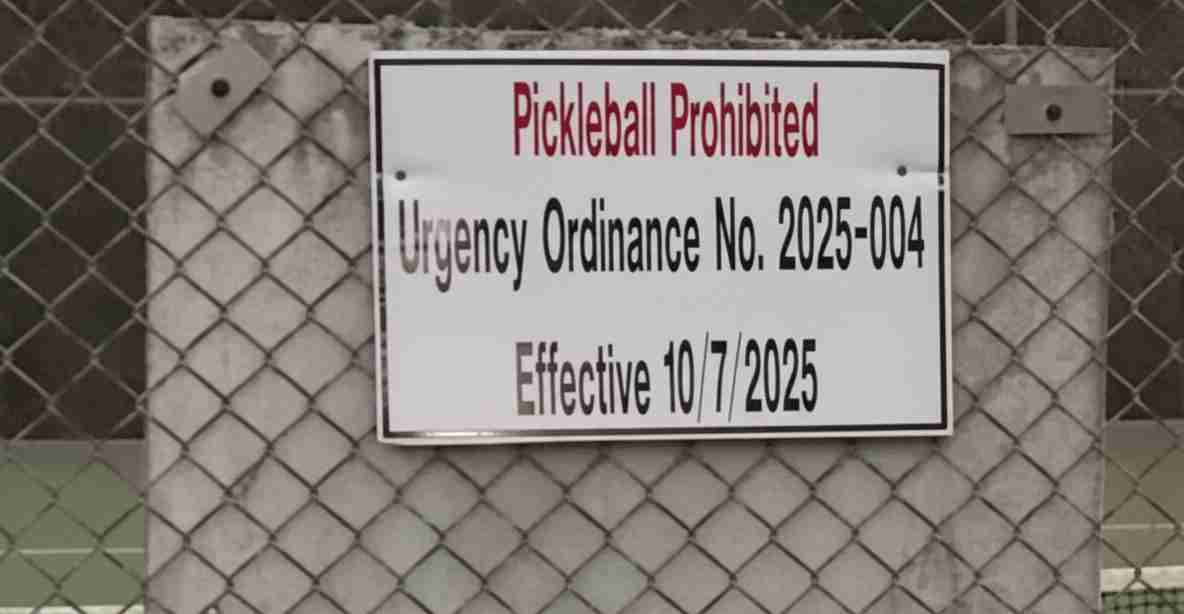
Wealthy Carmel town bans pickleball at Forest Hill Park amid noise fight, rejects quieter-equipment compromise
Carmel-by-the-Sea has permanently banned pickleball at Forest Hill Park after neighbors filed repeated noise complaints, rejecting proposals to allow quieter paddles and softer balls — leaving the city without any public courts for the sport.
Key takeaways
- Carmel’s City Council voted to permanently prohibit pickleball at Forest Hill Park after months of neighbor complaints.
- The council rejected a proposed compromise to allow quieter paddles and softer balls intended to reduce sound.
- Supporters cite repeated “pop” noises disrupting neighborhood peace; opponents warn the ban removes the town’s only public court.
- The decision drew national attention and could influence how other affluent communities address similar disputes.
What happened in Carmel-by-the-Sea
Carmel-by-the-Sea’s council addressed months of complaints from neighbors near Forest Hill Park, the city’s only public pickleball site. Residents described a persistent, sharp popping sound from paddles hitting balls that they said echoed into homes and interrupted daily life.
Council members considered a plan to permit play only with quieter paddles and softer balls — equipment combinations used elsewhere to reduce noise — but ultimately concluded that even reduced sound levels would not satisfy nearby residents. The result: a permanent ban on pickleball at the park, leaving no legal public courts in Carmel.
“It’s not just a background noise. It’s a repeated pop that echoes into our homes for hours.” — local supporter quoted in reporting
Local voices and views
The move split a small, affluent city known for quiet neighborhoods and strict local codes. Supporters argued that preserving tranquility and residents’ quality of life took precedence. Opponents described the council’s action as heavy-handed and exclusionary, noting pickleball’s role as an affordable, low-impact form of exercise and social connection for older adults and retirees.
City officials said the decision followed public hearings and noise studies submitted during the planning process. Council members framed their refusal to accept quieter equipment as a judgment that any organized play would continue to generate disruptive sound for immediate neighbors.
Why the quieter-equipment compromise was rejected
Quieter balls and paddle combinations — already marketed and used in some cities — can lower volume and change the sound profile. Supporters of the compromise called the option a reasonable middle ground. But tests and demonstrations left many neighbors and council members unsatisfied: the issue was not only decibel level but the repetitive, sudden nature of the pop, which opponents said could still interrupt conversation and sleep, especially during early-morning or evening play.
Broader reactions and national attention
The ban drew national coverage and commentary that framed the dispute as a clash between preserving residential quiet and accommodating a popular recreational activity. Some observers emphasized property rights and neighborhood standards; others raised concerns about inclusivity, public health, and the social value of parks.
Reporting on the council vote and the noise dispute appeared in outlets including Fox News, The Independent and The Washington Times, bringing wider attention to Carmel’s decision.
Legal and policy angles
Municipalities have broad authority over parks and public facilities via noise ordinances, zoning, and park rules. Legal experts note that courts often defer to local governments if rules are applied fairly and without unlawful discrimination. Still, bans are politically sensitive and can carry reputational costs for small towns when they affect visible community groups.
Cities facing similar disputes have used alternatives such as time restrictions, sound barriers, relocated courts, equipment trials, or dedicated indoor spaces. Carmel’s approach is among the strictest reported in the rising California pickleball controversy.
Implications for the United States of America
Economic: The ban may shift demand to neighboring towns, affecting recreation revenues and local businesses that sell equipment or rent courts.
Political: The decision could be used in local campaigns around quality of life, land use, and municipal responsiveness.
Social: Removing publicly available courts reduces low-cost exercise and social options for older adults and may push players to private clubs or other municipalities.
Cultural: The case highlights tensions between preserving tranquil neighborhoods and adapting public space for popular, intergenerational activities.
Practical applications for local governments
Other municipalities can learn from Carmel’s experience. Options include formal equipment trials, curfews, relocating courts away from homes, investing in sound mitigation, or offering alternative public sites. Transparent community engagement and clear noise measurements can help craft defensible, balanced policies.
Sources and further reading
- Fox News coverage of the ban and community response
- The Independent report on local reaction and debate
- The Washington Times reporting on the broader trend and policy implications
Forest Hill Park’s noise dispute is now part of a wider debate over how towns balance neighborhood tranquility with evolving recreational demand. Carmel-by-the-Sea’s ban will likely be cited by both advocates of strict local controls and defenders of shared public-space access.